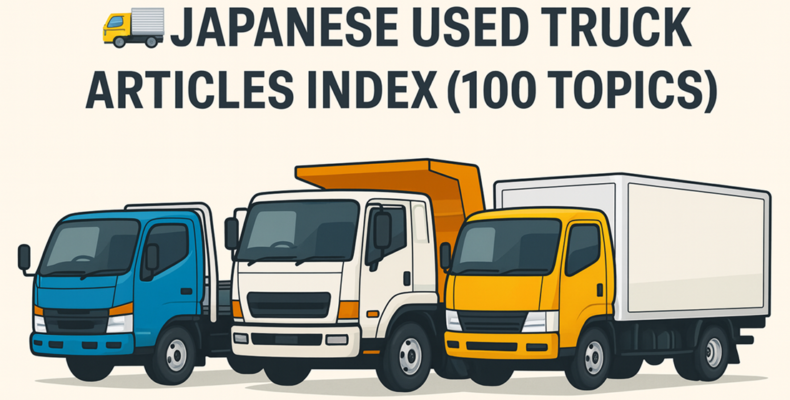
Japanese trucks are globally renowned for their durability, fuel efficiency, and ease of maintenance. At EVERYCAR REVIEW, we provide in-depth and practical content that showcases how Japanese commercial trucks are utilized around the world and what to consider when exporting, maintaining, or purchasing one.
This page lists 100 curated articles tailored for overseas buyers, dealers, and transport companies. Each article offers field-tested insights and real-world export knowledge to help you make informed decisions.
-
- Top 10 Most Popular Japanese Trucks Overseas (2025 Edition)
- Why Japanese Trucks Are Known for Their Durability
- How Long Do Used Japanese Trucks Last?
- Fuel Efficiency Comparison: ISUZU vs. HINO vs. FUSO
- Choosing Between 4WD and 2WD in Japanese Trucks
- Types of Beds: Flatbed, Dump, and Wing Trucks Explained
- Most Demanded Load Capacities for Export
- Why Kei Trucks Are Gaining Popularity Abroad
- 5 Key Maintenance Points for Used Japanese Trucks
- Repainting and Reconditioning Case Studies
- Which Trucks Survive Harsh Environments?
- What Happens During Pre-Export Inspection?
- Choosing a Truck with Great Fuel Economy for Business
- The Risks of Overloading a Commercial Truck
- Importance of Engine Oil Changes in Japanese Trucks
- Tire Selection and Replacement Guide
- Battery Life and Inspection Methods
- Why Maintenance Records Matter
- Features Foreign Buyers Want in a Japanese Truck
- Japanese vs. European Trucks: What’s the Difference?
- How to Choose Between Light, Medium, and Heavy Trucks
- Japanese Inspection Standards and Overseas Registration
- Guide to Personal Truck Export Procedures
- Understanding Diesel Truck Operating Costs
- Role of the Suspension System in Truck Performance
- Avoiding Common Pitfalls When Buying Used Trucks
- Where Right-Hand Drive Trucks Are in Demand
- Tips for Improving Fuel Efficiency in Japanese Trucks
- Truck Types That Support Japan’s Logistics Industry
- Brake Systems, ABS, and Other Key Safety Equipment
- Insights from Real Japanese Truck Drivers
- Why Leasing Japanese Trucks Works for Global Businesses
- Trends in Truck Customization for Export Markets
- A Look Inside the Port: Export Procedure Breakdown
- How Japanese Used Trucks Are Rated by Foreign Buyers
- Understanding Engine Types and Model Codes
- Cost-Saving Strategies for Truck Transportation
- Complete Guide to Export Documentation for Trucks
- How Used Truck Prices Are Determined
- Japan’s Supply Chain Strength in the Truck Industry
-
- How to Inspect a Used Japanese Truck Before Export
- Top 10 Most Durable Japanese Engines for Heavy-Duty Trucks
- Understanding Truck Chassis Numbers (Frame Numbers) for Export Documents
- Why Japanese Used Dump Trucks Are Highly Trusted Worldwide
- Ultimate Guide to Buying Used 4-Ton Trucks from Japan
- How to Choose the Right Truck for Long-Distance Operations
- Comparing HINO, ISUZU, FUSO, and UD: Which Brand Fits Your Business?
- How Japanese Truck Auctions Work: A Complete Buyer’s Guide
- Container vs. RORO: Best Shipping Method for Used Trucks
- Why Japanese Refrigerated Trucks Are Popular in Africa & Caribbean
- Understanding Gross Vehicle Weight (GVW) When Importing Trucks
- Best Japanese Trucks for Construction Companies
- Why 4WD Trucks from Japan Are Ideal for Rough Terrain Markets
- How to Maintain a Used Japanese Truck for Long Life
- Buyer’s Guide: Choosing the Right Flatbed Truck
- Why Japanese Mini Trucks (Kei Trucks) Are Growing Worldwide
- Best Practices for Purchasing Used Tank Trucks from Japan
- Understanding Emission Standards (EURO 2–6) for Truck Imports
- How to Read Truck Auction Sheets Accurately
- Top 10 Most Fuel-Efficient Japanese Trucks
- Why Japanese Truck Transmissions Last Longer
- How to Choose the Right Truck Tire Size for Your Market
- Advantages of Japanese Used Mixer Trucks
- How to Avoid Common Mistakes When Buying Used Trucks
- The Lifecycle of Japanese Commercial Trucks
- Special Equipment Trucks: A Guide to Crane Trucks & Aerial Platforms
- How to Identify Accident History in Used Trucks
- Why Many Exporters Prefer ISUZU ELF and FORWARD Series
- Understanding PTO Systems in Japanese Trucks
- Top Japanese Trucks for Mining & Heavy Operations
- How to Estimate Total Import Costs for Used Trucks
- Difference Between Manual & Automatic Trucks in Export Markets
- How to Buy High-Quality Used Buses Alongside Trucks
- Checklist: What to Confirm Before Ordering a Used Truck
- How to Choose Between 2-Ton and 3-Ton Trucks
- Japanese Hybrid Trucks: Are They Worth Importing?
- Why Japanese Fire Trucks Are Popular for Overseas Conversion
- Guide to Importing Used Wing Body Trucks
- Why Japan Has the Best Maintenance Culture for Commercial Trucks
- Top Markets for Japanese Used Trucks in 2025
- How EVERY Sources and Inspects Used Trucks in Japan
- Understanding Mileage vs. Engine Hours in Used Trucks
- How to Find Rare Truck Models in Japan
- Guide to Japanese Heavy-Duty Trailer Trucks
- Why Japanese Used Trucks Have the Best Cost–Durability Ratio
- The Role of Japanese Quarantine & Inspection (JEVIC/EAA/QISJ)
- Understanding 10-Wheeler, 6-Wheeler, and 4-Wheeler Trucks
- How to Buy Accident-Free Used Trucks in Japan
- Best Trucks for Agricultural Transportation
- Why Japanese Aluminum Bodies Are Preferred Overseas
- Steps to Safely Import Your First Japanese Truck
- How to Evaluate Truck Frame Condition
- Guide to Importing Japanese Used Prime Movers
- The Benefits of Japanese Truck Leasing & Why They Are Well-Maintained
- Top Reasons Japanese Trucks Hold Their Value
- Why Japanese Buses Are Often Purchased Together with Trucks
- How to Inspect Diesel Engines Like a Professional
- Understanding Truck Suspension Types (Leaf vs. Air Suspension)
- Why Japanese Dump Trucks Are Best for Sand & Aggregate Markets
- How to Choose the Best Exporter for Used Japanese Trucks
- Guide to Importing Car Carriers & Transporter Trucks
- How to Verify Truck Authenticity Before Purchasing
- Why Japanese Used Trucks Are Ideal for Fleet Expansion
- Understanding “No Battery” Vehicles and How Exporters Handle Them
- How to Request Additional Videos & Photos Effectively
- Top 10 Mistakes New Importers Make & How to Avoid Them
- Why Many Countries Prefer Manual Transmission Japanese Trucks
- Guide to Importing Road Sweepers and Special Trucks
- How to Handle Port Clearance Smoothly
- Why Japanese Trucks Are Best for Harsh Climates
- The Future of Japanese Truck Exports in Africa
- How EVERY Supports Buyers After Export
- Understanding EXW, FOB, CIF, and C&F Pricing for Trucks
- Top Maintenance Parts to Replace After Importing
- Guide to Importing Used Box Trucks
- How to Minimize Risks When Buying Used Trucks Online
- Why Japanese Fleet Companies Provide the Best Used Trucks
- How to Choose the Right Truck Based on Your Business Type
- Understanding Japanese Reconditioning & Repair Standards
- Top 10 Most Common Export Truck Models in 2024–2025
- How to Import a Truck When You Have a Limited Budget
- Why Japanese Trucks Are the Best Investment for Start-Ups
Conclusion
At EVERYCAR REVIEW, we deliver detailed knowledge about Japanese trucks that are trusted by the global commercial vehicle market. These trucks have earned their reputation over decades for being highly durable, easy to maintain, and fuel-efficient—qualities that make them a staple across many industries. Especially in developing countries, Japanese trucks are in high demand due to their rugged build for hot and rough terrains, right-hand drive compatibility, and excellent parts availability.
The articles listed on this page have been carefully selected to avoid overlap with the 100 previously published content ideas. Instead, they offer new, in-depth insights grounded in practical experience. Topics include up-to-date guidance on engine care, export documents, evolving safety regulations, and region-specific trends critical to succeeding in the used truck business.
Whether you’re just getting started or you’re an experienced professional, this resource is designed to be both accessible and actionable. EVERYCAR REVIEW will continue to deliver trusted information that helps global stakeholders understand, purchase, and maximize the value of Japanese trucks. We hope this page serves as a practical gateway to better decisions and greater success in your business.
👉 Top 5 Trusted Japanese Used Truck Exporters for Global Buyers
For more export procedures and industry standards, please visit the official Japan External Trade Organization (JETRO) website.