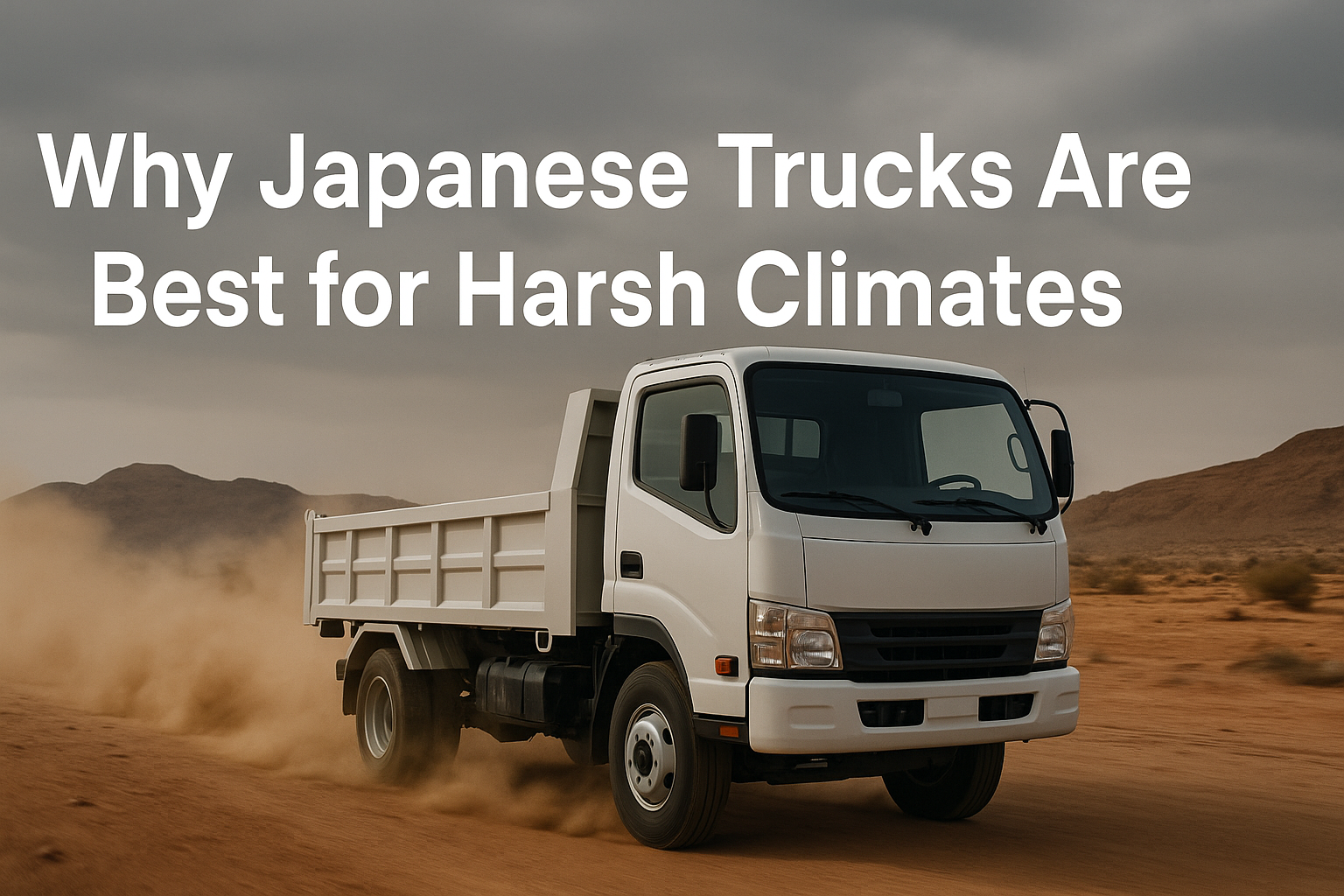
Why Japanese Trucks Are Best for Harsh Climates: Built to Perform Where Others Fail
In many parts of the world, trucks must operate in extreme heat, heavy rain, dust, snow, and rough roads. Under such conditions, vehicle reliability is not optional. It is essential. For this reason, many global buyers choose Japanese trucks for harsh climates.
Japanese trucks have earned a strong reputation for durability, stability, and long service life. This article explains why they perform so well in challenging environments and why they remain a top choice worldwide.
Global Buyers:
👉 https://everycar-review.com/2023/12/09/top-recommended-japanese-used-car-export-companies-for-international-customers/
All exporters are located in Japan and have a proven track record of serving international customers.
Engine Reliability in Extreme Temperatures
First of all, Japanese truck engines are designed for stable operation. They start reliably in cold regions and continue running smoothly in high heat.
Moreover, cooling systems are well balanced. As a result, engines avoid overheating even during long working hours. This reliability becomes critical in deserts, tropical regions, and high-altitude areas.
Strong Construction for Rough Roads
Harsh climates often come with poor road conditions. Mud, sand, potholes, and uneven surfaces put stress on vehicles.
Japanese trucks feature strong frames and reinforced suspensions. Therefore, they handle heavy loads without structural damage. Over time, this strength reduces repair costs and downtime.
Proven Performance in Dust and Sand
Dust and sand can damage engines and electrical systems quickly. However, Japanese trucks use effective air filtration and sealed components.
Because of this design, engines stay protected. Consequently, performance remains stable even in dry and dusty regions such as deserts or mining zones.
Reliable Operation in Heavy Rain and Humidity
In tropical climates, humidity and rain cause corrosion and electrical issues. Japanese trucks are built with weather-resistant components and careful wiring layouts.
As a result, electrical problems occur less often. Vehicles continue operating during rainy seasons and flood-prone periods.
Easy Maintenance in Remote Areas
In harsh climates, repair facilities are often limited. Therefore, simple maintenance matters.
Japanese trucks use practical mechanical designs and widely available parts. Local mechanics understand them well. Because of this, repairs are faster and less expensive.
Fuel Efficiency Under Heavy Load
Fuel supply can be limited in remote or extreme regions. Japanese trucks are known for efficient diesel engines.
Therefore, businesses save fuel even when carrying heavy loads. Over time, this efficiency improves profitability and operational stability.
Long Service Life and Strong Resale Value
Vehicles working in harsh climates must last longer to justify investment. Japanese trucks maintain value even after years of use.
As a result, fleet owners can upgrade or resell trucks without major losses. This benefit supports long-term planning.
Choosing the Right Exporter Is Just as Important
Even the best truck needs a reliable exporter. A professional exporter ensures correct specifications, proper inspection, and accurate documents.
Instead of searching blindly, global buyers can use this trusted reference page:
👉 Top 5 Trusted Japanese Used Truck Exporters for Global Buyers
https://everycar-review.com/2025/07/14/top-5-trusted-japanese-used-truck-exporters-for-global-buyers/
This page helps buyers connect with experienced exporters based in Japan. As a result, the buying process becomes safer and smoother.
Common Mistakes Buyers Should Avoid
Even strong trucks cannot fix poor decisions. Buyers should avoid:
-
Ignoring climate suitability
-
Choosing only by price
-
Skipping condition checks
-
Working with unverified exporters
Careful selection leads to better long-term performance.
Final Thoughts: Built for the Toughest Conditions
Japanese trucks are not designed only for clean highways. They are built to work in heat, cold, rain, dust, and difficult terrain.
With strong engineering, easy maintenance, and proven reliability, they remain the best choice for harsh climates. If you want a safe starting point, visit this exporter comparison page:
👉 https://everycar-review.com/2025/07/14/top-5-trusted-japanese-used-truck-exporters-for-global-buyers/
Smart vehicle choices today create stable operations tomorrow.