🚛 Japanese Used Truck Articles Index (100 Topics)
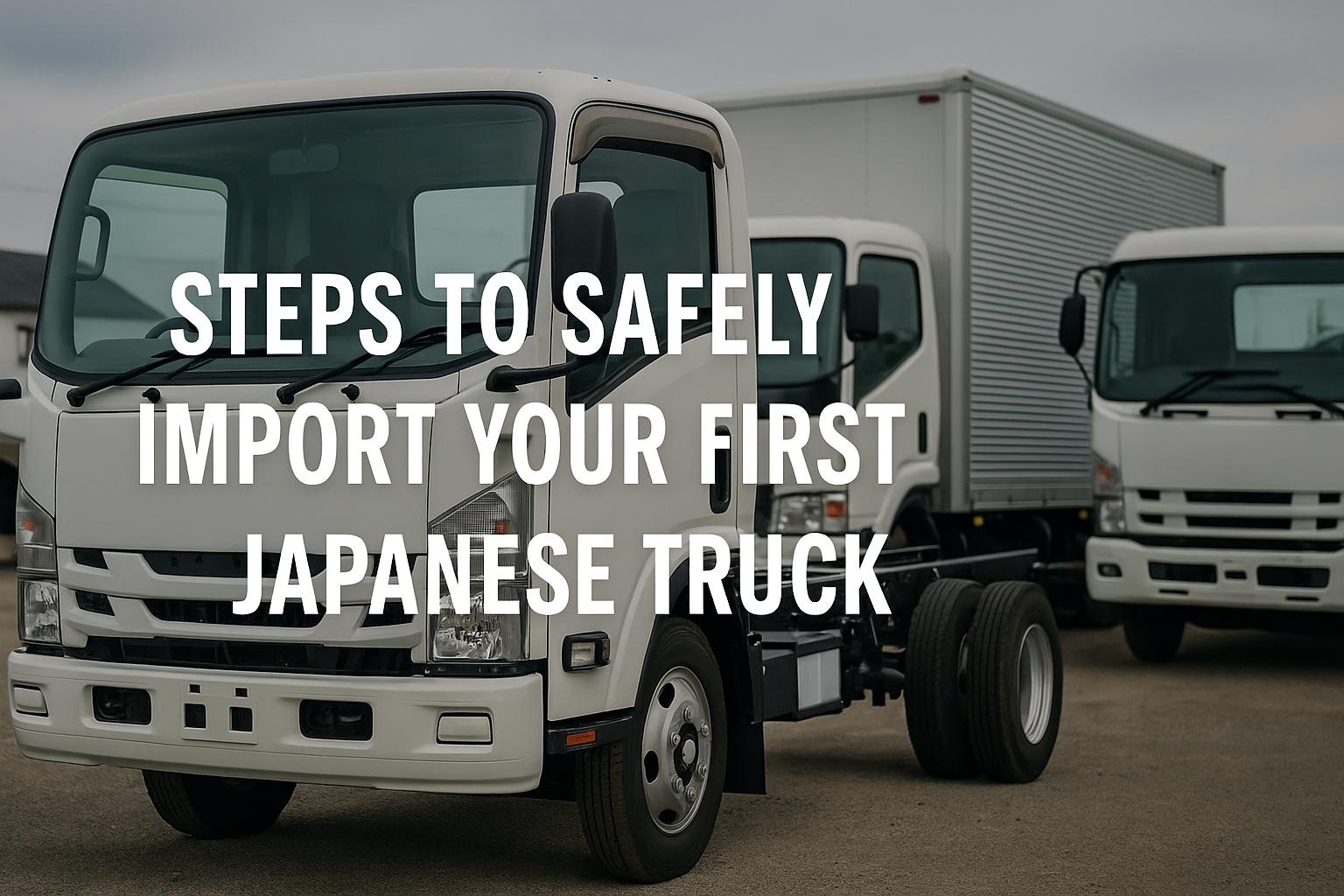
Steps to Safely Import Your First Japanese Truck: A Beginner’s Guide
Introduction: Start Your Import Journey With Confidence
Importing your first Japanese truck can feel complex.
However, with the right steps, the process becomes clear and safe.
Japanese used trucks are popular worldwide because they offer high reliability, long service life, and strong resale value.
Therefore, many first-time buyers choose Japan as their sourcing market.
This guide explains each step clearly, so you can import your first truck with confidence.
Step 1: Define Your Business Needs Clearly
First of all, decide how you will use the truck.
Different businesses require different specifications.
For example:
-
Logistics companies often need box trucks
-
Construction businesses prefer dump trucks
-
Agriculture operators use flatbeds or crane trucks
Because of this, defining your purpose helps avoid costly mistakes later.
Step 2: Set a Realistic Budget
Next, calculate your full import budget.
Do not focus only on the truck price.
Your budget should include:
-
Vehicle cost
-
Shipping fees
-
Insurance
-
Import duties and taxes
-
Local registration costs
By planning carefully, you avoid surprises after shipment.
Step 3: Choose a Trusted Japanese Exporter
This step is the most important for first-time buyers.
A trusted exporter protects you from fraud and misinformation.
Professional exporters provide:
-
Clear vehicle photos
-
Inspection details
-
Honest condition reports
-
Proper export documents
We strongly recommend reviewing this guide before choosing a seller:
Top 5 Trusted Japanese Used Truck Exporters for Global Buyers
All companies listed are Japan-based professional exporters with proven global experience.
Step 4: Check Vehicle Condition and History
Before payment, always confirm the truck’s condition.
Ask for details such as:
-
Mileage
-
Maintenance history
-
Accident records
-
Engine and transmission condition
Moreover, request additional photos or videos if needed.
Clear communication at this stage reduces risk significantly.
Step 5: Understand Pricing Terms (FOB, CIF, etc.)
Japanese exporters usually offer different pricing terms.
Common terms include FOB and CIF.
FOB covers export costs in Japan.
CIF includes shipping and insurance to your port.
Because pricing terms affect total cost, always confirm what is included.
This clarity helps you compare offers correctly.
Step 6: Arrange Secure Payment
For first-time buyers, secure payment matters greatly.
Most professional exporters accept bank transfers.
Before sending funds:
-
Confirm company registration
-
Match bank account name with company name
-
Verify invoice details
Trusted exporters guide buyers carefully through this step.
Step 7: Shipping and Documentation Support
After payment, the exporter arranges shipment.
They also prepare key documents such as:
-
Bill of Lading
-
Export Certificate
-
Invoice and Packing List
Because these documents are critical, professional handling prevents customs delays.
Step 8: Prepare for Customs Clearance
Before the truck arrives, prepare your local import requirements.
These may include inspections, taxes, or compliance checks.
Your exporter can explain document usage.
However, local agents handle clearance at your port.
By preparing early, clearance becomes smooth and fast.
Step 9: Inspect and Register After Arrival
Once the truck arrives, inspect it immediately.
Check engine condition, fluids, and tires.
After inspection, complete local registration.
This step allows legal operation on public roads.
Early maintenance helps extend vehicle life.
Why Japanese Trucks Are Ideal for First-Time Importers
Japanese trucks offer several advantages:
-
Strong reliability
-
Simple mechanical design
-
Easy parts availability
-
Global mechanic familiarity
Because of these benefits, first-time buyers often succeed with Japanese vehicles.
Final Advice for First-Time Buyers
Importing your first Japanese truck does not need to be risky.
With careful planning and the right exporter, the process becomes safe and efficient.
There are many Japanese used cars, trucks, buses, and farm tractors in the market.
If you want to import a used truck, always work with trusted Japanese export companies.
For reliable exporter guidance, please visit:
https://everycar-review.com/2023/12/09/top-recommended-japanese-used-car-export-companies-for-international-customers/