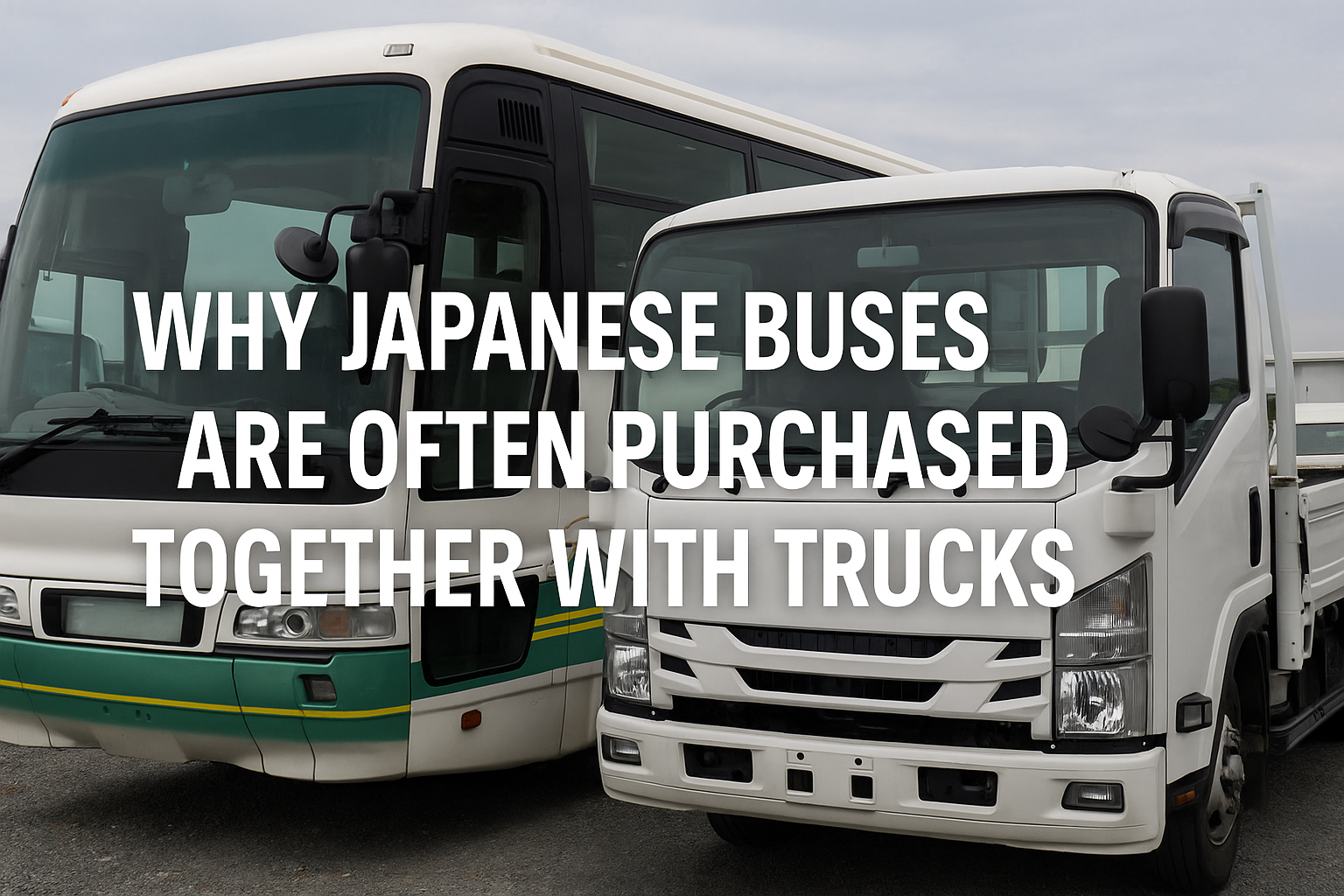
Why Japanese Buses Are Often Bought Together with Used Trucks
Across Africa, Asia, the Caribbean, and the Pacific, many importers choose Japanese buses and trucks at the same time.
This trend continues to grow every year, and for good reasons.
Japanese used vehicles offer strong value, reliable quality, and flexible purchasing options.
Therefore, combining buses and trucks in one import plan has become a smart business strategy for global buyers.
In this article, we explain why Japanese buses are often purchased together with trucks, how this approach saves money, and how professional exporters in Japan support this process smoothly.
1. One Shipment, Lower Total Costs
First of all, shipping costs matter.
When buyers import buses and trucks together, they often reduce total logistics expenses.
For example, RoRo vessels and container shipping allow mixed vehicle loading.
As a result, buyers can spread port fees, documentation costs, and inland transport charges across multiple units.
Moreover, exporters often offer better package pricing for multi-vehicle orders.
This makes combined purchases more attractive, especially for fleet buyers and project-based businesses.
2. Trucks and Buses Serve Complementary Roles
Next, trucks and buses support different but connected operations.
Many businesses need trucks for:
-
Cargo transport
-
Construction materials
-
Agricultural products
-
Fuel or water delivery
At the same time, buses handle:
-
Staff transportation
-
School routes
-
Public or private shuttle services
-
Worker movement to job sites
Therefore, importing both vehicle types together helps companies build a complete transport solution from day one.
3. Easier Maintenance and Parts Management
Japanese trucks and buses often share:
-
Similar diesel engine families
-
Common electrical components
-
Compatible maintenance procedures
Because of this, fleet owners simplify spare parts stock and mechanic training.
In addition, Japanese vehicles are well-documented.
Service manuals, VIN records, and maintenance histories are usually available.
As a result, long-term operating costs stay lower and more predictable.
4. High Trust in Japanese Fleet Vehicles
Another key reason is vehicle quality.
Many Japanese buses and trucks come from:
-
Leasing companies
-
Corporate fleets
-
Government or municipal operators
These vehicles follow strict inspection schedules and maintenance rules in Japan.
Therefore, buyers receive units with consistent condition and verified histories.
This reliability builds strong trust, especially for first-time importers.
5. Faster Business Expansion for Buyers
Importing buses and trucks together allows businesses to start operations immediately.
For example:
-
Construction companies move workers and materials at once
-
Transport operators launch passenger and cargo services together
-
Municipal buyers expand public transport and logistics simultaneously
As a result, revenue generation starts faster, improving return on investment.
6. Professional Exporters Make Combined Purchases Easy
Importing multiple vehicle types requires experience.
That is why working with trusted Japanese exporters is essential.
Professional exporters handle:
-
Vehicle inspection and selection
-
Export documentation
-
Shipping coordination
-
Compliance with destination regulations
To find reliable partners, we recommend reviewing this guide:
Top 5 Trusted Japanese Used Truck Exporters for Global Buyers
https://everycar-review.com/2023/12/09/top-recommended-japanese-used-car-export-companies-for-international-customers/
These exporters operate in Japan and support global customers with transparent processes and proven results.
7. Strong Global Demand Continues to Grow
Finally, global demand keeps increasing.
Infrastructure projects, urban growth, and public transport needs continue worldwide.
Because Japanese buses and trucks deliver durability and value, buyers often choose both together.
This trend will likely remain strong for years to come.
Final Thoughts
In conclusion, Japanese buses are often purchased together with used trucks because this strategy:
-
Reduces total costs
-
Improves operational efficiency
-
Simplifies maintenance
-
Accelerates business growth
If you plan to import vehicles from Japan, consider combining buses and trucks in one shipment.
With the right exporter, this approach delivers long-term success and peace of mind.
For trusted exporters, visit again:
https://everycar-review.com/2023/12/09/top-recommended-japanese-used-car-export-companies-for-international-customers/