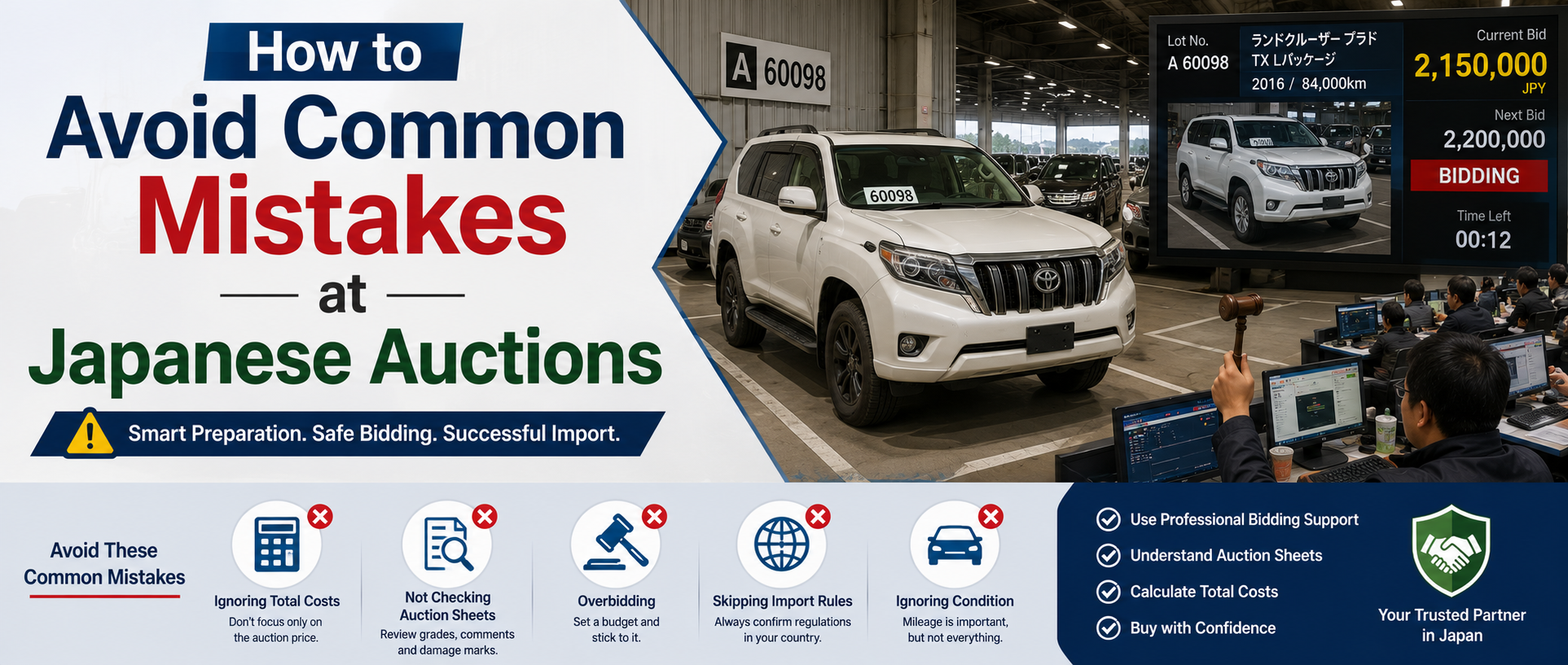
How to Avoid Common Mistakes at Japanese Auctions
Japanese vehicle auctions offer overseas buyers access to one of the largest used vehicle markets in the world.
Every week, thousands of vehicles are sold through auction networks across Japan. Buyers can find cars, trucks, buses, tractors, machinery, and many other vehicle types.
Search available auction vehicles here:
Browse Auction Vehicles
While Japanese Auction Stock offers many opportunities, beginners often make avoidable mistakes that can increase costs and create unnecessary risks.
This guide explains how Japanese vehicle auctions work, highlights common mistakes, and shows how overseas buyers can buy with confidence.
How Japanese Vehicle Auctions Work
A Japanese vehicle auction is a professional marketplace where used vehicles are sold through competitive bidding.
Vehicles enter the auction system from dealers, leasing companies, transport businesses, construction firms, farms, rental companies, and private owners.
Before the auction, inspectors evaluate each vehicle and prepare an auction sheet.
This inspection report provides valuable information about condition, mileage, repairs, damage, and overall quality.
Most overseas buyers cannot access auctions directly. They usually work through a Japanese vehicles exporter that has auction membership.
What is Auction Stock Japan?
Auction Stock Japan refers to vehicles listed in Japanese auction systems and available for bidding.
Japanese Auction Stock changes daily because new inventory enters the market continuously.
Buyers can search a wide range of vehicle categories including:
- Used cars from Japan
- Used trucks from Japan
- Used buses from Japan
- Used tractors from Japan
- Construction machinery
- Commercial vans
- Industrial equipment
- Special purpose vehicles
This large selection is one of the biggest advantages of the Japanese vehicle auction system.
Auction Stock vs Dealer Stock
Auction Stock
Auction Stock vehicles are sold through bidding.
Prices depend on demand, condition, mileage, specifications, and competition among buyers.
Auction Stock provides access to a larger inventory and more vehicle choices.
Dealer Stock
Dealer Stock vehicles are sold at fixed prices.
The buying process is simpler because there is no bidding competition.
Dealer Stock may be suitable for buyers who prefer immediate purchasing and clear pricing.
Understanding the Difference
Many buyers assume Auction Stock is always cheaper. This is not always true.
The best choice depends on vehicle availability, timing, condition, and market demand.
Common Mistake #1: Focusing Only on Auction Price
Many beginners focus only on the auction winning price.
However, the auction price is only one part of the total cost.
Buyers should also consider:
- Auction fees
- Exporter fees
- Inland transport
- Shipping costs
- Import duties
- Local taxes
- Inspection costs
- Registration fees
A vehicle that looks inexpensive at auction may become expensive after all costs are included.
Common Mistake #2: Ignoring the Auction Sheet
The Auction sheet Japan is one of the most important documents in the auction process.
Some buyers focus only on photos and ignore the inspection report.
This can lead to unpleasant surprises after the vehicle arrives.
Auction sheets contain valuable information that should always be reviewed carefully before bidding.
How to Read an Auction Sheet Japan
Auction Grade
The auction grade indicates the general condition of the vehicle.
Higher grades usually mean better condition, but buyers should still review the full report.
Mileage and Operating Hours
Cars, trucks, and buses normally show mileage.
Tractors and machinery often show operating hours.
These figures help estimate wear and future maintenance needs.
Damage Map
The damage diagram shows scratches, dents, rust, repairs, and paintwork.
Understanding these symbols helps buyers evaluate condition accurately.
Inspector Comments
Comments may mention rust, accident history, oil leaks, engine condition, hydraulic problems, or missing components.
Professional translation is important to understand these details correctly.
Common Mistake #3: Bidding Emotionally
Competitive bidding can create pressure.
Some buyers become focused on winning rather than following their budget.
This often results in overpaying.
A successful buyer sets a maximum bid amount before the auction starts and follows it carefully.
Common Mistake #4: Not Checking Import Regulations
Every country has different import requirements.
Some countries limit vehicle age, emissions standards, or steering configurations.
Others require specific inspections or documents.
Buying a vehicle that does not meet local regulations can create serious problems.
Import requirements should always be confirmed before bidding.
Common Mistake #5: Assuming Low Mileage Means Perfect Condition
Low mileage can be attractive, but it does not guarantee excellent condition.
Storage conditions, maintenance history, rust, accident repairs, and mechanical issues are also important.
The auction sheet and condition report provide a more complete picture than mileage alone.
Common Mistake #6: Ignoring Shipping Costs
Shipping costs vary significantly depending on vehicle size and destination.
Large trucks, buses, tractors, and machinery often have higher transport costs than passenger cars.
Buyers should obtain shipping estimates before placing bids.
This helps avoid budget surprises later.
Benefits of Japanese Auction Stock for Overseas Buyers
Large Vehicle Selection
Japanese auctions offer access to thousands of vehicles every week.
Buyers can compare different models, years, grades, and specifications.
Market-Based Pricing
Auction prices reflect actual market demand.
This provides valuable pricing information for importers and dealers.
Wide Range of Vehicle Categories
Buyers can search cars, trucks, buses, tractors, machinery, and special purpose vehicles through one auction network.
Transparent Inspection System
The auction sheet system provides detailed condition information that supports informed purchasing decisions.
How to Buy Through Japanese Vehicle Auctions
Step 1: Define Your Requirements
Buyers should determine the vehicle type, budget, mileage range, condition requirements, and destination country regulations.
Step 2: Search Japanese Auction Stock
Auction databases allow searches by brand, model, year, grade, mileage, and auction date.
Step 3: Review the Auction Sheet
Carefully evaluate condition reports before selecting vehicles.
Professional guidance can be extremely valuable during this stage.
Step 4: Establish a Safe Bid Limit
Calculate total costs and set a maximum bid before the auction begins.
Step 5: Participate in the Auction
The exporter places bids on behalf of the buyer.
If successful, the vehicle is purchased.
Step 6: Arrange Export and Shipping
The exporter handles transport, export documentation, and shipping arrangements.
Why Professional Bidding Support Helps
Professional bidding support reduces many of the risks associated with Japanese auctions.
Experienced exporters understand auction systems, pricing trends, condition reports, and export procedures.
Their expertise helps buyers avoid common mistakes.
Services Often Included
- Auction vehicle search
- Auction sheet translation
- Vehicle condition advice
- Market price guidance
- Budget planning
- Bidding strategy support
- Export documentation
- Shipping coordination
This professional support helps buyers buy direct from Japan with confidence.
Tips for First-Time Buyers
Research Before Bidding
Understand the market value of your target vehicles before participating in auctions.
Review Every Auction Sheet
Never rely only on photographs.
Condition reports often contain important details that photos cannot show.
Calculate Total Costs
Always include shipping, taxes, fees, and local expenses when planning your budget.
Stay Patient
The right vehicle may not appear immediately.
Patience often leads to better purchasing decisions.
Work with a Trusted Partner
A reliable exporter can provide valuable guidance throughout the process.
This support is especially important for beginners.
How Professional Support Helps Buyers Buy with Confidence
Professional bidding support provides experience, market knowledge, and practical assistance.
It helps buyers understand Auction Stock Japan, evaluate vehicles properly, and manage risks effectively.
For overseas buyers, this support can make the difference between a successful purchase and a costly mistake.
Conclusion
Japanese vehicle auctions provide outstanding opportunities for overseas buyers.
Buyers can access used cars from Japan, used trucks from Japan, used buses from Japan, used tractors from Japan, machinery, and many other vehicle types.
However, avoiding common mistakes is essential for successful importing.
Understanding auction sheets, calculating total costs, checking regulations, and following a disciplined bidding strategy all contribute to better results.
Working with a trusted partner and using professional support helps buyers buy with confidence.
EVERY TRADING is a Japanese used vehicles exporter that exports Japanese used vehicles to customers around the world.
EVERY TRADING handles cars, trucks, buses, tractors, machinery, and many other vehicle categories.
The company provides Japanese auction vehicle search and professional support so overseas buyers can safely import vehicles from Japan.
As a trusted Japanese vehicles exporter, EVERY TRADING supports buyers before purchase, during export procedures, and until shipment from Japan.
Learn more about Japanese auctions:
Japanese Car Auction Guide
Start searching your vehicle from Japan today:
Search Auction Vehicles Now


Browse Reliable Used Trucks & Buses from Japan
Carefully selected vehicles ready for export worldwide
Search 100,000+ Dealer Stock Vehicles from Japan
Access a wide selection of vehicles from Japanese dealers nationwide. Updated daily.