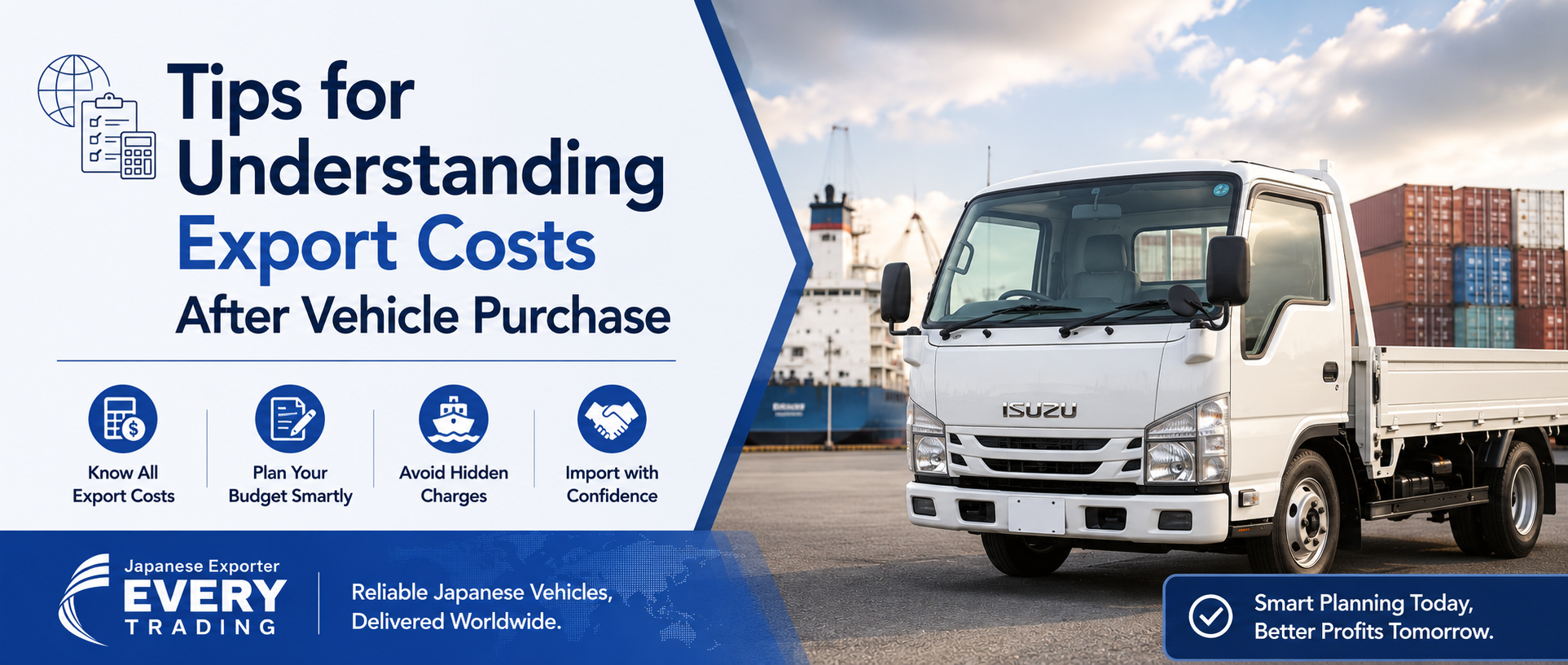
Tips for Understanding Export Costs After Vehicle Purchase
Many overseas buyers focus only on the vehicle price when importing cars, trucks, buses, or tractors from Japan. However, export costs after vehicle purchase are also very important. If buyers do not understand these costs clearly, the final business profit can become smaller than expected.
Japanese dealer stock vehicles are popular because they offer fast purchasing, fixed pricing, and simple export procedures. Unlike auctions, dealer stock vehicles are already prepared for sale. This helps buyers plan costs more easily and reduce business risks.
In this guide, we explain important tips for understanding export costs after vehicle purchase. This article is useful for dealers, importers, and business buyers looking for reliable used vehicles from Japan.
Before purchasing, many buyers also check this Japanese dealer stock vehicles guide to better understand how dealer stock export works.
Know the Main Export Costs After Buying a Vehicle
After purchasing a vehicle in Japan, several additional costs appear before shipment. These costs are normal in the export business and should always be included in your budget planning.
The main export costs usually include:
- Domestic transportation inside Japan
- Port handling charges
- Export customs clearance
- Shipping freight
- Inspection fees if required
- Insurance costs
- Documentation fees
Some countries in Africa, Asia, and the Caribbean also require pre-export inspection. This inspection may increase total export costs slightly, but it helps avoid import problems at destination ports.
When using Japanese dealer stock vehicles, buyers can often receive clear cost information quickly. This makes business planning easier compared to auction purchasing.
Understand the Difference Between FOB and CIF Prices
Many first-time buyers become confused about FOB and CIF pricing. Understanding these terms is very important when calculating export costs.
FOB means “Free On Board.” This price includes the vehicle cost and export handling until the vehicle is loaded onto the ship in Japan. Buyers must separately pay ocean freight and destination charges.
CIF means “Cost, Insurance, and Freight.” This price already includes shipping and marine insurance to the destination port.
For example, a dealer stock truck may look cheaper with an FOB price. However, after adding shipping costs, the total price may become similar to CIF.
Professional exporters usually explain both pricing methods clearly. This transparency helps overseas buyers avoid misunderstandings and manage business budgets more accurately.
Reliable exporters also provide updates about shipping schedules, container availability, and freight market conditions. These factors can change export costs depending on the season.
Dealer Stock Vehicles Help Buyers Control Costs
One major advantage of dealer stock vehicles is price stability. In Japanese auto auctions, bidding prices can rise suddenly. Buyers may also lose vehicles after spending time and money preparing for bids.
Dealer stock vehicles are different. The prices are usually fixed, and buyers can purchase immediately. This helps importers calculate export costs faster and more accurately.
For business buyers handling multiple cars, trucks, buses, or tractors every month, speed is very important. Faster purchasing means faster shipment preparation and quicker sales in local markets.
Another advantage is easier communication. Dealer stock exporters often provide detailed photos, inspection comments, and shipping support directly. This reduces hidden risks and helps buyers avoid unexpected expenses after purchase.
Many overseas buyers now prefer used vehicles from Japan dealer stock because the process is simple, fast, and reliable.
This system is especially useful for buyers who need vehicles urgently for business operations, construction projects, farming work, or transportation services.
Always Check Destination Costs Before Importing
Export costs from Japan are only part of the total import business cost. Buyers must also understand destination charges in their own countries.
These costs may include:
- Import duties
- Port storage fees
- Local customs charges
- Registration costs
- Transportation from port to business location
Each country has different import rules. Some countries calculate taxes using CIF value, while others use engine size, vehicle age, or vehicle type.
For example, buses and trucks may have different tax structures compared to passenger cars. Agricultural tractors may also receive special tax treatment in some countries.
Professional Japanese exporters often help buyers understand these requirements before shipment. This support is important because it prevents unexpected costs after vehicle arrival.
Buyers should also prepare emergency funds for possible delays or currency fluctuations. Exchange rates and freight costs can change quickly in the global market.
Good budget planning protects business profits and creates more stable import operations over the long term.
Conclusion
Understanding export costs after vehicle purchase is very important for successful importing from Japan. Buyers should look beyond the vehicle price and carefully calculate shipping, handling, inspection, and destination costs.
Japanese dealer stock vehicles offer many advantages for overseas buyers. Fixed pricing, fast purchasing, simple export procedures, and reliable communication help businesses reduce risks and improve planning accuracy.
Whether importing cars, trucks, buses, or tractors, smart budget planning helps buyers build stronger and more profitable businesses. Working with a trusted Japanese exporter also makes the entire process smoother, faster, and more transparent.


Browse Reliable Used Trucks & Buses from Japan
Carefully selected vehicles ready for export worldwide
Search 100,000+ Dealer Stock Vehicles from Japan
Access a wide selection of vehicles from Japanese dealers nationwide. Updated daily.