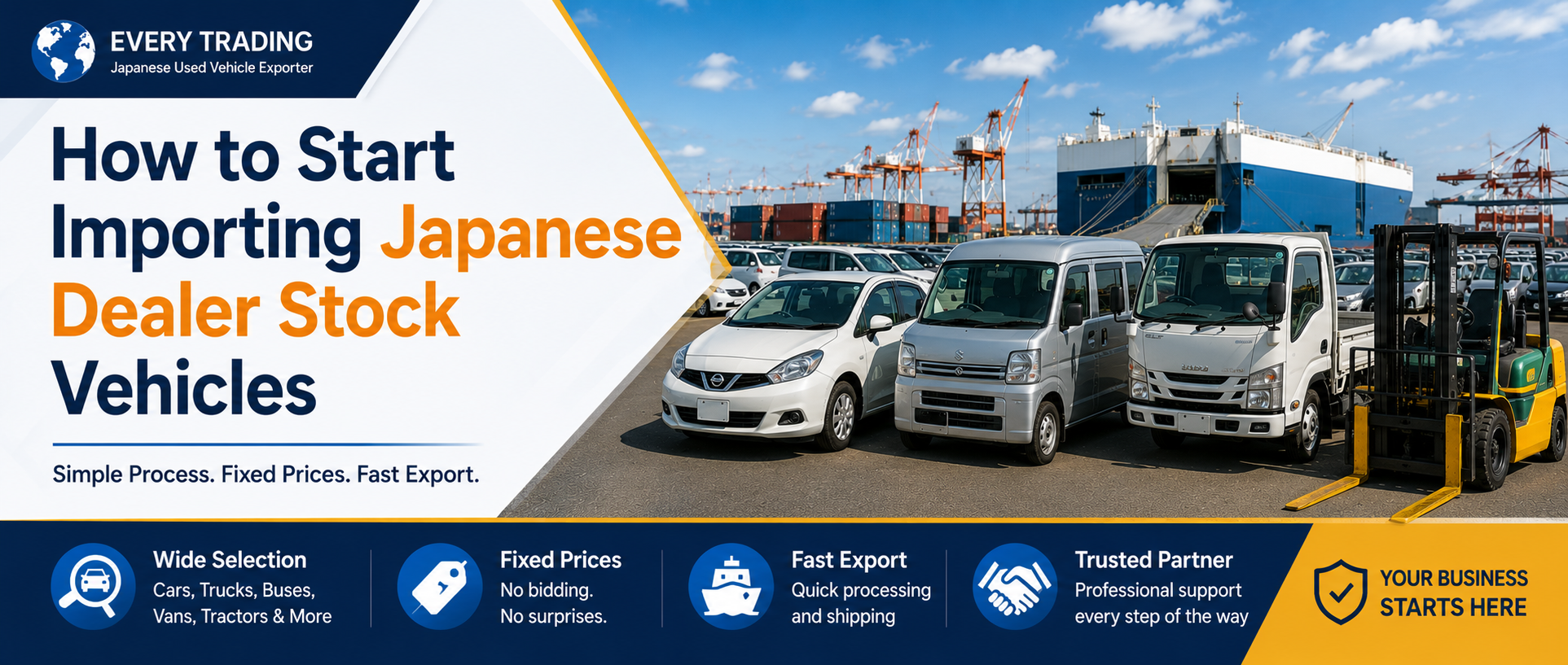
How to Start Importing Japanese Dealer Stock Vehicles
How to Start Importing Japanese Dealer Stock Vehicles is an important topic for overseas buyers who want reliable vehicles from Japan with a simple and fast buying process. Dealer stock vehicles are popular because they are ready for direct purchase, have fixed prices, and can often move to export quickly.
Many buyers in Africa, the Caribbean, Asia, and other regions import cars, trucks, buses, vans, tractors, and machinery from Japan for resale, transportation, farming, and business use. Japanese vehicles are trusted worldwide because they are durable, fuel efficient, and well maintained.
Dealer stock is especially useful for first-time buyers because the process is easier than auctions. Buyers can review Japanese dealer stock vehicles, compare prices directly, and make faster purchasing decisions without bidding competition.
Understand What Dealer Stock Means
Dealer stock vehicles are units already owned by dealers in Japan. These vehicles are available for direct purchase at fixed prices. Buyers do not need to wait for auction dates or compete against other bidders.
This makes dealer stock attractive for overseas buyers who want speed and simple business planning. The purchasing process is easier to understand, especially for first-time importers.
Dealer stock includes many vehicle types such as compact cars, SUVs, trucks, buses, vans, tractors, and commercial machinery. Buyers can search based on business needs, budget, and local market demand.
Another advantage is export speed. Because dealer stock vehicles are already prepared for sale, exporters can often arrange shipping faster compared to auction vehicles.
For buyers who are new to vehicle imports, dealer stock provides a lower-stress starting point with clearer pricing and faster communication.
Choose the Right Vehicle for Your Market
Before purchasing, buyers should understand local market demand and import regulations. Different countries require different vehicle types depending on road conditions, fuel prices, passenger demand, and business use.
Compact cars and hybrid vehicles are often popular for city transportation and fuel savings. Trucks and buses are useful for transport businesses, construction work, and public service operations. Tractors and agricultural machinery are important for farming markets.
Buyers should also check import age limits, emission rules, and registration requirements in their country before selecting vehicles.
Vehicle condition is another important point. Buyers should compare mileage, engine condition, transmission performance, suspension, and maintenance history. Reliable exporters can help explain these details clearly.
When comparing used vehicles from Japan dealer stock, buyers can review available inventory more easily because prices and details are already listed.
Understand the Export and Shipping Process
Importing vehicles from Japan requires several important steps. After selecting a vehicle, buyers usually receive a quotation, invoice, and shipping schedule from the exporter.
Export documents are also important. Buyers may need documents such as the invoice, export certificate, bill of lading, and inspection certificates depending on local import rules.
Shipping methods may vary depending on the vehicle type. Cars, buses, and trucks are often shipped by RoRo vessel. Some vehicles and machinery may require container shipping.
Professional exporters help buyers manage these processes smoothly. This reduces mistakes and helps buyers understand delivery schedules more clearly.
EVERY TRADING supports overseas buyers with export preparation, shipping coordination, and professional communication. This helps first-time importers feel more confident during the process.
Buyers who want to understand more about direct purchase from Japan can also review this Japanese dealer stock vehicles guide.
Why Dealer Stock Is Good for Long-Term Business
Dealer stock is not only useful for first-time buyers. It is also valuable for repeat buyers and growing businesses. Fixed prices help companies plan budgets and manage inventory more efficiently.
Speed is another major advantage. Businesses that import vehicles regularly need reliable supply and faster export preparation. Dealer stock supports smoother operations by reducing waiting time.
Dealer stock also helps buyers build stronger business relationships with exporters. Clear communication and stable purchasing processes improve trust between buyers and suppliers.
Many overseas dealers and import companies use dealer stock to maintain stable inventory for resale. Transport companies, rental businesses, and construction firms also benefit from faster vehicle replacement and fleet expansion.
While auctions may offer more vehicle choices, dealer stock often provides a more practical solution for businesses that value simplicity, trust, and export speed.
Reliable Japanese vehicles combined with professional export support can help businesses grow more successfully in competitive markets.
Conclusion
Starting to import Japanese dealer stock vehicles is a smart option for overseas buyers who want reliable vehicles with a simpler buying process. Dealer stock provides fixed prices, faster purchasing, and smoother export preparation.
Japanese cars, trucks, buses, tractors, and machinery remain popular worldwide because of their durability, fuel efficiency, and strong long-term value. Choosing the correct vehicle requires careful planning and understanding of local market needs.
Professional export support is also important. Buyers need clear communication, accurate information, and reliable shipping coordination to reduce risk during import.
With support from EVERY TRADING, overseas buyers can start importing Japanese dealer stock vehicles more confidently and build stronger long-term business operations through trusted export partnerships.


Browse Reliable Used Trucks & Buses from Japan
Carefully selected vehicles ready for export worldwide
Search 100,000+ Dealer Stock Vehicles from Japan
Access a wide selection of vehicles from Japanese dealers nationwide. Updated daily.