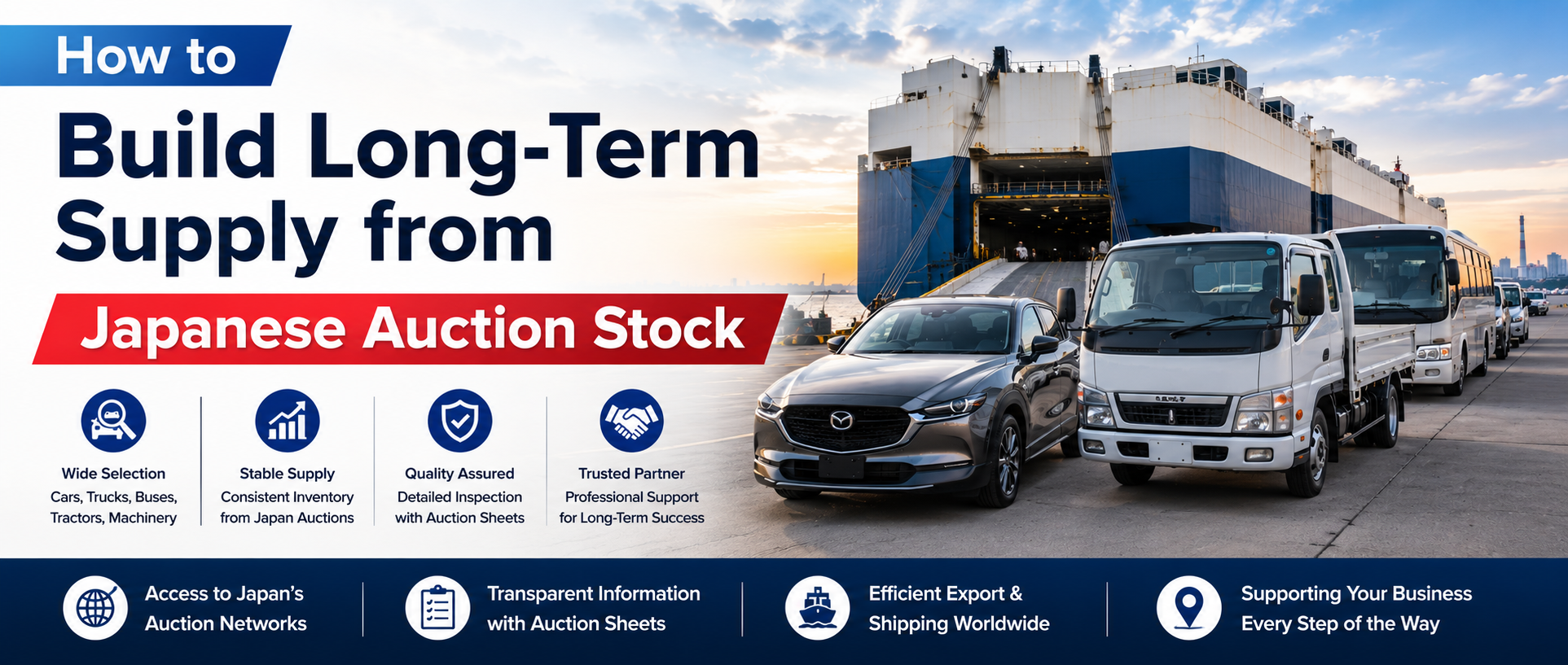
How to Build Long-Term Supply from Japanese Auction Stock
For many vehicle importers, buying one vehicle is only the beginning. The real goal is often to create a reliable long-term supply of quality vehicles that can support business growth for many years.
Japan remains one of the world’s most important sources of Japanese used vehicles. Through Auction Stock Japan, buyers can access a large and constantly changing inventory of vehicles suitable for many different markets.
Whether you sell passenger cars, commercial trucks, buses, tractors, or machinery, understanding how to build a sustainable supply chain from Japan can help your business become more competitive.
This guide explains how Japanese Auction Stock works and how overseas buyers can use it to create a stable long-term vehicle sourcing strategy.
Search available auction vehicles here:
Browse Auction Vehicles
Understanding the Japanese Vehicle Auction System
The Japanese vehicle auction system is one of the largest automotive marketplaces in the world.
Every day, dealers, leasing companies, rental companies, businesses, and vehicle owners send vehicles to auction houses across Japan.
Licensed buyers then review vehicle information and place bids.
The Japanese vehicle auction system offers several advantages:
- Large daily inventory
- Transparent condition reporting
- Competitive market pricing
- Wide vehicle selection
- Regular stock turnover
Because thousands of vehicles enter the market every week, buyers can continue sourcing vehicles over the long term rather than depending on a limited supplier network.
What Is Auction Stock?
Auction Stock refers to vehicles currently available through Japanese auctions.
Unlike fixed inventory, Japanese Auction Stock changes constantly. New vehicles enter the market every day, creating fresh opportunities for buyers.
Auction Stock Japan includes:
- Used cars from Japan
- Used trucks from Japan
- Used buses from Japan
- Used tractors from Japan
- Construction machinery
- Commercial equipment
- Special-purpose vehicles
This continuous flow of inventory makes Auction Stock especially valuable for businesses that need regular vehicle supply.
Auction Stock vs Dealer Stock
Auction Stock
Auction Stock provides access to vehicles from many different sellers throughout Japan.
- Large inventory
- Daily updates
- Wide variety of specifications
- Market-driven pricing
- Strong supply potential
Dealer Stock
Dealer Stock consists of vehicles already owned by dealers or exporters.
- Fixed pricing
- Immediate availability
- No bidding process
- Smaller inventory pool
- Suitable for urgent purchases
For businesses building long-term sourcing programs, Auction Stock often provides greater flexibility and a larger selection than Dealer Stock alone.
Why Long-Term Supply Matters
Many successful import businesses focus on consistency rather than occasional purchases.
Customers want reliable inventory. Dealers want predictable stock levels. Fleet operators need replacement vehicles on a regular basis.
A stable supply system can help:
- Reduce inventory shortages
- Improve customer satisfaction
- Support business growth
- Create stronger market reputation
- Increase repeat sales opportunities
Japanese Auction Stock can become an important part of this strategy.
Benefits of Japanese Auction Stock for Overseas Buyers
There are several reasons why importers choose Auction Stock Japan as a long-term sourcing solution.
Large Vehicle Volume
Thousands of vehicles become available every week across multiple auction networks.
Wide Product Range
Buyers can source many vehicle types through a single system.
Consistent Market Activity
New inventory enters the market throughout the year.
Transparent Information
Vehicle condition reports help buyers make informed decisions.
Scalable Purchasing
Businesses can start with a few units and gradually increase purchasing volume.
Finding the Right Vehicles for Your Market
Long-term success depends on understanding local demand.
Instead of purchasing random vehicles, successful importers focus on models that consistently sell in their market.
Passenger Cars
Used cars from Japan often attract buyers looking for fuel efficiency, reliability, and affordable maintenance.
Commercial Trucks
Used trucks from Japan support transportation, logistics, construction, and delivery businesses.
Buses
Used buses from Japan are commonly used for tourism, schools, hotels, and public transport.
Agricultural Equipment
Used tractors from Japan remain popular in many farming regions.
Machinery
Construction equipment supports infrastructure and development projects.
Understanding which categories generate stable demand helps create a more reliable sourcing plan.
Using Auction Data to Build Supply Strategy
Experienced buyers do more than purchase vehicles.
They study market trends.
Regular auction participation helps buyers understand:
- Popular models
- Seasonal demand patterns
- Average selling prices
- Vehicle availability
- Market competition
Over time, this information helps buyers improve purchasing decisions and reduce risk.
Understanding the Auction Sheet
The Auction sheet Japan document is one of the most valuable tools available to buyers.
It provides condition information before bidding.
Overall Grade
This indicates the general condition of the vehicle.
Interior Grade
This evaluates the cabin and interior condition.
Exterior Diagram
The diagram identifies dents, scratches, rust, and repairs.
Mileage Information
Mileage provides insight into vehicle usage.
Inspector Comments
Additional comments may highlight issues requiring attention.
Businesses that consistently review auction sheets carefully often make more successful purchases.
Building Relationships with Export Partners
Auction access alone is not enough for long-term success.
Reliable partnerships are equally important.
An experienced exporter can help buyers:
- Find suitable inventory
- Translate auction sheets
- Verify vehicle condition
- Manage bidding strategies
- Handle export documentation
- Arrange shipping schedules
A trusted partner becomes an important part of a long-term supply chain.
Purchase Flow for Long-Term Buyers
Step 1: Define Your Market Requirements
Identify the vehicle categories that perform well in your market.
Step 2: Search Auction Stock
Review available inventory and compare options.
Step 3: Analyze Auction Sheets
Evaluate condition, mileage, and inspection comments.
Step 4: Establish a Budget
Create realistic bidding limits and purchasing targets.
Step 5: Place Bids
Your exporter participates in the auction process.
Step 6: Purchase and Export
Successful vehicles move into export preparation.
Step 7: Shipping and Delivery
Vehicles are shipped to their destination market.
Repeating this process consistently helps create a dependable supply system.
Common Mistakes to Avoid
Building a long-term supply strategy requires discipline.
Some common mistakes include:
- Focusing only on low prices
- Ignoring auction sheet details
- Buying unfamiliar models
- Failing to understand local demand
- Overbidding during competitive auctions
- Working without experienced export support
Successful importers focus on long-term value rather than short-term opportunities.
Why Professional Export Support Is Important
Many overseas buyers cannot directly participate in Japanese auctions.
This makes professional support extremely important.
A professional exporter can provide:
- Auction access
- Condition analysis
- Auction sheet translation
- Vehicle sourcing advice
- Shipping coordination
- Export documentation management
These services help buyers reduce risk and improve purchasing efficiency.
For businesses building long-term supply systems, professional support becomes even more valuable.
Tips for First-Time Buyers
New buyers should start with a structured approach.
- Begin with vehicles that have proven local demand
- Study auction sheets carefully
- Compare multiple vehicles before bidding
- Understand total landed costs
- Build relationships with trusted exporters
- Develop a long-term purchasing plan
These steps help buyers buy with confidence and establish sustainable sourcing practices.
Creating a Sustainable Import Business
Long-term success depends on consistency.
Businesses that regularly source from Japanese Auction Stock can gradually build stronger inventory management systems, better customer relationships, and more predictable sales results.
Instead of viewing each purchase individually, successful importers often focus on creating a continuous flow of quality vehicles.
This approach supports long-term growth and helps create a more stable business model.
Final Thoughts
Japanese Auction Stock offers one of the most effective ways to build a long-term vehicle supply business.
With access to cars, trucks, buses, tractors, machinery, and commercial equipment, buyers can develop reliable sourcing strategies that support growth over time.
Understanding the Japanese vehicle auction process, reviewing Auction sheet Japan documents carefully, and working with experienced export partners all contribute to better purchasing decisions.
EVERY TRADING is a Japanese used vehicle exporter serving customers around the world. The company supplies cars, trucks, buses, tractors, machinery, and other commercial vehicles through Japanese auction networks.
As a trusted Japanese vehicles exporter, EVERY TRADING provides professional support from vehicle selection and auction bidding to export procedures and shipping arrangements.
Overseas buyers can search Japanese Auction Stock, review available inventory, and Import vehicles from Japan with confidence through an experienced and trusted partner.
Learn more about Japanese auctions:
Japanese Car Auction Guide
Start searching your vehicle from Japan today:
Search Auction Vehicles Now


Browse Reliable Used Trucks & Buses from Japan
Carefully selected vehicles ready for export worldwide
Search 100,000+ Dealer Stock Vehicles from Japan
Access a wide selection of vehicles from Japanese dealers nationwide. Updated daily.