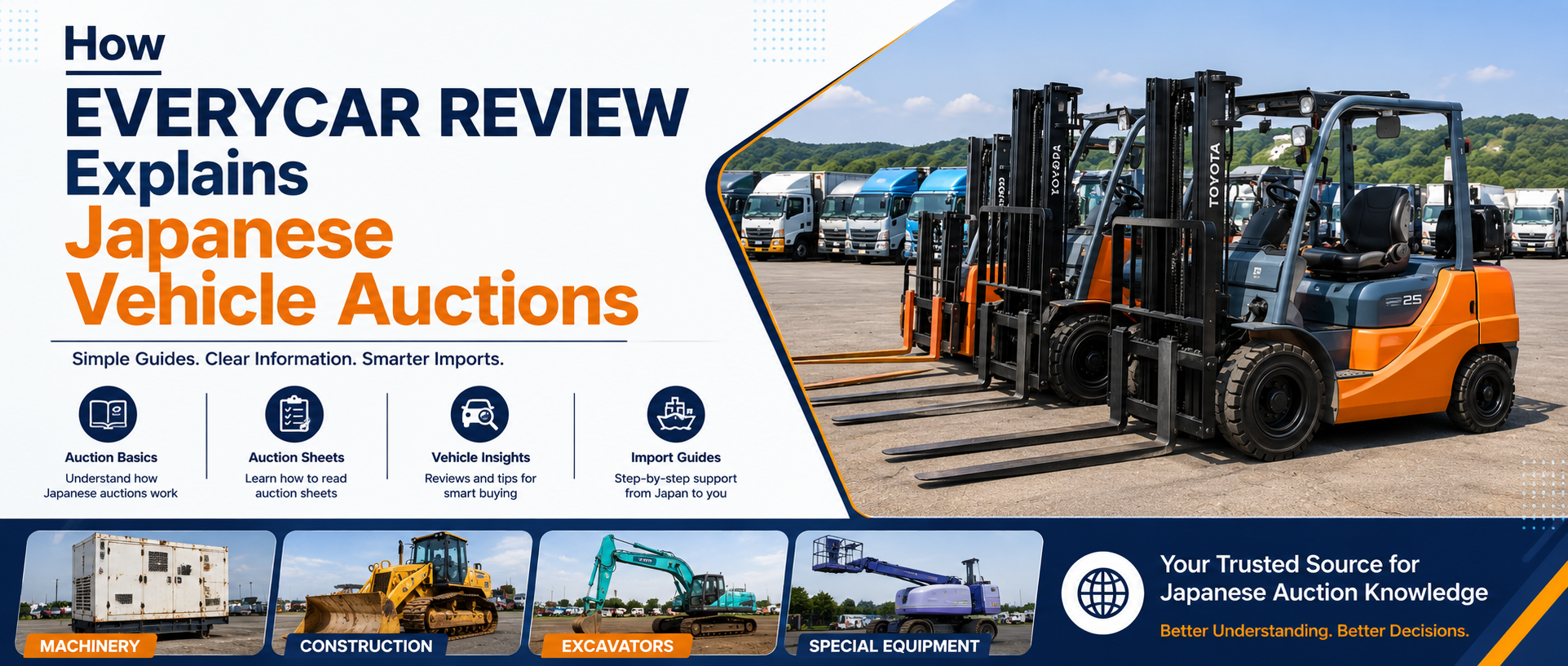
How EVERYCAR REVIEW Helps Buyers Understand Japanese Auctions
Buying vehicles from Japan can be a great opportunity for overseas importers, dealers, and business owners. However, many first-time buyers find the Japanese auction system difficult to understand.
Questions often include how auctions work, how to read an auction sheet, how bidding works, and how to choose the right vehicle.
EVERYCAR REVIEW was created to help answer these questions. The website provides easy-to-understand information about Japanese auctions, vehicle selection, importing procedures, and market trends.
This guide explains how EVERYCAR REVIEW helps overseas buyers understand Japanese Auction Stock and make informed purchasing decisions.
Search available auction vehicles here:
Browse Auction Vehicles
Why Understanding Japanese Auctions Is Important
Japan is one of the largest sources of exported used vehicles in the world.
Thousands of Japanese used vehicles are sold through auctions every week. These vehicles are exported to Africa, Asia, Oceania, the Caribbean, Europe, and many other regions.
Because auctions play such an important role in vehicle sourcing, buyers who understand the system often make better purchasing decisions.
EVERYCAR REVIEW helps buyers learn how the market works before spending money on vehicles.
How the Japanese Vehicle Auction System Works
The Japanese vehicle auction system is a marketplace where vehicles are sold through competitive bidding.
Vehicles come from many sources:
- Dealers
- Rental companies
- Leasing companies
- Businesses
- Fleet operators
- Private owners
Each vehicle receives an inspection before entering the auction.
Buyers review auction information, inspect the vehicle data, and place bids through licensed auction members.
If the highest bid meets the seller’s requirements, the vehicle is sold.
EVERYCAR REVIEW explains each part of this process using simple language that new buyers can understand.
What Is Auction Stock?
Auction Stock refers to vehicles currently available through Japanese auctions.
Japanese Auction Stock changes every day because new vehicles enter the market continuously.
This creates a large and active marketplace where buyers can compare many options.
Auction Stock Japan includes:
- Used cars from Japan
- Used trucks from Japan
- Used buses from Japan
- Used tractors from Japan
- Construction machinery
- Commercial vehicles
- Special-purpose equipment
EVERYCAR REVIEW helps buyers understand how Auction Stock differs from traditional dealer inventory and why it offers more choices.
Auction Stock vs Dealer Stock
Auction Stock
Auction Stock provides access to vehicles from many different sellers.
- Large inventory volume
- Daily updates
- Wide range of models
- Competitive bidding
- Many condition levels
Dealer Stock
Dealer Stock consists of vehicles already owned by a dealer or exporter.
- Fixed pricing
- No auction bidding
- Faster purchasing process
- Smaller inventory selection
- Suitable for urgent purchases
EVERYCAR REVIEW explains the advantages and disadvantages of both sourcing methods so buyers can choose the best option for their business.
How EVERYCAR REVIEW Helps Buyers Compare Vehicle Choices
One of the biggest challenges for buyers is choosing the right vehicle.
Many buyers do not know whether a specific model is suitable for their market.
EVERYCAR REVIEW provides educational content covering:
- Passenger cars
- SUVs
- Commercial trucks
- Buses
- Tractors
- Construction machinery
The goal is not simply to list vehicles. The goal is to help buyers understand which vehicles may be suitable for their business, customers, and local market conditions.
Benefits of Japanese Auction Stock for Overseas Buyers
EVERYCAR REVIEW regularly explains why Auction Stock Japan remains popular among international buyers.
Large Inventory
Thousands of vehicles are available every week.
Wide Vehicle Selection
Buyers can search many categories through one system.
Transparent Information
Auction sheets provide valuable condition data.
Competitive Market Pricing
Vehicle values are determined through active market participation.
Fresh Inventory
New vehicles enter the market daily.
Understanding these benefits helps buyers create better sourcing strategies.
How to Read an Auction Sheet
Many new buyers find auction sheets confusing.
EVERYCAR REVIEW explains Auction sheet Japan documents in simple terms.
Overall Grade
This grade shows the overall vehicle condition.
Interior Grade
This grade evaluates the cabin condition.
Exterior Diagram
The diagram shows scratches, dents, rust, repairs, and other visible issues.
Mileage
Mileage provides information about vehicle usage.
Inspector Comments
Inspectors may note engine issues, warning lights, accident history, or repair concerns.
EVERYCAR REVIEW teaches buyers how to use this information when comparing vehicles.
How to Search Different Vehicle Categories
Different buyers have different business goals.
EVERYCAR REVIEW explains how to search suitable vehicle categories based on market demand.
Used Cars from Japan
Popular for private transportation, taxi businesses, rental fleets, and resale operations.
Used Trucks from Japan
Suitable for logistics, construction, farming, and delivery services.
Used Buses from Japan
Commonly used by schools, tourism companies, hotels, and transport operators.
Used Tractors from Japan
Popular among farmers who need reliable and efficient equipment.
Machinery
Supports construction projects, infrastructure work, and industrial operations.
This educational approach helps buyers understand vehicle applications before purchasing.
Understanding the Vehicle Purchase Flow
EVERYCAR REVIEW explains the full auction purchase process from start to finish.
Step 1: Identify Vehicle Requirements
Choose the vehicle type, budget, and specifications.
Step 2: Search Auction Stock
Review available listings and compare options.
Step 3: Review the Auction Sheet
Analyze condition grades and inspector comments.
Step 4: Set a Bid Budget
Calculate vehicle cost, fees, shipping, and destination expenses.
Step 5: Place the Bid
The exporter submits bids through the auction network.
Step 6: Complete Purchase
Winning bids move into export preparation.
Step 7: Shipping and Delivery
The vehicle is exported to the destination country.
Understanding this process reduces confusion and improves buyer confidence.
Common Mistakes Buyers Should Avoid
EVERYCAR REVIEW also helps buyers avoid common mistakes.
- Focusing only on low prices
- Ignoring auction sheet details
- Overbidding
- Not checking import regulations
- Choosing unfamiliar vehicle models
- Failing to calculate total costs
Learning from these examples helps buyers make smarter decisions.
Why Professional Export Support Matters
Most overseas buyers cannot directly access Japanese auctions.
They rely on licensed exporters to participate in the auction process.
EVERYCAR REVIEW explains why professional support is important.
Experienced exporters can help with:
- Auction vehicle searches
- Auction sheet translation
- Vehicle condition review
- Bidding strategy
- Export documentation
- Shipping arrangements
A trusted partner can help buyers avoid misunderstandings and reduce purchasing risks.
Why EVERYCAR REVIEW Focuses on Education
EVERYCAR REVIEW is designed as an information and review platform.
The purpose is to help buyers understand Japanese auctions before making decisions.
Rather than focusing only on sales, the website aims to answer practical questions such as:
- How do Japanese auctions work?
- What is an auction sheet?
- What vehicles are available?
- How does bidding work?
- What are the import risks?
- How can buyers compare vehicles?
This educational approach supports informed decision-making.
Tips for First-Time Buyers
First-time buyers often feel overwhelmed by the size of the Japanese auction market.
EVERYCAR REVIEW recommends a simple approach.
- Start with vehicles that match local demand
- Study auction sheets carefully
- Compare multiple vehicles
- Understand total costs
- Research import regulations
- Work with experienced exporters
- Avoid rushing purchase decisions
These steps help buyers buy with confidence.
Final Thoughts
Japanese auctions offer one of the largest selections of used vehicles in the world.
However, understanding the system is important before making purchasing decisions.
EVERYCAR REVIEW helps overseas buyers learn about Japanese Auction Stock, auction sheets, vehicle categories, bidding systems, and import procedures.
By providing practical guides, comparisons, and educational content, the website helps buyers better understand the Japanese vehicle auction market.
EVERY TRADING is a Japanese used vehicle exporter serving customers around the world. The company exports cars, trucks, buses, tractors, machinery, and many other vehicle types.
As a trusted Japanese vehicles exporter, EVERY TRADING provides professional support throughout the purchasing process, including vehicle selection, auction participation, export documentation, and shipping arrangements.
Buyers can use EVERYCAR REVIEW to learn about auctions and then search available vehicles through Japanese auction networks with confidence.
Learn more about Japanese auctions:
Japanese Car Auction Guide
Start searching your vehicle from Japan today:
Search Auction Vehicles Now


Browse Reliable Used Trucks & Buses from Japan
Carefully selected vehicles ready for export worldwide
Search 100,000+ Dealer Stock Vehicles from Japan
Access a wide selection of vehicles from Japanese dealers nationwide. Updated daily.