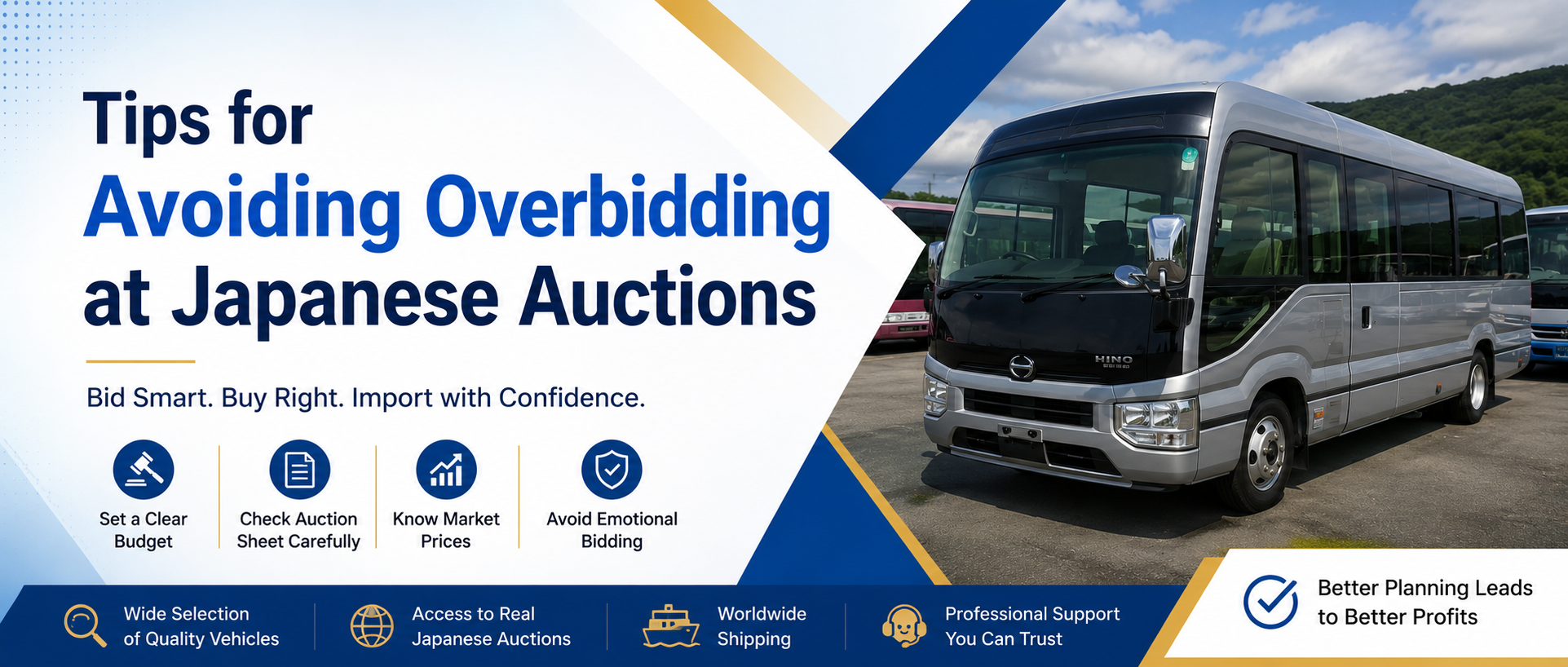
Tips for Avoiding Overbidding at Japanese Auctions
Search available auction vehicles here:
Browse Auction Vehicles
Japanese vehicle auctions provide one of the largest sources of used vehicles in the world. Every week, thousands of cars, trucks, buses, tractors, and machinery are sold through professional auction networks across Japan.
For overseas buyers, auctions offer excellent opportunities to source Japanese used vehicles at market-based prices. However, many buyers make one costly mistake: overbidding.
Paying too much at auction can reduce profit margins, increase import costs, and create unnecessary financial risk. This is especially important for dealers, importers, and businesses that buy vehicles for resale.
This guide explains how Japanese auctions work, why overbidding happens, and what buyers can do to avoid it while purchasing Auction Stock Japan with confidence.
Understanding the Japanese Vehicle Auction System
A Japanese vehicle auction is a professional marketplace where licensed members buy and sell vehicles.
Sellers include dealerships, leasing companies, rental companies, fleet operators, businesses, and individual owners.
Before the auction begins, inspectors evaluate the vehicle and prepare an auction sheet that describes its condition.
Buyers review vehicle information, set bidding limits, and participate during the auction process.
The highest bidder usually wins the vehicle.
Because auctions move quickly, buyers must make informed decisions before bidding starts.
What Is Auction Stock Japan?
Auction Stock Japan refers to vehicles currently available through Japanese auction systems.
Unlike fixed inventory, Japanese Auction Stock changes every day. Thousands of new vehicles enter auction networks each week.
Buyers can search for:
- Passenger cars
- Commercial trucks
- Buses
- Tractors
- Construction machinery
- Agricultural equipment
- Special-purpose vehicles
This wide selection gives buyers more opportunities to find vehicles that match their business requirements.
Dealer Stock vs Auction Stock
Dealer Stock
Dealer Stock consists of vehicles already owned by dealers or exporters.
Prices are usually fixed, making budgeting easier.
- Fixed pricing
- No bidding competition
- Faster purchasing process
- Simpler cost planning
Auction Stock
Auction Stock consists of vehicles listed for upcoming auctions.
The final purchase price depends on bidding activity.
- Large inventory
- Fresh vehicle listings
- Access to rare models
- Market-driven pricing
While Auction Stock offers more choices, buyers must carefully manage bidding decisions to avoid paying too much.
Why Overseas Buyers Choose Japanese Auction Stock
Many importers prefer Japanese Auction Stock because it provides access to a huge range of vehicles.
Buyers can search for:
- Used cars from Japan
- Used trucks from Japan
- Used buses from Japan
- Used tractors from Japan
- Construction machinery
- Commercial vehicles
The variety available through Japanese auctions often exceeds what buyers can find through local markets.
In addition, auction sheets provide valuable information about vehicle condition before purchase.
Why Overbidding Happens
Overbidding occurs when buyers pay more than the vehicle is worth for their business objectives.
This can happen for several reasons.
Emotional Decisions
Some buyers become focused on winning a specific vehicle and continue increasing bids beyond their original budget.
Limited Market Research
Without understanding current market prices, buyers may bid too aggressively.
Ignoring Total Cost
Many buyers focus only on the auction price and forget about shipping, taxes, fees, and local expenses.
Competition from Other Buyers
Popular models often attract many bidders, causing prices to rise quickly.
Know Your Total Budget Before Bidding
One of the best ways to avoid overbidding is to establish a complete budget before participating in any auction.
The auction price is only one part of the total landed cost.
Buyers should calculate:
- Expected bid price
- Auction fees
- Exporter service fees
- Transport within Japan
- Port charges
- Shipping costs
- Insurance if required
- Import duties and taxes
- Local registration costs
When the full cost is known, buyers can determine a safe maximum bid.
Research Market Value Before the Auction
Successful buyers study market conditions before bidding.
Review similar vehicles that have recently sold through auctions.
Pay attention to:
- Year of manufacture
- Mileage
- Auction grade
- Equipment level
- Vehicle condition
- Engine specifications
This research provides a realistic understanding of current market value.
As a result, buyers can avoid unrealistic bidding decisions.
Understand the Auction Sheet Japan System
The Auction sheet Japan report is one of the most valuable tools available to buyers.
Understanding it correctly can help prevent costly mistakes.
Overall Grade
The overall grade provides a general assessment of vehicle condition.
Vehicles with higher grades often attract stronger bidding activity.
Interior Grade
This section evaluates the condition of seats, trim, dashboard, and interior components.
Exterior Condition Diagram
Inspectors mark scratches, dents, paint repairs, and other visible issues.
Inspector Comments
This section often contains important information about repairs, mechanical concerns, accident history, or maintenance issues.
Buyers who fail to understand auction sheets may unintentionally overpay for vehicles that require additional repairs.
Set a Maximum Bid and Follow It
One of the simplest strategies for avoiding overbidding is to establish a maximum bid before the auction starts.
This amount should be based on:
- Total budget
- Expected import costs
- Market value
- Expected resale value
Once the maximum bid is determined, avoid increasing it during the auction.
Discipline is often more important than finding the perfect vehicle.
Remember That Another Vehicle Will Appear
Many buyers overbid because they believe a specific vehicle is their only opportunity.
In reality, Japanese auctions continuously receive new inventory.
Thousands of vehicles become available every week.
If one vehicle exceeds your budget, another similar vehicle will often appear soon.
Patience helps buyers avoid unnecessary spending.
Consider Vehicle Type Differences
Different vehicle categories behave differently in auctions.
Passenger Cars
Popular passenger cars often attract the highest bidding competition.
Commercial Trucks
Used trucks from Japan may experience price increases when demand is strong in export markets.
Buses
Used buses from Japan often attract transport companies and tourism operators.
Tractors
Used tractors from Japan may experience seasonal demand depending on agricultural markets.
Machinery
Construction machinery frequently requires careful consideration of shipping and transportation costs.
Understanding category-specific demand helps buyers establish realistic bidding strategies.
Work with a Trusted Japanese Vehicles Exporter
Many overseas buyers rely on experienced exporters to help manage auction purchases.
A trusted Japanese vehicles exporter provides valuable guidance throughout the process.
Professional support may include:
- Auction sheet translation
- Vehicle condition assessment
- Market price analysis
- Bidding recommendations
- Export documentation
- Shipping coordination
This expertise helps buyers make informed decisions and avoid unnecessary risks.
Common Mistakes That Lead to Overbidding
Several mistakes frequently cause buyers to exceed their intended budgets.
- Bidding emotionally
- Ignoring total import costs
- Not researching market prices
- Misunderstanding auction grades
- Failing to review auction sheet comments
- Increasing bids repeatedly during the auction
- Rushing purchasing decisions
Avoiding these mistakes can significantly improve purchasing results.
Basic Purchase Flow for Auction Buyers
Step 1: Search Auction Vehicles
Review available Auction Stock Japan and identify suitable vehicles.
Step 2: Analyze Auction Sheets
Check grades, comments, mileage, and condition details.
Step 3: Estimate Total Cost
Calculate all costs associated with the purchase and import process.
Step 4: Set a Maximum Bid
Determine the highest acceptable purchase price.
Step 5: Submit Your Bid
Participate through your exporter or auction representative.
Step 6: Complete Export Procedures
Arrange payment, documentation, and shipping.
Tips for Beginners to Buy with Confidence
New buyers can avoid many problems by following a structured process.
- Research before bidding
- Study auction sheets carefully
- Set realistic budgets
- Calculate total costs
- Avoid emotional decisions
- Use professional support
- Work with a trusted partner
These simple steps help buyers buy with confidence while reducing financial risk.
Final Thoughts
Japanese vehicle auctions offer excellent opportunities for buyers seeking Japanese used vehicles. Whether you need used cars from Japan, used trucks from Japan, used buses from Japan, used tractors from Japan, or machinery, the auction market provides extensive options.
However, successful buying requires discipline and planning.
By understanding Auction Stock Japan, studying Auction sheet Japan reports, researching market values, and setting firm bidding limits, buyers can avoid overbidding and make smarter purchasing decisions.
EVERY TRADING is a Japanese used vehicle exporter serving customers around the world. The company supplies cars, trucks, buses, tractors, and machinery while providing access to Japanese Auction Stock searches.
As a trusted Japanese vehicles exporter, EVERY TRADING offers professional support before purchase, during auction participation, and throughout the export and shipping process. This helps overseas buyers import vehicles from Japan safely and buy with confidence.
Learn more about Japanese auctions:
Japanese Car Auction Guide
Start searching your vehicle from Japan today:
Search Auction Vehicles Now


Browse Reliable Used Trucks & Buses from Japan
Carefully selected vehicles ready for export worldwide
Search 100,000+ Dealer Stock Vehicles from Japan
Access a wide selection of vehicles from Japanese dealers nationwide. Updated daily.