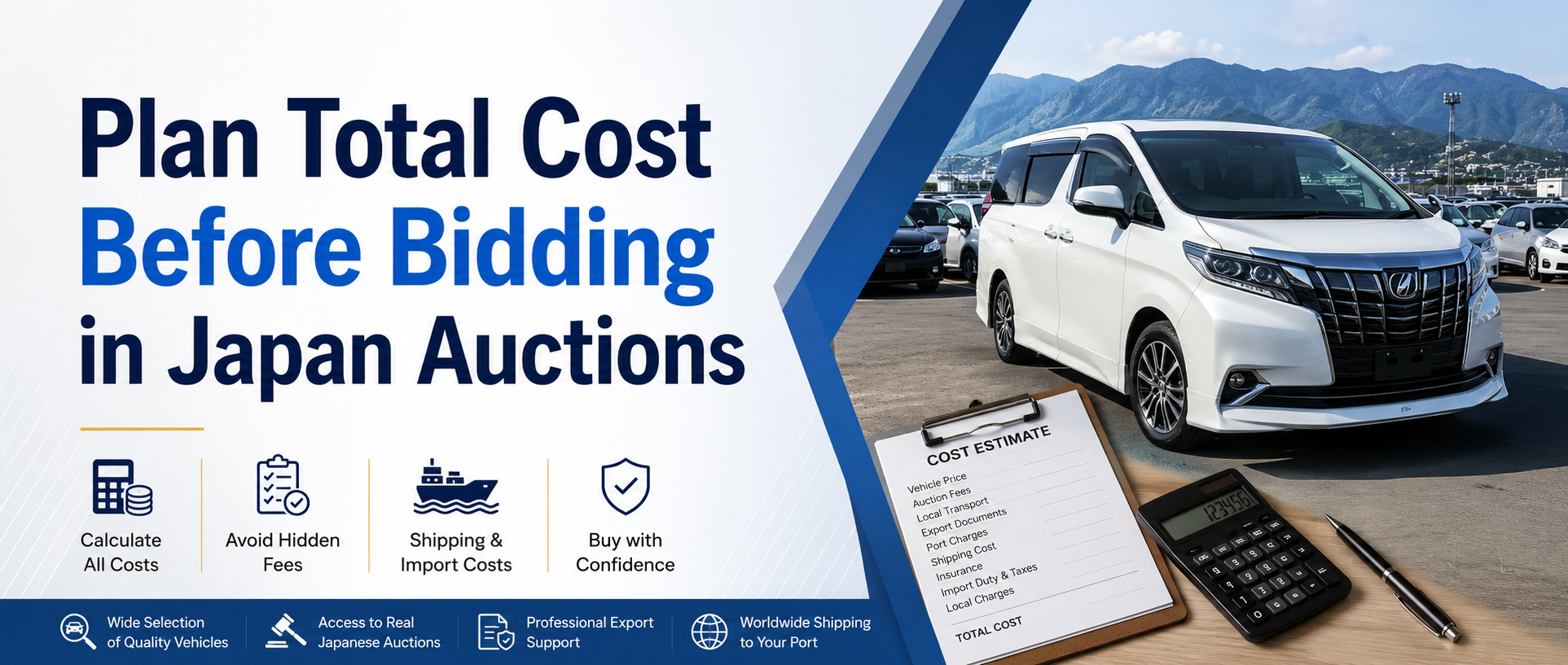
How to Plan Total Cost before Bidding in Japan
Search available auction vehicles here:
Browse Auction Vehicles
Buying vehicles from Japanese auctions can be a smart way to find quality stock for business. Many overseas buyers search for Japanese used vehicles because Japan offers a wide selection, clear auction information, and many vehicle types.
However, the winning bid price is not the final cost.
Before bidding, buyers should understand the full cost from Japan to their country. This includes auction fees, inland transport, export documents, shipping, import duty, port charges, and local registration.
This guide explains how to plan the total cost before bidding in Japan. It also explains Auction Stock Japan, Dealer Stock, auction sheets, risks, and why professional support helps overseas buyers buy with confidence.
How Japanese Used Vehicle Auctions Work
A Japanese vehicle auction is a marketplace where licensed members buy and sell vehicles. These auctions are used by dealers, exporters, leasing companies, rental companies, and other businesses.
Vehicles are inspected before the auction. Then the auction house creates an auction sheet. This sheet gives important information about the vehicle condition, mileage, grade, and repair history.
Buyers check the auction sheet, photos, and vehicle details before placing a bid.
If the bid wins, the vehicle is purchased. After that, the exporter arranges payment, transport, export documents, and shipping.
Japanese auctions are fast and organized. But buyers must make decisions carefully because auction vehicles are usually sold quickly and cannot be checked in person by overseas buyers.
What Is Auction Stock Japan?
Auction Stock Japan means vehicles listed in Japanese auction systems. These vehicles are not fixed dealer inventory. They are available for bidding during specific auction schedules.
Japanese Auction Stock changes every day. New vehicles appear often, and sold vehicles disappear quickly.
Buyers can search by:
- Maker and model
- Year
- Mileage
- Engine size
- Transmission
- Fuel type
- Auction grade
- Vehicle type
- Budget range
This makes Auction Stock Japan useful for buyers who want many choices and fresh market information.
Auction Stock vs Dealer Stock
What Is Dealer Stock?
Dealer Stock means vehicles already owned by a dealer or exporter. These vehicles usually have fixed prices and are ready for sale.
Dealer Stock is useful when buyers want a simple and fast purchase.
- Fixed price
- No bidding
- Faster decision
- Easier cost calculation
What Is Auction Stock?
Auction Stock means vehicles available through auction bidding. Buyers may find more options, but the final price depends on the auction result.
- More vehicle choices
- Fresh stock every day
- Chance to buy direct from Japan
- Final price decided by bidding
Both options are useful. Dealer Stock is simple. Auction Stock offers wider selection. The best choice depends on budget, timing, and vehicle needs.
Why Overseas Buyers Use Japanese Auction Stock
Many overseas buyers use Japanese Auction Stock because it gives access to a large and active vehicle market.
Buyers can search for used cars from Japan, used trucks from Japan, used buses from Japan, used tractors from Japan, and machinery.
This is helpful for:
- Used vehicle dealers
- Import companies
- Transport businesses
- Taxi and bus operators
- Farm owners
- Construction companies
- Resale businesses
Japanese auctions also provide useful vehicle information before purchase. Buyers can compare similar vehicles and understand market prices.
However, buyers should not focus only on the bid price. Total cost planning is very important.
Why Total Cost Planning Matters before Bidding
The auction bid price is only one part of the total cost.
For example, a vehicle may look affordable at auction. But after fees, shipping, and import costs, the final amount may become much higher.
Good cost planning helps buyers avoid surprises.
Before bidding, check these main cost areas:
- Vehicle bid price
- Auction fee
- Exporter service fee
- Inland transport in Japan
- Export document cost
- Port charges
- Shipping cost
- Marine insurance if needed
- Import duty and taxes
- Clearing charges in destination country
- Local transport and registration
When buyers understand these costs before bidding, they can set a safe maximum bid.
Main Costs to Check before Bidding
1. Auction Bid Price
This is the amount paid for the vehicle at auction. The final price depends on competition from other buyers.
Popular models may sell higher than expected. Therefore, buyers should set a maximum bid before the auction starts.
2. Auction Fees
Auction houses charge fees for successful purchases. These fees vary depending on the auction house and vehicle type.
Large vehicles, trucks, buses, tractors, and machinery may have different fee structures.
3. Inland Transport in Japan
After purchase, the vehicle must move from the auction yard to a port or exporter yard.
Transport cost depends on distance, vehicle size, and whether the vehicle can drive.
4. Export Documents
Japanese export requires correct documents. These may include export certificate, invoice, packing details, and shipping documents.
Wrong or missing documents can delay shipment and import clearance.
5. Shipping Cost
Shipping cost depends on destination port, vehicle size, shipping method, and vessel schedule.
Cars are often shipped by RORO. Some machinery, parts, or non-running units may need container shipping or special handling.
6. Import Duty and Taxes
Each country has different import rules. Duty and tax may depend on vehicle type, age, engine size, CIF value, and local law.
Buyers should check local rules before bidding.
How to Set a Safe Maximum Bid
A safe maximum bid is the highest auction price you can pay while keeping the final landed cost within your budget.
Use this simple planning method:
- Start with your total budget in your country
- Subtract import duty and local charges
- Subtract shipping cost
- Subtract Japan-side fees
- The remaining amount becomes your possible bid limit
This method helps buyers avoid overbidding.
It is also useful for resale businesses. If you know the expected selling price in your market, you can calculate your safe buying cost before bidding.
How to Read an Auction Sheet Japan
Auction sheet Japan information is important for cost planning. A cheap vehicle may become expensive if it needs repairs.
The auction sheet helps buyers understand condition before bidding.
Overall Grade
The overall grade shows the general condition. Higher grades often mean better condition, but buyers should still check the details.
Interior Grade
This grade shows the condition of seats, dashboard, trim, and cabin.
Exterior Diagram
The diagram shows scratches, dents, paint marks, rust, and repair points.
Inspector Comments
This section may include important notes about engine, transmission, accident history, corrosion, warning lamps, or other issues.
Mileage
Mileage affects value, resale demand, and maintenance planning.
A trusted Japanese vehicles exporter can help translate and explain the auction sheet before bidding.
Vehicle Types Available through Japanese Auctions
Japanese vehicle auctions offer much more than passenger cars.
Overseas buyers can search many types of vehicles, including:
- Used cars from Japan for personal and resale use
- Used trucks from Japan for logistics and construction
- Used buses from Japan for passenger transport
- Used tractors from Japan for farming
- Machinery for construction and industrial work
- Vans, mini trucks, and special vehicles
This wide selection makes Japanese auctions useful for many business sectors.
However, large vehicles and machinery often require more careful cost planning because shipping and handling costs can be higher.
Basic Purchase Flow from Japan Auction
Step 1: Search Auction Stock
First, search available Japanese Auction Stock based on your vehicle needs and budget.
Step 2: Check Vehicle Details
Review photos, auction sheet, mileage, grade, model code, engine, and condition notes.
Step 3: Estimate Total Cost
Before bidding, calculate Japan-side costs, shipping, and destination-side costs.
Step 4: Decide Maximum Bid
Set a realistic maximum bid based on your total cost plan.
Step 5: Place Bid
Your exporter places the bid through the Japanese vehicle auction system.
Step 6: Complete Purchase
If your bid wins, payment and paperwork begin.
Step 7: Export and Shipping
The exporter arranges transport, documents, port handling, and shipment.
Common Mistakes to Avoid
Many beginners make mistakes because they focus only on the auction price.
Avoid these common problems:
- Bidding without checking total cost
- Ignoring auction sheet comments
- Forgetting destination import duty
- Underestimating shipping cost
- Choosing vehicles that do not meet local rules
- Not checking repair risk
- Setting no maximum bid limit
Careful planning helps buyers import vehicles from Japan more safely.
Why Professional Export Support Is Important
Japanese auctions are useful, but they are not always simple for overseas buyers.
Professional support helps buyers understand information, avoid mistakes, and manage the full process.
A trusted partner can support:
- Auction Stock Japan search
- Auction sheet translation
- Vehicle condition review
- Total cost estimation
- Bidding strategy
- Export documents
- Shipping arrangements
- Pre-shipment communication
This support is especially important for beginners, business buyers, and buyers handling trucks, buses, tractors, or machinery.
Tips for Beginners to Buy with Confidence
Beginners can buy with confidence by following a clear process.
- Start with a realistic total budget
- Check import rules in your country
- Compare several vehicles before bidding
- Ask for auction sheet explanation
- Do not rush only because the price looks low
- Plan shipping and port costs early
- Use a trusted Japanese vehicles exporter
The goal is not only to win the auction. The real goal is to receive the right vehicle at the right total cost.
Final Thoughts
Japanese vehicle auctions give overseas buyers access to a large and trusted market. Buyers can find Japanese used vehicles for many needs, including cars, trucks, buses, tractors, and machinery.
Auction Stock Japan offers strong choice, fresh listings, and useful vehicle information. However, the bid price is not the full cost.
Before bidding, buyers should calculate auction fees, Japan-side costs, shipping, import duty, local charges, and possible repair costs.
With careful planning and professional support, overseas buyers can buy direct from Japan and make better decisions.
EVERY TRADING is a Japanese used vehicle exporter that supplies vehicles to customers around the world. The company handles cars, trucks, buses, tractors, and machinery, and also provides access to Japanese auction vehicle searches.
As a trusted Japanese vehicles exporter, EVERY TRADING provides professional support for vehicle checks, auction buying, export procedures, and shipping. This helps overseas buyers purchase Japanese vehicles safely and buy with confidence.
Learn more about Japanese auctions:
Japanese Car Auction Guide
Start searching your vehicle from Japan today:
Search Auction Vehicles Now


Browse Reliable Used Trucks & Buses from Japan
Carefully selected vehicles ready for export worldwide
Search 100,000+ Dealer Stock Vehicles from Japan
Access a wide selection of vehicles from Japanese dealers nationwide. Updated daily.