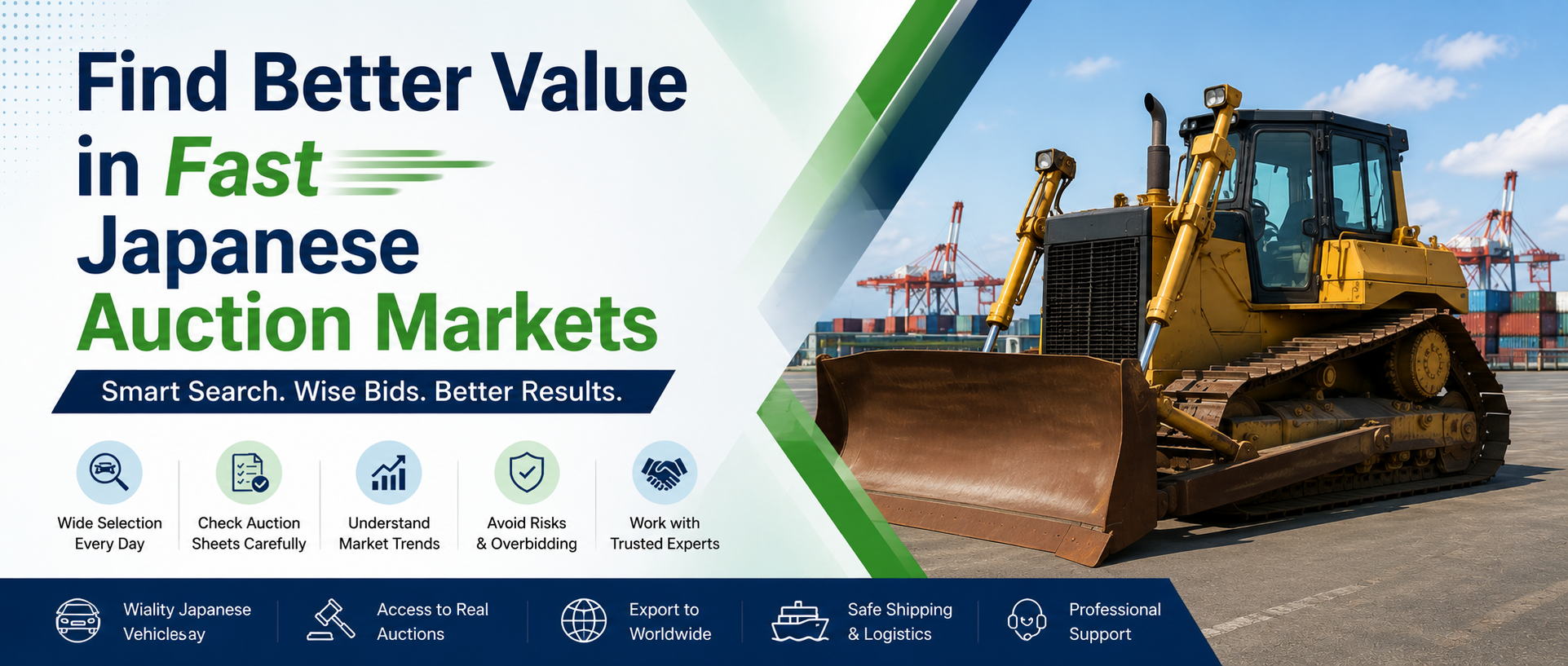
How to Find Better Value in Fast-Moving Auction Markets
Search available auction vehicles here:
Browse Auction Vehicles
Japanese vehicle auctions move very fast. Every day, many cars, trucks, buses, tractors, and machinery enter the auction system. Some vehicles sell quickly, while others attract strong competition from buyers around the world.
For overseas buyers, this speed creates both opportunity and risk.
A fast-moving market can help buyers find good vehicles before they reach local markets. However, it can also lead to rushed decisions, overbidding, and missed details.
This guide explains how to find better value in Japanese Auction Stock. It also explains how the Japanese vehicle auction system works, how to read auction sheets, and why professional support helps buyers import vehicles from Japan with confidence.
How Japanese Used Vehicle Auctions Work
A Japanese vehicle auction is a professional marketplace where licensed members buy and sell vehicles.
Sellers may include dealers, leasing companies, rental companies, fleet owners, and businesses. Before the auction, inspectors check each vehicle and create an auction sheet.
Buyers review the vehicle details, photos, auction grade, and condition notes before placing bids.
If the bid wins, the vehicle is purchased. After that, the exporter arranges payment, inland transport, export documents, and shipping.
The system is organized and transparent, but it moves quickly. Therefore, buyers need a clear plan before bidding.
What Is Auction Stock Japan?
Auction Stock Japan means vehicles currently listed in Japanese auction systems.
Unlike fixed stock, Japanese Auction Stock changes every day. New vehicles appear often, and sold vehicles disappear quickly.
Buyers can search by:
- Maker and model
- Year
- Mileage
- Engine size
- Transmission
- Fuel type
- Auction grade
- Body type
- Budget range
This fresh inventory helps overseas buyers find many types of Japanese used vehicles for resale, business use, farming, construction, and transport.
Auction Stock vs Dealer Stock
Dealer Stock
Dealer Stock means vehicles already owned by a dealer or exporter. These vehicles usually have fixed prices and are ready for purchase.
Dealer Stock is useful when buyers want simple pricing and faster decisions.
- Fixed price
- No auction bidding
- Easier cost planning
- Faster purchase process
Auction Stock
Auction Stock means vehicles available through auction bidding. The final price depends on market demand and buyer competition.
Auction Stock is useful when buyers want a larger selection and fresh market options.
- More vehicle choices
- Daily new listings
- Chance to buy direct from Japan
- Market-based pricing
Both options have value. Dealer Stock is simple. Auction Stock offers more choice. Smart buyers compare both before making a decision.
Why Overseas Buyers Use Japanese Auction Stock
Many overseas buyers choose Japanese Auction Stock because Japan offers a large and reliable vehicle market.
Buyers can search for used cars from Japan, used trucks from Japan, used buses from Japan, used tractors from Japan, and machinery.
This is useful for:
- Used vehicle dealers
- Import companies
- Taxi businesses
- Bus operators
- Logistics companies
- Farm owners
- Construction companies
The main benefit is choice. Buyers can compare many vehicles before making a bid.
However, better value does not always mean the lowest price. A low-priced vehicle with poor condition may cost more after repair, shipping, and import.
What Better Value Really Means
Better value means the vehicle gives the best balance of price, condition, demand, and total cost.
A good value vehicle may not be the cheapest vehicle in the auction. Instead, it may have better condition, lower repair risk, stronger resale demand, or lower total landing cost.
Before bidding, buyers should consider:
- Vehicle condition
- Auction grade
- Mileage
- Repair history
- Local market demand
- Shipping cost
- Import rules
- Expected resale price
This approach helps buyers make safer and more profitable decisions.
How to Read an Auction Sheet Japan
Auction sheet Japan information is very important when searching for value.
The auction sheet shows the condition of the vehicle before bidding. It helps buyers avoid units that look cheap but may have hidden risks.
Overall Grade
The overall grade shows the general vehicle condition. Higher grades usually mean better condition, but buyers should still check all details.
Interior Grade
This grade shows the condition of seats, dashboard, trim, and cabin parts.
Exterior Diagram
The exterior diagram shows scratches, dents, paint marks, rust, and repair points.
Inspector Comments
Inspector comments may include notes about engine issues, warning lamps, accident history, corrosion, or special conditions.
Mileage
Mileage affects value, maintenance planning, and resale demand.
A trusted Japanese vehicles exporter can help translate and explain the auction sheet before bidding.
How to Find Better Value in a Fast Market
Compare Similar Vehicles
Do not judge one vehicle alone. Compare several similar units before bidding.
Check year, mileage, grade, equipment, and condition. This helps you understand the real market range.
Set a Clear Budget
Fast auctions can create pressure. Set your maximum bid before the auction starts.
Your bid limit should include the full cost from Japan to your country.
Check Total Landing Cost
The winning bid is not the final cost.
Buyers should calculate:
- Auction price
- Auction fees
- Exporter service fees
- Japan inland transport
- Port charges
- Shipping cost
- Import duty and taxes
- Local clearing charges
- Registration costs
Do Not Rush for One Unit
Many similar vehicles appear in Japanese auctions every week.
If one unit becomes too expensive, another option may appear soon.
Focus on Condition, Not Only Price
A cheaper vehicle may need repairs. A slightly higher-priced vehicle in better condition may offer stronger value.
Vehicle Types Available in Japanese Auctions
Japanese auctions are not only for passenger cars.
Overseas buyers can search for many vehicle types, including:
- Used cars from Japan for personal use and resale
- Used trucks from Japan for logistics and construction
- Used buses from Japan for passenger transport
- Used tractors from Japan for farming
- Machinery for construction and industrial work
- Vans, mini trucks, and special vehicles
This wide selection makes Japanese auctions useful for many types of businesses.
However, larger vehicles may have higher shipping and handling costs. Buyers should always check total cost before bidding.
Basic Purchase Flow from Japanese Auctions
Step 1: Search Auction Stock
Start by searching available Auction Stock Japan based on your vehicle needs, budget, and destination market.
Step 2: Check Vehicle Details
Review photos, auction sheet, mileage, model code, engine size, and condition notes.
Step 3: Compare Market Value
Compare similar Japanese used vehicles before choosing your target bid.
Step 4: Estimate Total Cost
Calculate Japan-side costs, shipping costs, and destination-side import costs.
Step 5: Set a Maximum Bid
Decide your highest bid before the auction starts.
Step 6: Place the Bid
Your exporter places the bid through the Japanese vehicle auction system.
Step 7: Arrange Export and Shipping
After a successful purchase, the exporter arranges documents, port handling, and shipment.
Important Points and Risks
Japanese auctions provide useful information, but buyers should still be careful.
Common risks include:
- Misreading auction sheet comments
- Focusing only on low price
- Ignoring total import cost
- Bidding without checking local regulations
- Underestimating repair needs
- Choosing vehicles with poor resale demand
- Acting too quickly in a fast-moving market
Careful preparation helps buyers avoid these mistakes.
Why Professional Export Support Matters
Fast-moving auctions can be difficult for overseas buyers. Information changes quickly, and bidding decisions often need to be made in a short time.
Professional support helps buyers understand the details before making decisions.
A trusted partner can assist with:
- Japanese Auction Stock search
- Auction sheet translation
- Condition review
- Market price comparison
- Total cost planning
- Bidding support
- Export documents
- Shipping arrangements
This support is especially useful for beginners and business buyers who want to import vehicles from Japan safely.
Tips for Beginners to Buy with Confidence
Beginners can find better value by following a simple process.
- Start with a clear budget
- Compare several vehicles before bidding
- Check the auction sheet carefully
- Ask questions before the auction
- Do not chase a vehicle beyond your budget
- Check shipping and import costs early
- Work with a trusted Japanese vehicles exporter
These steps help buyers buy with confidence and reduce costly mistakes.
Final Thoughts
Japanese auctions offer a strong opportunity for overseas buyers who want quality vehicles and wide selection.
Auction Stock Japan gives access to used cars from Japan, used trucks from Japan, used buses from Japan, used tractors from Japan, and machinery. However, fast markets require careful planning.
Better value comes from comparing options, reading auction sheets, checking total cost, and using disciplined bidding.
EVERY TRADING is a Japanese used vehicle exporter serving customers around the world. The company handles cars, trucks, buses, tractors, and machinery, and provides access to Japanese auction vehicle searches.
As a trusted Japanese vehicles exporter, EVERY TRADING provides professional support for vehicle checks, auction buying, export procedures, and shipping. This helps overseas buyers choose the right vehicle and buy with confidence.
Learn more about Japanese auctions:
Japanese Car Auction Guide
Start searching your vehicle from Japan today:
Search Auction Vehicles Now


Browse Reliable Used Trucks & Buses from Japan
Carefully selected vehicles ready for export worldwide
Search 100,000+ Dealer Stock Vehicles from Japan
Access a wide selection of vehicles from Japanese dealers nationwide. Updated daily.