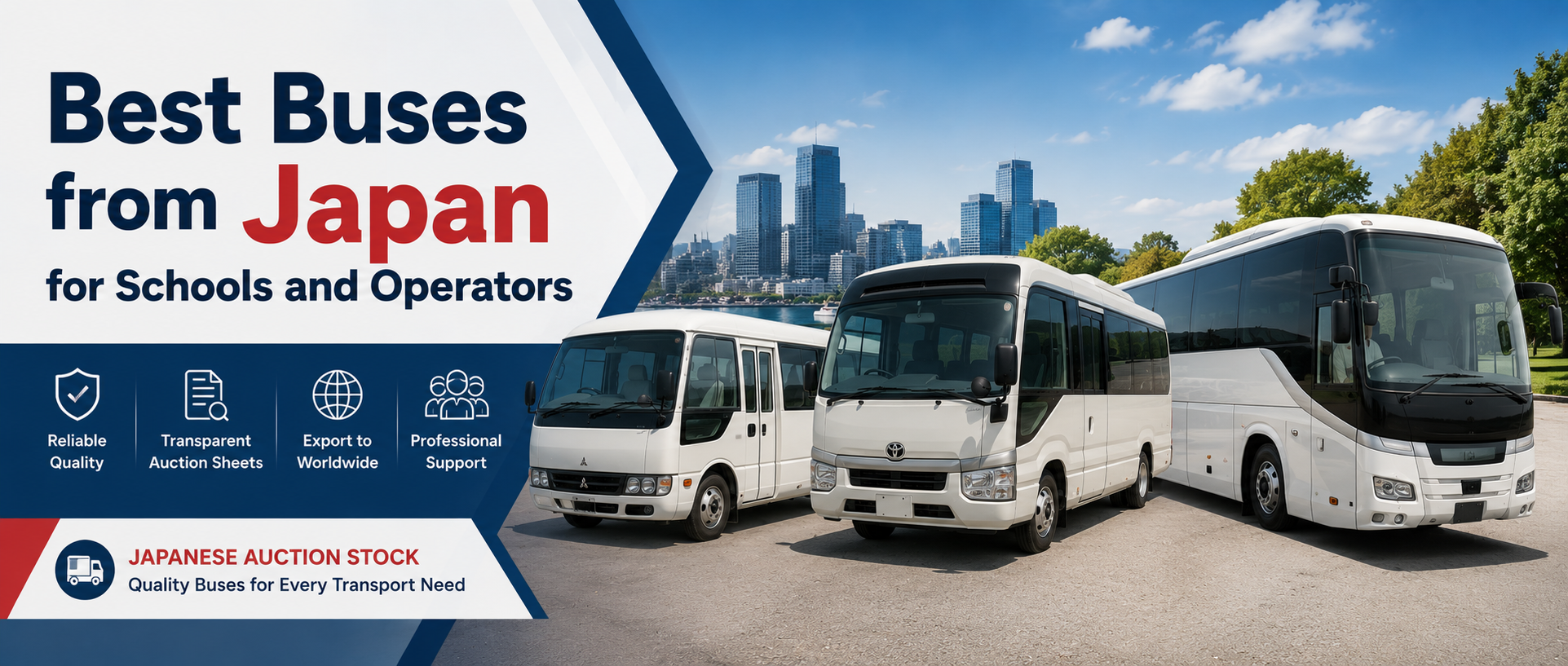
Best Buses from Japan for Schools and Transport Operators
Schools and transport operators need buses that are safe, reliable, and easy to maintain. A bus carries many passengers every day, so quality and condition matter more than price alone.
Many overseas buyers choose used buses from Japan because Japanese buses are known for strong build quality, clean interiors, and dependable performance. Japan also offers many bus types through auction stock, dealer stock, and export channels.
For schools, shuttle services, tour companies, worker transport operators, and public transport businesses, the Japanese vehicle auction market can be a useful source.
Search available auction vehicles here:
Browse Auction Vehicles
Why Schools and Transport Operators Choose Used Buses from Japan
Passenger transport requires trust. Schools must protect students. Transport operators must keep schedules. Tourism companies must give passengers a comfortable ride.
Used buses from Japan can support these needs because many units are well maintained and regularly inspected during their service life.
Buyers often search for:
- School buses
- Micro buses
- Coaster-type buses
- Medium buses
- Large passenger buses
- Shuttle buses
- Tour buses
- Staff transport buses
The best bus depends on passenger capacity, road conditions, fuel cost, driver license rules, and local maintenance support.
How the Japanese Vehicle Auction System Works
A Japanese vehicle auction is a professional marketplace where registered dealers buy and sell used vehicles. These auctions operate across Japan and list many vehicles every week.
The Japanese vehicle auction system includes used cars from Japan, used trucks from Japan, used buses from Japan, used tractors from Japan, machinery, and other Japanese used vehicles.
Before a vehicle enters the auction, it usually receives an inspection. Inspectors check the vehicle condition and record the details on an auction sheet.
This auction sheet helps buyers understand mileage, grade, condition, exterior marks, interior condition, and important comments before bidding.
Most overseas buyers cannot bid directly at Japanese auctions. Therefore, they work with a Japanese vehicles exporter that can search, check, bid, buy, and export vehicles on their behalf.
What Is Auction Stock Japan?
Auction Stock means vehicles currently available through Japanese auction networks. This stock changes daily because new vehicles enter the auction system all the time.
Auction Stock Japan is helpful for schools and transport companies because it gives access to many bus types and specifications.
For example, one school may need a small bus for daily student transport. Another operator may need a medium bus for city routes. A tourism company may need a comfortable bus for hotel and airport transfers.
Japanese Auction Stock allows buyers to compare many vehicles before making a decision. This helps buyers choose buses based on condition, seating capacity, mileage, age, and total cost.
Auction Stock vs Dealer Stock
Auction Stock
Auction Stock is available through auction bidding. The selection is large, and new vehicles appear regularly.
Prices change depending on demand, vehicle condition, mileage, and bidding competition.
Dealer Stock
Dealer Stock means vehicles already purchased and owned by a dealer or exporter. These vehicles are usually ready for direct sale.
Dealer Stock can be easier for beginners because the price is often fixed. It can also be faster when a buyer needs a vehicle immediately.
Main Differences
- Auction Stock offers wider selection.
- Dealer Stock is easier to buy quickly.
- Auction Stock requires bidding.
- Dealer Stock often has fixed pricing.
- Auction Stock requires careful auction sheet review.
- Dealer Stock may already include seller inspection.
Both options can be useful. Schools and transport operators should compare both before choosing the best purchase route.
Benefits of Japanese Auction Stock for Overseas Buyers
Wide Selection of Buses
Japanese auctions include many passenger vehicle types. Buyers can search by size, seating capacity, engine type, mileage, year, and condition.
Transparent Vehicle Information
The Auction sheet Japan system gives useful details about condition, mileage, inspection notes, repair history, and visible damage.
Market-Based Pricing
Auction prices reflect real market activity. Buyers can compare similar buses and understand current value before placing bids.
Access to More Than Buses
Many organizations need more than buses. Japanese Auction Stock also includes cars, trucks, tractors, machinery, and equipment.
Flexible Fleet Planning
A school can start with one bus and later add more units. A transport company can expand its fleet by adding cars, vans, buses, and trucks as demand grows.
Best Bus Types for Schools and Transport Operators
Micro Buses
Micro buses are useful for schools, small hotels, local shuttle services, and community transport.
They are easier to drive than large buses and may work well on narrow roads.
Coaster-Type Buses
Toyota Coaster and similar models are popular in many countries. They offer good passenger capacity, practical design, and strong reliability.
They are often used for schools, tourism, staff transport, and airport transfers.
Medium Buses
Medium buses are suitable for larger schools, route operators, and group transport businesses.
They can carry more passengers while remaining easier to manage than full-size buses.
Large Buses
Large buses are useful for public transport, long-distance routes, tourism, and large staff transport operations.
Buyers should check engine condition, suspension, tires, brake systems, and interior wear carefully.
Shuttle Buses
Shuttle buses are ideal for airports, hotels, factories, schools, and campuses.
Comfort, air conditioning, door operation, and interior layout are important points to review.
Purchase Flow for Overseas Buyers
Step 1: Define Your Passenger Transport Needs
First, decide how the bus will be used. School transport, city transport, hotel shuttle service, and tourism routes require different features.
Step 2: Search Auction Stock Japan
Search Japanese Auction Stock by bus type, year, mileage, seating capacity, engine size, transmission, and auction grade.
Step 3: Review the Auction Sheet
Check the Auction sheet Japan report carefully. This helps you understand the condition before bidding.
Step 4: Confirm Total Cost
Calculate vehicle price, auction fees, inland transport, export costs, shipping, import duty, local taxes, port fees, and registration costs.
Step 5: Place a Bid
Your Japanese vehicles exporter places the bid based on your budget and instructions.
Step 6: Complete Payment and Documents
After a successful bid, the exporter prepares payment guidance, export documents, and shipping arrangements.
Step 7: Arrange Shipping
The bus is shipped by RORO or container when possible. The best method depends on destination, size, and shipping availability.
Step 8: Clear and Register the Bus
After arrival, the buyer completes customs clearance, inspection, local registration, and road-use requirements.
How to Read an Auction Sheet Japan
The auction sheet is one of the most important documents when buying from a Japanese vehicle auction.
Overall Grade
The overall grade shows the general condition of the bus. A higher grade usually means better condition, but buyers should still read all notes.
- Grade 5: Excellent condition
- Grade 4.5: Very good condition
- Grade 4: Good used condition
- Grade 3.5: Average used condition
- Grade 3: Needs careful checking
- Grade R or RA: Repaired accident history
Interior Grade
Interior grade is very important for schools and passenger transport. Seats, floor condition, smell, ceiling condition, and air conditioning vents should be checked.
Mileage
Mileage affects value, maintenance planning, and resale potential. For buses, buyers should compare mileage with age, engine condition, and service history.
Exterior Notes
The sheet may show scratches, dents, rust, paint marks, panel repairs, and body damage.
Inspector Comments
Inspector comments can include engine noise, warning lights, rust, oil leaks, seat damage, air conditioning problems, or missing parts.
Auction sheets often use Japanese terms and abbreviations. Professional support helps buyers understand the details correctly.
Important Points Before Buying Used Buses from Japan
Check Local Import Rules
Every country has different rules for vehicle age, emissions, roadworthiness, inspection, passenger transport registration, and right-hand drive use.
Confirm Seating Capacity
Schools and operators must confirm legal passenger capacity. Seat belts, emergency exits, and safety rules may differ by country.
Check Interior Condition
Passengers notice the interior first. Clean seats, good floor condition, working doors, and strong air conditioning improve comfort and trust.
Review Safety and Mechanical Parts
Brake systems, tires, suspension, lights, doors, and steering must be checked carefully.
Consider Parts Availability
Choose bus brands and models with parts support in your market. This helps reduce downtime and maintenance delays.
Do Not Focus Only on Low Price
The cheapest bus may not be the best business choice. Safety, condition, passenger comfort, and maintenance cost are more important for long-term use.
Why Use a Professional Japanese Vehicles Exporter?
Buying direct from Japan can be useful, but auction buying requires experience. A professional Japanese vehicles exporter can support buyers through each step.
- Search suitable buses from auction stock
- Check auction sheets and inspection notes
- Explain vehicle condition clearly
- Confirm photos and specifications
- Place bids correctly
- Guide payment steps
- Prepare export documents
- Arrange shipping
- Support communication before shipment
This professional support helps overseas buyers avoid mistakes and buy with confidence.
For schools and transport operators, a poor vehicle choice can affect safety, schedules, and customer trust. A trusted partner helps reduce that risk.
Beginner Tips to Buy with Confidence
- Start with popular bus models that have parts support in your country.
- Check the auction grade and inspector comments carefully.
- Review seating capacity, interior condition, and air conditioning.
- Confirm local import and passenger transport rules before bidding.
- Calculate total cost, not only auction price.
- Compare Auction Stock and Dealer Stock.
- Use professional support when reading auction sheets.
- Choose buses that match your real passenger needs.
These steps help first-time buyers import vehicles from Japan with more confidence.
Using Japanese Auctions for More Than Buses
Schools and transport operators may need more than buses. They may need cars for staff use, vans for small groups, trucks for supplies, tractors for land care, and machinery for facility work.
Japanese auctions can support these needs because they include many categories of Japanese used vehicles.
Buyers can search used cars from Japan, used trucks from Japan, used buses from Japan, used tractors from Japan, machinery, and equipment through the same auction market.
This makes Japanese Auction Stock useful for schools, transport operators, tourism companies, rental businesses, farms, and construction firms.
Final Thoughts
Used buses from Japan can be a practical choice for schools and transport operators that need safe, reliable, and comfortable passenger vehicles.
The Japanese vehicle auction system gives overseas buyers access to many bus types, from micro buses to large passenger buses.
However, buyers should understand the difference between Auction Stock and Dealer Stock. They should also learn how to read an Auction sheet Japan report and check the full cost before purchase.
With the right trusted partner, overseas buyers can buy direct from Japan and import vehicles from Japan with greater confidence.
EVERY TRADING is a Japanese used vehicle export company that supplies Japanese used vehicles to customers around the world.
The company handles cars, trucks, buses, tractors, machinery, and many other vehicle types. Overseas buyers can search Japanese auction vehicles and receive professional support before purchase, during export procedures, and until shipment.
As a trusted Japanese vehicles exporter, EVERY TRADING helps buyers check vehicles carefully, understand auction information, and buy with confidence from Japan.
Learn more about Japanese auctions:
Japanese Car Auction Guide
Start searching your vehicle from Japan today:
Search Auction Vehicles Now


Browse Reliable Used Trucks & Buses from Japan
Carefully selected vehicles ready for export worldwide
Search 100,000+ Dealer Stock Vehicles from Japan
Access a wide selection of vehicles from Japanese dealers nationwide. Updated daily.