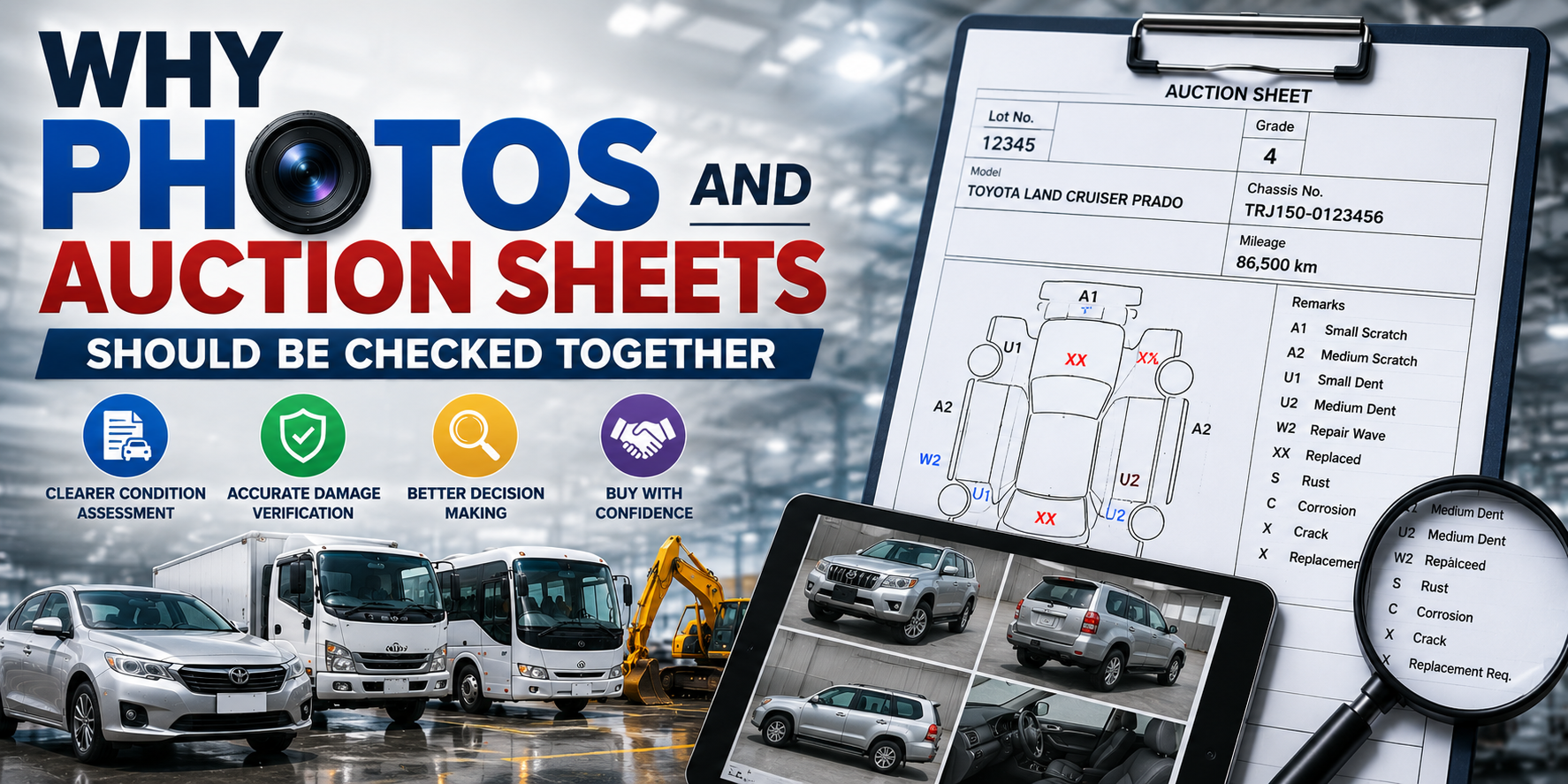
Why Photos and Auction Sheets Should Be Checked Together
Buying Japanese used vehicles through a Japanese vehicle auction can be a smart way to find quality stock for export. However, overseas buyers often cannot inspect the vehicle in person before bidding.
For this reason, two sources of information are very important: the auction sheet and the vehicle photos.
The auction sheet explains the condition in written form and symbols. The photos show the actual appearance of the vehicle. When buyers check both together, they can understand the vehicle more clearly and make safer decisions.
This guide explains why auction photos and Auction sheet Japan information should always be reviewed together before buying Auction Stock Japan vehicles.
Search available auction vehicles here:
Browse Auction Vehicles
Understanding the Japanese Used Vehicle Auction System
Japan has one of the largest used vehicle auction systems in the world. Every day, many vehicles are listed by auction houses across Japan.
These auctions include cars, trucks, buses, tractors, machinery, and many special-purpose vehicles.
Before a vehicle is listed, auction inspectors check the vehicle condition and prepare an auction sheet. This document gives buyers useful information before bidding.
The auction sheet usually includes:
- Vehicle details
- Mileage
- Exterior condition
- Interior condition
- Auction grade
- Repair marks
- Inspector comments
- Accident history information
This system helps overseas buyers review Japanese used vehicles with more confidence.
What Is Auction Stock?
Auction Stock means vehicles currently available through Japanese auction houses.
These vehicles are not fixed dealer inventory. They are listed for bidding and may be sold quickly when the auction starts.
Japanese Auction Stock gives buyers access to many vehicle types, such as:
- Used cars from Japan
- Used trucks from Japan
- Used buses from Japan
- Used tractors from Japan
- Construction machinery
- Forklifts
- Vans and pickups
- Special-purpose commercial vehicles
Because listings change every day, buyers can find many options that may not be available in local markets.
Auction Stock vs Dealer Stock
Auction Stock
Auction Stock is sold through bidding. Buyers review the auction sheet, photos, grade, and comments before setting a bid price.
- Large daily selection
- Market-based pricing
- Detailed auction inspection
- Many vehicle categories
- Good chance to find rare models
Dealer Stock
Dealer Stock is already owned by a dealer or exporter. It is usually available at a fixed price.
- Immediate purchase possible
- Clear selling price
- Often easier for beginners
- Smaller selection than auctions
- May be ready for export faster
Both options are useful. However, Auction Stock Japan is especially helpful when buyers want wide selection, daily opportunities, and the ability to buy direct from Japan.
Why Auction Sheets Are Important
The auction sheet is the main inspection report for a Japanese vehicle auction.
It helps buyers understand condition before purchase. This is especially important for overseas buyers who cannot visit the auction yard.
The auction sheet can show:
- Scratches
- Dents
- Rust
- Corrosion
- Repair marks
- Panel replacement
- Interior wear
- Accident history
However, an auction sheet is not enough by itself. Buyers should also check vehicle photos carefully.
Why Vehicle Photos Are Important
Photos show the real visual condition of the vehicle.
They help buyers confirm what is written on the auction sheet.
Photos can help reveal:
- Paint condition
- Body shape
- Panel gaps
- Tire condition
- Interior cleanliness
- Rust visibility
- Cargo bed condition
- Machinery wear
Sometimes a mark on the auction sheet may look minor, but the photo may show that the damage is more visible. In other cases, a mark may look serious on paper, but the actual photo may show only light cosmetic wear.
Why Both Should Be Checked Together
Auction sheets and photos support each other.
The auction sheet gives structured inspection data. Photos give visual confirmation.
When buyers check both together, they can make a more balanced decision.
The Auction Sheet Gives Detail
It explains damage type, location, grade, and inspector comments.
Photos Give Reality
They show how the damage actually looks on the vehicle.
Together They Reduce Risk
Using both helps buyers avoid misunderstanding the vehicle condition.
Basic Way to Read an Auction Sheet
A Japanese auction sheet usually has several important sections.
- Vehicle name and model code
- Year and mileage
- Transmission and fuel type
- Auction grade
- Interior grade
- Equipment details
- Damage diagram
- Inspector comments
The damage diagram is especially important. Inspectors place marks on the vehicle outline to show scratches, dents, rust, repair waves, and replaced panels.
Common Damage Symbols on Auction Sheets
A – Scratch
- A1 = Small scratch
- A2 = Medium scratch
- A3 = Large scratch
U – Dent
- U1 = Small dent
- U2 = Medium dent
- U3 = Large dent
W – Repair Wave
- W1 = Small repair wave
- W2 = Medium repair wave
- W3 = Large repair wave
S and C – Rust and Corrosion
S means rust. C means corrosion. These marks need careful attention, especially for older trucks, buses, tractors, and machinery.
XX – Replaced Panel
XX usually means that a panel has been replaced. Buyers should check photos and comments to understand why it was replaced.
How Photos Help Confirm Auction Sheet Marks
Photos allow buyers to check whether the auction sheet marks match the visible condition.
For example, if the auction sheet shows A3 on the door, the buyer should look closely at the door photo.
If the sheet shows rust on the frame, truck buyers should check underbody or side photos if available.
This comparison helps buyers understand the real condition before bidding.
Important Photo Check Points for Cars
When checking used cars from Japan, buyers should focus on body condition and interior quality.
- Front bumper
- Rear bumper
- Doors
- Bonnet
- Roof
- Wheel arches
- Interior seats
- Dashboard
Photos can show paint fade, scratches, dents, and general cleanliness.
Important Photo Check Points for Trucks
Used trucks from Japan need a different inspection approach.
- Cab condition
- Cargo bed
- Frame
- Rear body
- Tailgate
- Tires
- Rust around chassis
- Equipment condition
For trucks, cosmetic damage may be less important than frame condition and working parts.
Important Photo Check Points for Buses
Used buses from Japan require careful review of both exterior and passenger areas.
- Side panels
- Passenger doors
- Roof condition
- Windows
- Seats
- Floor area
- Air conditioning vents
- Luggage space
Photos can help buyers understand whether the bus is suitable for school transport, shuttle service, tourism, or public transport use.
Important Photo Check Points for Tractors and Machinery
Used tractors from Japan and construction machinery often show wear from work use.
- Tires or tracks
- Hydraulic parts
- Bucket or attachment
- Frame
- Cabin
- Rust areas
- Engine cover
- Working hours if shown
For machinery, buyers should not judge condition only by appearance. Still, photos are very useful when compared with inspection information.
Benefits of Using Japanese Auction Stock
Japanese Auction Stock offers many advantages for overseas buyers.
- Wide vehicle selection
- Daily new listings
- Transparent auction sheets
- Competitive market prices
- Access to cars, trucks, buses, tractors, and machinery
- Opportunity to import vehicles from Japan efficiently
It gives buyers the chance to compare many vehicles before making a decision.
Purchase Flow for Auction Stock Japan
The general buying process is simple when handled with professional support.
- Search Japanese Auction Stock
- Select vehicles of interest
- Check auction sheets and photos
- Ask questions before bidding
- Set a budget
- Place a bid through an exporter
- Win the auction
- Complete payment
- Arrange export documents
- Ship the vehicle to the destination country
This flow helps buyers buy direct from Japan with a clear process.
Common Mistakes to Avoid
- Checking only photos
- Checking only the auction sheet
- Ignoring inspector comments
- Focusing only on price
- Misunderstanding repair marks
- Not checking rust carefully
- Forgetting to compare similar vehicles
A low price does not always mean good value. Condition, repair history, shipping cost, and market demand should all be considered.
Why Professional Support Is Important
Auction sheets can be difficult for beginners to understand. Some marks are technical, and some comments may require experience to interpret.
A Japanese vehicles exporter can help buyers understand both the auction sheet and the photos.
Professional support can help with:
- Auction sheet review
- Photo condition checks
- Damage interpretation
- Market price advice
- Bidding support
- Export documents
- Shipping arrangements
Working with a trusted partner reduces risk and helps buyers choose vehicles more safely.
Tips for Beginners to Buy with Confidence
First-time buyers should take time to compare information carefully.
- Review the auction grade
- Check all photos
- Read inspector comments
- Compare damage marks with photos
- Ask for professional advice
- Avoid rushing the bid
- Choose vehicles suitable for your market
These steps help beginners buy with confidence when searching Japanese used vehicles.
Final Thoughts
Photos and auction sheets should always be checked together. The auction sheet gives inspection details, while photos show the real visual condition.
By comparing both, overseas buyers can better understand scratches, dents, repairs, rust, interior condition, and overall value.
Whether you are buying used cars from Japan, used trucks from Japan, used buses from Japan, used tractors from Japan, or machinery, this comparison is essential.
EVERY TRADING is a Japanese used vehicle exporter serving customers around the world. The company handles cars, trucks, buses, tractors, machinery, and many other vehicle types.
Buyers can search Japanese Auction Stock and receive professional support before purchase, during export procedures, and through shipping arrangements.
As a trusted Japanese vehicles exporter and trusted partner, EVERY TRADING helps overseas buyers import vehicles from Japan and buy with confidence.
Learn more about Japanese auctions:
Japanese Car Auction Guide
Start searching your vehicle from Japan today:
Search Auction Vehicles Now


Browse Reliable Used Trucks & Buses from Japan
Carefully selected vehicles ready for export worldwide
Search 100,000+ Dealer Stock Vehicles from Japan
Access a wide selection of vehicles from Japanese dealers nationwide. Updated daily.