How to Understand Repair Marks on Auction Sheets
Japanese vehicle auctions offer one of the most transparent ways to purchase used vehicles from Japan. Every day, thousands of cars, trucks, buses, tractors, and machinery are sold through auction houses across the country.
One of the most valuable tools available to overseas buyers is the auction sheet. This inspection document contains detailed information about a vehicle’s condition, including scratches, dents, repairs, replacements, and accident history.
For many international buyers, understanding repair marks can seem difficult at first. However, learning these symbols is essential when evaluating Japanese Auction Stock and making informed purchasing decisions.
This guide explains how repair marks work, what they mean, and how buyers can use them to safely purchase Japanese used vehicles.
Search available auction vehicles here:
Browse Auction Vehicles
Understanding the Japanese Used Vehicle Auction System
Japan operates one of the largest used vehicle auction networks in the world. Professional auction houses inspect vehicles before listing them for sale.
Each vehicle receives an auction sheet prepared by trained inspectors. The report helps buyers understand the vehicle’s condition before bidding.
Typical information found on an auction sheet includes:
- Vehicle specifications
- Mileage
- Interior condition
- Exterior condition
- Repair history
- Accident history
- Overall auction grade
- Inspector comments
This system provides a high level of transparency for buyers who want to import vehicles from Japan.
What Is Auction Stock?
Auction Stock refers to vehicles currently available through Japanese auction houses.
Unlike dealer inventory, Auction Stock changes every day as new vehicles enter the auction system.
Auction Stock Japan includes:
- Used cars from Japan
- Used trucks from Japan
- Used buses from Japan
- Used tractors from Japan
- Construction machinery
- Commercial vehicles
- Agricultural equipment
This large inventory allows buyers to compare many vehicles and select the most suitable option.
Auction Stock vs Dealer Stock
Auction Stock
- Vehicles sold through auctions
- Large daily inventory
- Competitive market pricing
- Detailed inspection reports
- Wide model selection
Dealer Stock
- Vehicles already owned by dealers
- Fixed pricing
- Immediate purchase possible
- Smaller inventory
- Often ready for export
Both options are useful. However, Japanese Auction Stock provides greater vehicle variety and more opportunities to find specific models.
Why Repair Marks Are Important
Repair marks help buyers understand the true condition of a vehicle.
Without these symbols, it would be difficult to identify previous damage or repairs.
Repair marks help buyers:
- Estimate repair costs
- Compare vehicle conditions
- Understand previous repairs
- Evaluate resale value
- Buy with confidence
Even a vehicle with some repair marks may still be an excellent purchase if the repairs were minor or professionally completed.
Basic Structure of an Auction Sheet
Most Auction sheet Japan reports follow a similar format.
The main sections include:
- Vehicle information
- Auction grade
- Mileage
- Equipment details
- Inspector comments
- Vehicle condition diagram
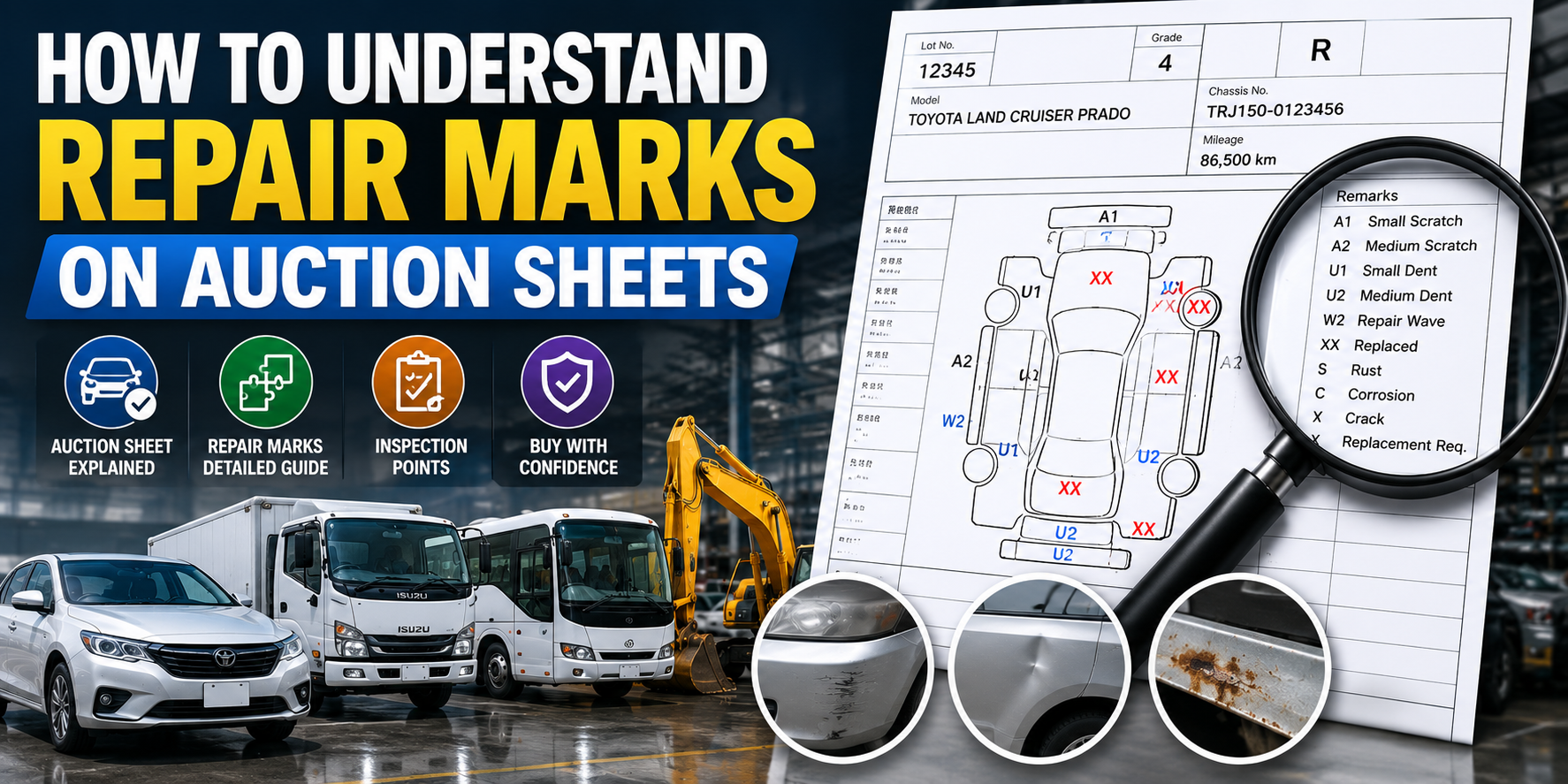
The repair marks usually appear on a vehicle body diagram where inspectors mark damaged or repaired areas.
Understanding Common Repair Marks
Japanese auction inspectors use standardized symbols to describe vehicle condition.
A – Scratch Marks
- A1 = Small scratch
- A2 = Medium scratch
- A3 = Large scratch
Scratches are among the most common marks found on used vehicles.
U – Dent Marks
- U1 = Small dent
- U2 = Medium dent
- U3 = Large dent
Dents may result from everyday use, parking incidents, or minor impacts.
W – Repair Wave Marks
- W1 = Slight repair wave
- W2 = Moderate repair wave
- W3 = Significant repair wave
These marks indicate previous body repairs that may still be visible.
S – Rust
S marks indicate rust.
Rust inspection is especially important for older vehicles and machinery.
C – Corrosion
Corrosion is generally more serious than surface rust and may require repairs.
Y – Crack
Y indicates cracks in panels, bumpers, lights, or other components.
X – Replacement Recommended
This symbol suggests that a damaged part should be replaced.
XX – Replaced Panel
XX indicates a panel has already been replaced.
Common examples include:
- Doors
- Fenders
- Bonnets
- Tailgates
- Bumpers
How to Read Repair Marks on the Vehicle Diagram
The vehicle diagram is one of the most important sections of the auction sheet.
Inspectors place repair marks directly on the affected area of the vehicle.
This allows buyers to quickly identify:
- Location of damage
- Type of damage
- Severity of repairs
- Replaced components
- Potential problem areas
Always compare the diagram with the vehicle photographs for a more complete evaluation.
Understanding Repair Marks and Auction Grades
Repair marks should be considered together with the auction grade.
Typical grades include:
- Grade 6 = Nearly new
- Grade 5 = Excellent condition
- Grade 4.5 = Very good condition
- Grade 4 = Good condition
- Grade 3.5 = Average condition
- Grade 3 = Noticeable wear
- R or RA = Repaired vehicle
A vehicle with a Grade 4 rating and several A1 marks may still be in very good condition.
The overall condition should always be evaluated as a whole.
How Repair Marks Affect Different Vehicle Types
Used Cars from Japan
Focus on body panels, paint condition, and accident repairs.
Used Trucks from Japan
Pay close attention to frame condition, cargo bed repairs, and cab damage.
Used Buses from Japan
Inspect side panels, roof sections, and passenger entry areas.
Used Tractors from Japan
Review axle condition, chassis components, and mounting points.
Machinery
Check structural components, booms, buckets, and hydraulic system areas.
Each vehicle category requires a slightly different inspection approach.
Benefits of Buying Japanese Auction Stock
Many overseas buyers prefer Auction Stock Japan because it offers:
- Large inventory selection
- Daily vehicle listings
- Transparent inspections
- Reliable grading systems
- Access to rare models
- Opportunity to buy direct from Japan
These advantages help importers make informed purchasing decisions.
The Vehicle Purchasing Process
The process of buying through a Japanese vehicle auction is generally straightforward.
- Search available vehicles
- Review auction sheets
- Study repair marks and comments
- Examine photos
- Set a bidding budget
- Participate in the auction
- Complete payment
- Arrange export procedures
- Ship the vehicle overseas
Professional assistance can help simplify every stage.
Common Mistakes Buyers Should Avoid
- Ignoring repair marks
- Looking only at the auction grade
- Not reviewing inspector comments
- Misunderstanding XX replacement marks
- Failing to compare photos and diagrams
- Avoiding all repaired vehicles automatically
Many repaired vehicles offer excellent value when evaluated correctly.
Why Work with a Professional Export Company?
Auction sheets contain technical information that can be difficult for inexperienced buyers to interpret.
A trusted partner can help explain:
- Repair marks and symbols
- Auction grades
- Vehicle condition reports
- Market values
- Export procedures
- Shipping requirements
Professional support helps buyers reduce risk and make better purchasing decisions.
Tips for First-Time Buyers
- Learn common auction symbols
- Review multiple auction sheets
- Study vehicle photos carefully
- Read inspector comments
- Ask questions before bidding
- Work with a trusted partner
- Use professional support throughout the process
These simple steps can help buyers buy with confidence and avoid common mistakes.
Final Thoughts
Understanding repair marks is an essential skill for anyone purchasing Japanese used vehicles through a Japanese vehicle auction.
By learning the meaning of scratches, dents, repair waves, rust marks, replacement symbols, and other inspection codes, buyers can better evaluate vehicle condition and make informed decisions.
Whether you are looking for used cars from Japan, used trucks from Japan, used buses from Japan, used tractors from Japan, or construction machinery, understanding Auction sheet Japan repair marks will help you import vehicles from Japan successfully.
EVERY TRADING is a Japanese vehicles exporter serving customers around the world. The company exports cars, trucks, buses, tractors, machinery, and many other vehicle types.
Buyers can search Japanese Auction Stock inventory and receive professional support throughout the purchasing process. As a trusted Japanese vehicles exporter and trusted partner, EVERY TRADING assists customers with vehicle selection, auction sheet analysis, export documentation, and shipping arrangements.
Learn more about Japanese auctions:
Japanese Car Auction Guide
Start searching your vehicle from Japan today:
Search Auction Vehicles Now


Browse Reliable Used Trucks & Buses from Japan
Carefully selected vehicles ready for export worldwide
Search 100,000+ Dealer Stock Vehicles from Japan
Access a wide selection of vehicles from Japanese dealers nationwide. Updated daily.