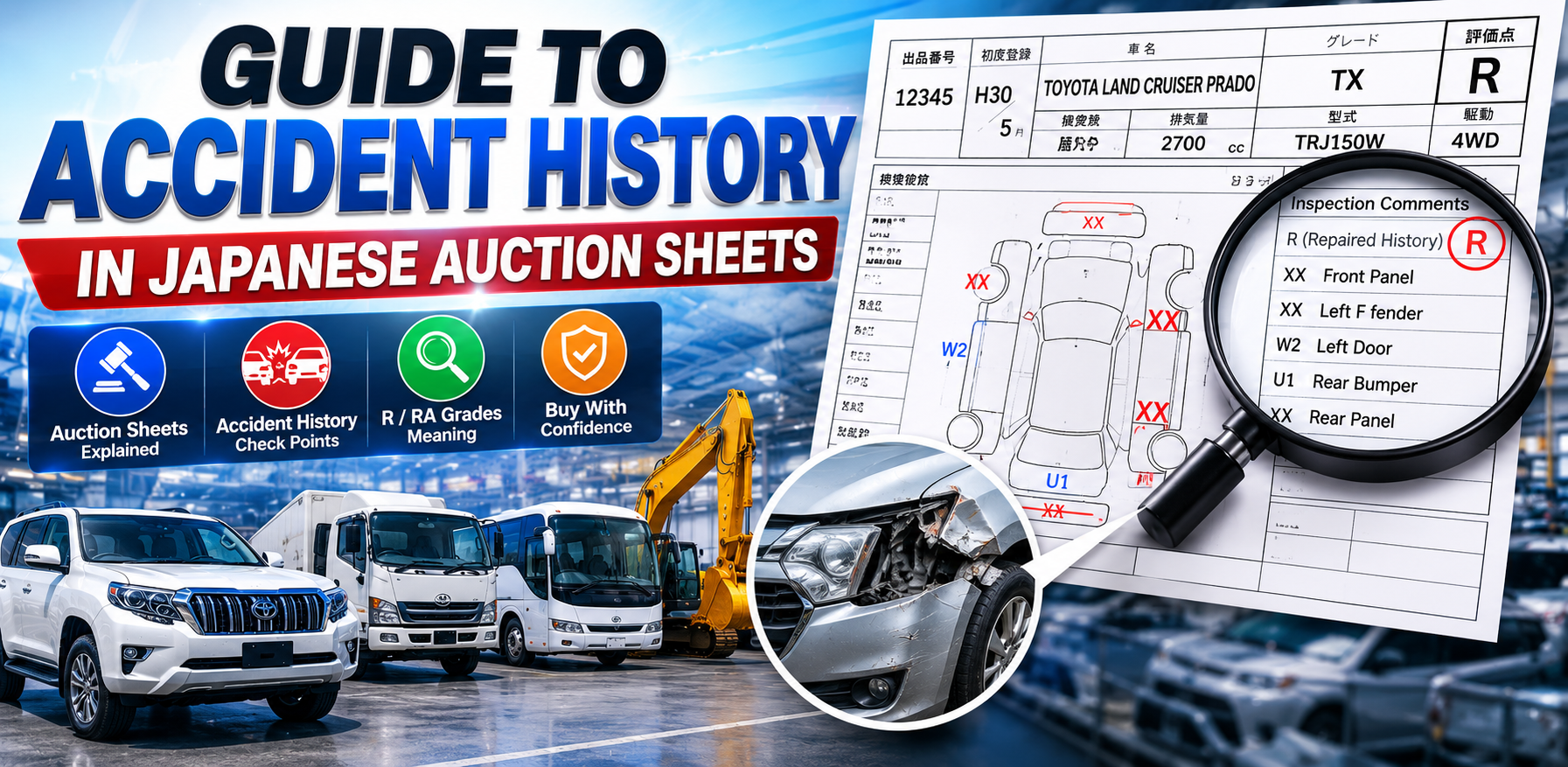
Guide to Accident History in Japanese Auction Sheets
For many overseas buyers, understanding accident history is one of the most important parts of buying vehicles through a Japanese vehicle auction. Whether you are purchasing passenger cars, commercial trucks, buses, tractors, or construction machinery, knowing how to read accident information can help you make better buying decisions.
Japan’s auction system is known for transparency. Auction inspectors carefully evaluate vehicles and record important information about repairs, structural damage, and accident history. This allows buyers around the world to review vehicle conditions before placing a bid.
This guide explains how accident history appears on auction sheets, how to identify repaired vehicles, and how buyers can safely purchase Japanese Auction Stock with confidence.
Search available auction vehicles here:
Browse Auction Vehicles
Understanding the Japanese Used Vehicle Auction System
Japan has one of the largest used vehicle auction networks in the world. Thousands of vehicles are traded every day through professional auction houses.
Before a vehicle is listed, trained inspectors examine its condition and create an auction sheet. This inspection report provides details about:
- Exterior condition
- Interior condition
- Mileage
- Mechanical condition
- Repair history
- Accident history
- Overall vehicle grade
Because the inspection process is standardized, buyers can evaluate Japanese used vehicles with a higher level of confidence than many other markets.
What Is Auction Stock?
Auction Stock refers to vehicles currently available through Japanese auctions. These vehicles have not yet been purchased and are open for bidding through licensed auction members and exporters.
Auction Stock Japan includes a wide range of vehicle categories:
- Used cars from Japan
- Used trucks from Japan
- Used buses from Japan
- Used tractors from Japan
- Construction machinery
- Commercial vehicles
- Special-purpose equipment
The large number of daily listings allows buyers to find vehicles that match their budget and operational requirements.
Auction Stock vs Dealer Stock
Auction Stock
- Vehicles sold through auctions
- Large inventory selection
- Daily new listings
- Competitive market pricing
- Detailed inspection reports
Dealer Stock
- Vehicles already owned by dealers
- Fixed pricing
- Immediate purchase available
- Smaller inventory selection
- Ready for export in many cases
Both options have advantages. However, Japanese Auction Stock often provides greater vehicle variety and more opportunities to compare different conditions and specifications.
Why Accident History Matters
Not every repaired vehicle is a bad purchase. In fact, many repaired vehicles perform well for years after proper repairs.
The key is understanding what type of repair was performed and whether structural components were affected.
Accident history can influence:
- Vehicle value
- Future resale potential
- Insurance considerations
- Maintenance costs
- Safety evaluation
Understanding the difference between cosmetic repairs and structural repairs is essential.
How Accident History Appears on Japanese Auction Sheets
The Auction sheet Japan system uses standardized grading and comments to indicate previous repairs.
Inspectors record visible damage, repaired sections, replaced panels, and structural repairs.
This information appears in several areas of the auction sheet:
- Overall auction grade
- Vehicle body diagram
- Inspector comments
- Repair history notes
Buyers should review all sections together rather than relying on one indicator.
Understanding R and RA Grades
One of the most common signs of accident history is an R or RA grade.
R Grade
An R grade generally indicates that the vehicle has undergone repair work related to accident damage.
The repairs may involve structural components or major body sections.
RA Grade
An RA grade often indicates repaired accident history with relatively minor structural repair compared to some R-grade vehicles.
However, auction houses may use grading standards differently. Buyers should always review the detailed comments and damage diagram.
Important Note
Not every R-grade vehicle has severe damage. Some vehicles receive an R grade because of repairs that were professionally completed and no longer affect performance.
This is why reviewing the complete inspection report is important.
Common Accident-Related Auction Sheet Terms
Inspectors use specific terms to describe repaired areas.
XX – Replaced Panel
XX indicates that a panel has been replaced.
Examples include:
- Door replacement
- Fender replacement
- Hood replacement
- Trunk replacement
W – Repair Wave
W codes indicate uneven surfaces resulting from previous repairs.
- W1 = Minor wave
- W2 = Moderate wave
- W3 = Significant wave
X – Replacement Recommended
This mark indicates a damaged panel that should be replaced.
Y – Crack
Y marks identify cracks in body panels, bumpers, or other components.
How to Read the Vehicle Damage Diagram
Most auction sheets contain a vehicle outline diagram.
Inspectors mark damaged or repaired areas directly on the drawing.
This visual representation allows buyers to quickly identify:
- Scratches
- Dents
- Panel replacements
- Repair locations
- Structural concerns
Reviewing the diagram together with auction photos provides a more complete understanding of the vehicle condition.
Structural Damage vs Cosmetic Damage
Cosmetic Damage
Cosmetic damage affects appearance but usually does not impact vehicle safety or performance.
Examples include:
- Small scratches
- Minor dents
- Bumper scuffs
- Paint imperfections
Structural Damage
Structural damage affects key vehicle components.
Examples include:
- Frame repairs
- Chassis damage
- Pillar repairs
- Core support replacement
- Major collision repairs
Structural repairs deserve closer inspection before purchase.
Special Considerations for Trucks, Buses, Tractors, and Machinery
Accident history evaluation differs depending on vehicle type.
Used Trucks from Japan
- Check frame condition carefully
- Inspect cargo bed repairs
- Review cab structure repairs
- Look for corrosion around repaired sections
Used Buses from Japan
- Review side panel repairs
- Check roof structure
- Inspect passenger entry areas
- Evaluate luggage compartment damage
Used Tractors from Japan
- Inspect chassis components
- Review front axle condition
- Check loader mounting points
- Evaluate frame integrity
Construction Machinery
- Inspect boom repairs
- Check bucket wear
- Review hydraulic component areas
- Inspect structural welds
Different equipment types require different inspection priorities.
Benefits of Buying Through Japanese Auction Stock
Many buyers choose Auction Stock Japan because of its transparency and vehicle selection.
- Large inventory
- Daily listings
- Reliable inspection reports
- Access to rare models
- Clear condition information
- Opportunity to buy direct from Japan
These advantages help importers make informed purchasing decisions.
The Vehicle Purchasing Process
The typical process for importing vehicles from Japan includes:
- Search available vehicles
- Review auction sheets
- Study accident history information
- Check photos and inspector comments
- Set a bidding budget
- Participate in the auction
- Complete payment
- Arrange export procedures
- Ship the vehicle overseas
Professional guidance can simplify every stage of this process.
Common Mistakes Buyers Should Avoid
- Ignoring inspector comments
- Focusing only on vehicle price
- Avoiding all R-grade vehicles automatically
- Not reviewing auction photos
- Misunderstanding repair codes
- Skipping professional consultation
Careful evaluation often reveals vehicles that offer excellent value despite previous repairs.
Why Use a Professional Export Company?
Auction sheets contain valuable information, but they can be difficult for first-time buyers to interpret correctly.
An experienced Japanese vehicles exporter can help explain:
- Auction terminology
- Repair history details
- Damage severity
- Market value
- Export procedures
- Shipping requirements
Professional support helps buyers reduce risk and select suitable vehicles for their markets.
Tips for First-Time Buyers
If you are new to Japanese vehicle auctions, consider the following recommendations:
- Learn basic auction sheet terminology
- Review multiple vehicle examples
- Compare photos with inspection diagrams
- Read inspector comments carefully
- Ask questions before bidding
- Work with a trusted partner
- Use professional support throughout the purchase process
These steps can help you buy with confidence and avoid unnecessary risks.
Final Thoughts
Accident history is an important part of evaluating Japanese used vehicles. Fortunately, Japan’s auction system provides detailed inspection reports that help buyers understand vehicle conditions before purchase.
By learning how to read Auction sheet Japan reports, understand R and RA grades, review damage diagrams, and evaluate repair information, buyers can make informed decisions when purchasing Japanese Auction Stock.
Whether you are searching for used cars from Japan, used trucks from Japan, used buses from Japan, used tractors from Japan, or construction machinery, understanding accident history is essential for successful importing.
EVERY TRADING is a Japanese used vehicle exporter serving customers around the world. The company exports cars, trucks, buses, tractors, machinery, and many other vehicle types.
Buyers can search Auction Stock Japan inventory and receive professional support throughout the purchasing process. As a trusted partner and trusted Japanese vehicles exporter, EVERY TRADING assists customers with vehicle selection, auction sheet review, export procedures, and shipping arrangements.
Learn more about Japanese auctions:
Japanese Car Auction Guide
Start searching your vehicle from Japan today:
Search Auction Vehicles Now


Browse Reliable Used Trucks & Buses from Japan
Carefully selected vehicles ready for export worldwide
Search 100,000+ Dealer Stock Vehicles from Japan
Access a wide selection of vehicles from Japanese dealers nationwide. Updated daily.