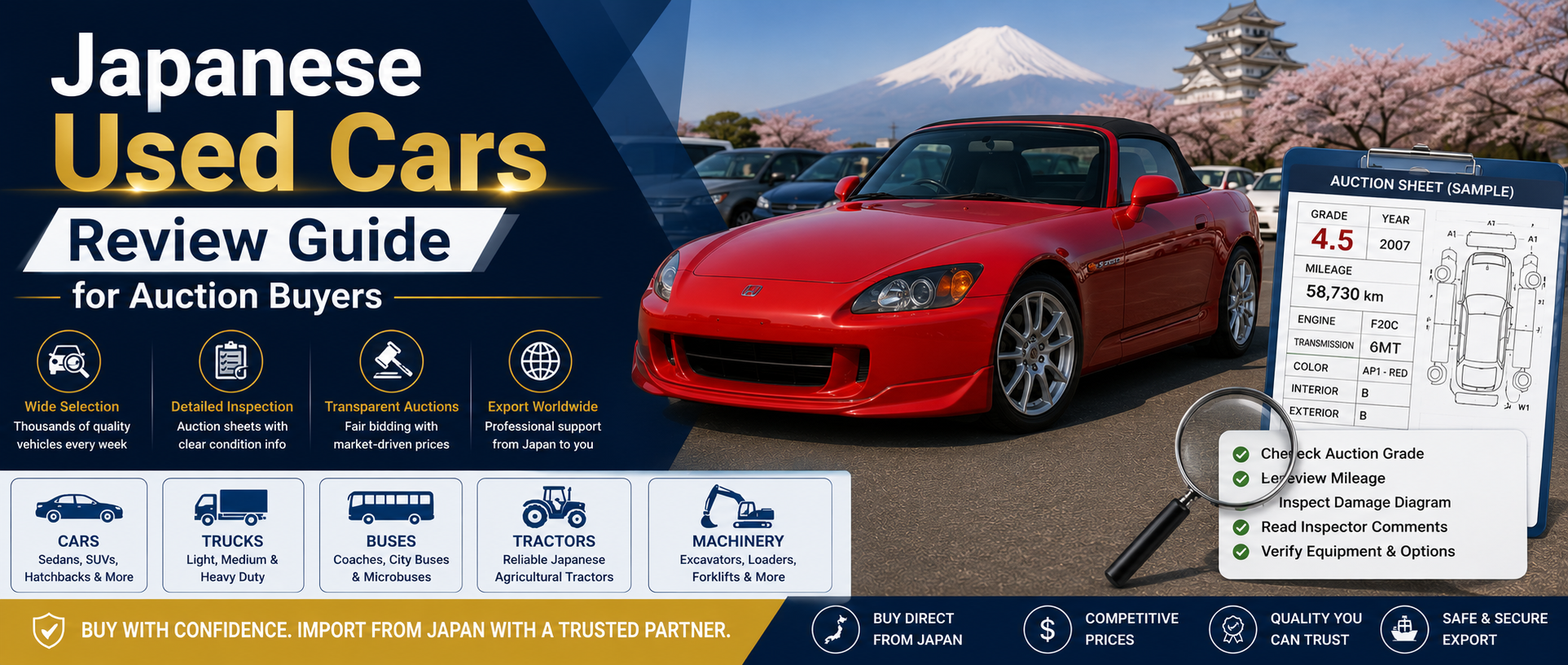
Japanese Used Cars Review Guide for Auction Buyers
Japan is one of the most trusted sources of used vehicles in the world. Every year, buyers from Africa, Asia, the Caribbean, Oceania, Europe, and many other regions import Japanese used vehicles because of their quality, reliability, and variety.
For overseas buyers, understanding how to review vehicles before bidding is one of the most important parts of the purchasing process. Whether you are searching for used cars from Japan, used trucks from Japan, used buses from Japan, used tractors from Japan, or machinery, knowing how to evaluate auction vehicles can help you avoid costly mistakes.
Japanese vehicle auctions provide detailed inspection reports, auction grades, and vehicle information. However, buyers still need to understand how to interpret that information correctly.
Search available auction vehicles here:
Browse Auction Vehicles
This guide explains how Japanese auctions work, how to review vehicles before bidding, and how overseas buyers can use Auction Stock Japan to buy with confidence.
How Japanese Vehicle Auctions Work
Japan has one of the largest used vehicle auction networks in the world.
Thousands of vehicles are listed every day through auction houses across the country. Dealers, leasing companies, rental companies, transport operators, farms, construction companies, and private owners sell vehicles through these auctions.
Before a vehicle enters auction, inspectors examine it and create an auction sheet. This document contains important information about the vehicle’s condition, mileage, repair history, equipment, and overall grade.
Buyers review this information and submit bids through licensed auction members.
Because overseas buyers cannot normally access auctions directly, most work with a trusted Japanese vehicles exporter who can search, inspect, and bid on their behalf.
What is Auction Stock Japan?
Auction Stock Japan refers to vehicles listed through Japanese auction systems.
Unlike dealer inventory, Auction Stock changes constantly as new vehicles arrive every day.
Japanese Auction Stock includes:
- Passenger cars
- SUVs and crossovers
- Commercial vans
- Used trucks from Japan
- Used buses from Japan
- Used tractors from Japan
- Construction machinery
- Specialized work vehicles
This large inventory gives buyers access to a wider selection than most dealer networks.
Auction Stock vs Dealer Stock
Auction Stock
Auction Stock vehicles are sold through competitive bidding.
Prices change according to demand and market conditions.
Buyers often gain access to a larger variety of vehicles, including rare models and unique specifications.
Dealer Stock
Dealer Stock vehicles are sold at fixed prices.
The buying process is generally quicker because no bidding is required.
However, inventory is usually more limited compared with Japanese Auction Stock.
Which Option is Better?
Buyers looking for maximum vehicle choice often prefer Auction Stock.
Those seeking immediate purchases with fixed pricing may prefer Dealer Stock.
Many professional importers use both sources depending on their business goals.
Why Overseas Buyers Use Japanese Auction Stock
Japanese auctions offer several advantages for international buyers.
- Large vehicle selection
- Transparent inspection reports
- Competitive market pricing
- Access to rare models
- Regular inventory updates
- Detailed auction sheet information
These advantages make Japanese vehicle auction systems attractive for both experienced and first-time importers.
Vehicles Available Through Japanese Auctions
Although many buyers focus on passenger vehicles, auctions include many categories.
Passenger Cars
Used cars from Japan remain the most popular auction category.
Buyers can find compact cars, sedans, wagons, sports cars, hybrids, and luxury vehicles.
Commercial Trucks
Used trucks from Japan are popular because of their durability and strong maintenance history.
Light-duty, medium-duty, and heavy-duty trucks are regularly available.
Buses
Used buses from Japan are widely purchased by schools, tourism companies, and transportation operators.
Agricultural Equipment
Used tractors from Japan are often imported by farms seeking reliable and affordable machinery.
Construction Machinery
Excavators, loaders, cranes, rollers, and other machinery frequently appear in auction listings.
How to Review Japanese Used Cars Before Bidding
Check the Auction Grade
The auction grade gives a general overview of the vehicle’s condition.
Higher grades usually indicate better overall condition.
However, buyers should never rely on the grade alone.
A complete review requires examining the entire auction sheet.
Review Mileage Carefully
Mileage is one of the most important factors affecting vehicle value.
Lower mileage often indicates less wear, but condition remains equally important.
Some well-maintained higher-mileage vehicles may perform better than poorly maintained low-mileage vehicles.
Study the Damage Diagram
Auction sheets include diagrams showing scratches, dents, repairs, rust, and other visible defects.
Understanding these symbols helps buyers evaluate cosmetic condition before bidding.
Read Inspector Comments
Inspectors often provide valuable notes regarding mechanical condition, repairs, modifications, leaks, corrosion, or other concerns.
Professional translation is recommended when reviewing these comments.
Understanding the Auction Sheet Japan
The Auction sheet Japan document is one of the most important tools available to buyers.
It helps provide transparency and allows informed purchasing decisions.
Typical Information Included
- Vehicle make and model
- Year of manufacture
- Engine size
- Transmission type
- Mileage
- Overall auction grade
- Interior grade
- Exterior condition
- Repair history
- Inspector comments
Reviewing all sections carefully reduces risk and improves buying decisions.
The Purchase Process
Step 1: Identify Target Vehicles
Determine your preferred vehicle type, specifications, and budget.
Step 2: Search Auction Stock
Use auction databases to locate suitable vehicles.
Step 3: Review Auction Sheets
Analyze grades, mileage, condition reports, and inspection notes.
Step 4: Set a Maximum Bid
Establish a budget before auction day.
Avoid increasing bids based on emotion.
Step 5: Participate in the Auction
Your exporter submits bids according to your instructions.
Step 6: Export and Shipping
After purchase, export documentation, customs preparation, and shipping arrangements begin.
Common Mistakes Buyers Should Avoid
Focusing Only on Price
A low purchase price does not always mean good value.
Condition, maintenance, and future repair costs should also be considered.
Ignoring Auction Sheet Details
Many problems can be identified through careful review of auction sheet information.
Skipping this step increases risk significantly.
Not Researching Import Rules
Different countries have different regulations regarding vehicle age, emissions, and safety requirements.
Always verify import eligibility before bidding.
Overbidding
Competitive auctions can encourage emotional decisions.
Establishing a maximum bid beforehand helps maintain profitability.
Why Professional Export Support Matters
Many overseas buyers choose professional support because Japanese auctions contain large amounts of technical information.
Experienced exporters help simplify the process.
Professional support often includes:
- Vehicle searches
- Auction sheet translation
- Condition evaluation
- Bidding support
- Export documentation
- Shipping arrangements
- Inspection assistance
This guidance helps buyers avoid mistakes and purchase with greater confidence.
Tips for First-Time Auction Buyers
- Start with a realistic budget.
- Research vehicle market values.
- Review auction sheets carefully.
- Verify import requirements.
- Focus on condition, not only mileage.
- Use a trusted partner.
- Request professional support when needed.
A careful and disciplined approach improves long-term success.
Building a Successful Import Business
Many successful importers rely on Japanese Auction Stock as a core vehicle sourcing method.
The combination of transparency, variety, and detailed inspection information creates opportunities for businesses of all sizes.
Whether importing passenger vehicles, commercial trucks, buses, tractors, or machinery, buyers who understand the auction process gain an important advantage.
Conclusion
Japanese vehicle auctions provide one of the world’s most reliable sources of used vehicles.
By learning how to review auction grades, mileage, condition reports, and Auction sheet Japan information, overseas buyers can make informed purchasing decisions.
Japanese Auction Stock offers access to a wide variety of Japanese used vehicles, including used cars from Japan, used trucks from Japan, used buses from Japan, used tractors from Japan, and construction machinery.
Careful research, realistic budgeting, and professional support help buyers import vehicles from Japan safely and efficiently.
EVERY TRADING is a Japanese used vehicles exporter serving customers around the world.
The company handles cars, trucks, buses, tractors, machinery, and many other vehicle categories.
EVERY TRADING provides auction search services and professional support so overseas buyers can buy direct from Japan with confidence.
As a trusted partner and trusted Japanese vehicles exporter, EVERY TRADING supports customers throughout vehicle selection, bidding, export procedures, and shipping arrangements.
Learn more about Japanese auctions:
Japanese Car Auction Guide
Start searching your vehicle from Japan today:
Search Auction Vehicles Now


Browse Reliable Used Trucks & Buses from Japan
Carefully selected vehicles ready for export worldwide
Search 100,000+ Dealer Stock Vehicles from Japan
Access a wide selection of vehicles from Japanese dealers nationwide. Updated daily.