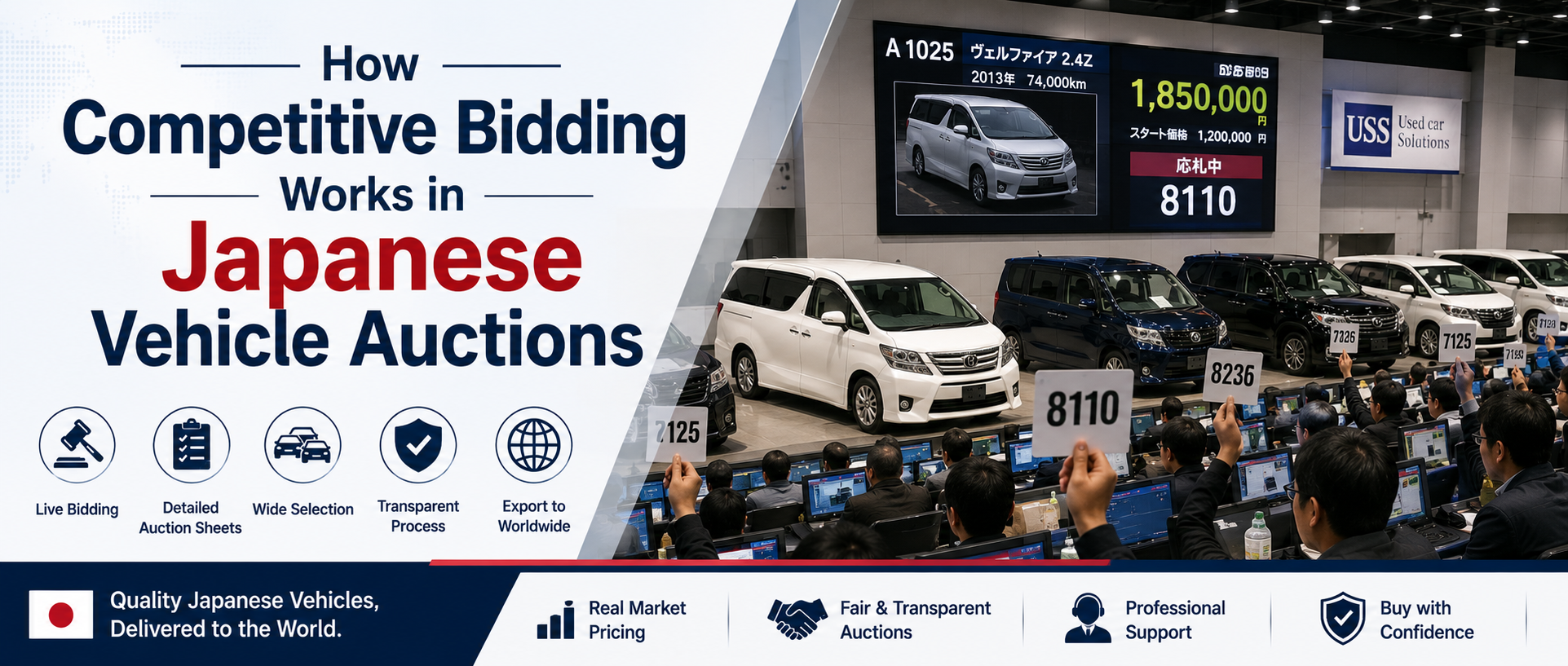
How Competitive Bidding Works in Japanese Vehicle Auctions
Japanese vehicle auctions are known around the world for their large selection, transparent inspection system, and active bidding process.
Every week, thousands of Japanese used vehicles are sold through auction systems across Japan.
Search available auction vehicles here:
Browse Auction Vehicles
This guide explains how competitive bidding works in Japanese vehicle auctions, how buyers use Auction Stock Japan, how to read an Auction sheet Japan, and how overseas buyers can safely import vehicles from Japan.
How Japanese Vehicle Auctions Work
A Japanese vehicle auction is a professional marketplace where used vehicles are sold through live bidding.
Auction houses receive vehicles from dealers, leasing companies, transport businesses, farms, construction companies, and private owners.
Before the auction begins, inspectors check the condition of each vehicle and prepare an auction sheet.
This inspection system helps buyers understand vehicle condition before bidding.
Japanese vehicle auction systems include many categories such as:
- Used cars from Japan
- Used trucks from Japan
- Used buses from Japan
- Used tractors from Japan
- Construction machinery
- Commercial vans
- Industrial equipment
Most auction houses require dealer membership. Therefore, overseas buyers usually work with a Japanese vehicles exporter to access the auction system.
What is Auction Stock Japan?
Auction Stock Japan refers to vehicles listed in Japanese auction systems and available for bidding.
Japanese Auction Stock changes every day because new vehicles enter the market regularly.
This gives overseas buyers access to many choices across different vehicle types, years, mileage ranges, and price levels.
Auction Stock is popular because buyers can compare many vehicles in one marketplace instead of checking individual sellers one by one.
How Competitive Bidding Works
The Auction Listing Process
Before the auction starts, vehicles are listed with photos, specifications, auction grades, and inspection information.
Buyers and exporters review the vehicle information before deciding whether to bid.
The Bidding Process
During the auction, registered members place bids electronically.
The price increases step by step as buyers compete against each other.
The highest bidder wins the vehicle when the auction ends.
Some popular vehicles receive many bids within a short time. Other vehicles may receive fewer bids depending on demand and condition.
Reserve Prices
Some sellers set reserve prices.
If bidding does not reach the reserve price, the seller may refuse the sale.
In some cases, negotiation may happen after the auction.
Why Auction Prices Change
Vehicle Condition
Clean vehicles with good maintenance history often receive stronger bidding competition.
Low mileage, higher grades, and clean interiors may increase demand.
Market Demand
Popular models often receive many bids.
Demand may also change depending on export markets, fuel prices, seasonal business needs, and shipping conditions.
Vehicle Type
Commercial vehicles such as trucks, buses, tractors, and machinery may become popular depending on business demand.
For example, construction projects may increase demand for machinery and trucks.
Export Country Rules
Import regulations in overseas markets also affect demand.
If a country allows newer vehicles only, buyers may compete strongly for vehicles within the legal import age range.
Auction Stock vs Dealer Stock
Auction Stock
Auction Stock vehicles are sold through competitive bidding.
The final price depends on demand and competition from other buyers.
Auction Stock Japan offers a large selection and access to many vehicle categories.
Dealer Stock
Dealer Stock vehicles are sold at fixed prices.
The buyer does not need to compete against other bidders.
Dealer Stock is often easier for beginners because pricing is clear and the buying process is simpler.
Main Difference
Auction Stock gives buyers more choices and market-based pricing.
Dealer Stock offers faster purchasing and fixed pricing.
Benefits of Competitive Bidding for Overseas Buyers
Access to Many Vehicles
Competitive bidding systems allow buyers to search a large number of vehicles every week.
This helps buyers compare different models, conditions, and price ranges.
Real Market Pricing
Auction prices reflect actual market demand.
This helps buyers understand the real value of Japanese used vehicles.
Wide Vehicle Categories
Buyers can search cars, trucks, buses, tractors, machinery, and special purpose vehicles through Japanese Auction Stock.
This is useful for dealers, contractors, farmers, and commercial fleet operators.
Transparent Inspection System
Auction sheets provide useful condition information before bidding.
This inspection system improves transparency for overseas buyers.
How to Buy Through Japanese Vehicle Auctions
Step 1: Decide Vehicle Requirements
Before searching, buyers should decide:
- Vehicle type
- Budget
- Year
- Mileage
- Condition
- Engine size
- Import country rules
Step 2: Search Auction Stock Japan
Buyers can search by brand, model, year, mileage, body type, auction date, and condition grade.
A trusted partner can help narrow the search and recommend suitable vehicles.
Step 3: Check the Auction Sheet Japan
The Auction sheet Japan is one of the most important documents before bidding.
Buyers should review mileage, repair history, grade, rust condition, damage map, and inspector comments carefully.
Step 4: Set a Maximum Bid
Before the auction starts, buyers should decide the highest price they are willing to pay.
This helps avoid emotional bidding and budget problems.
Step 5: Bid Through an Exporter
The exporter places the bid during the Japanese vehicle auction.
If the buyer wins, the purchase process begins immediately.
Step 6: Export and Shipping
After purchase, the vehicle moves to a port or storage yard.
The exporter arranges export documents, shipping, and communication until shipment from Japan.
How to Read an Auction Sheet Japan
Auction Grade
The auction grade shows the general condition of the vehicle.
Higher grades usually indicate cleaner condition, but buyers should not rely only on the grade.
Mileage or Operating Hours
Cars, trucks, and buses usually show mileage.
Machinery and tractors may show operating hours.
Low mileage or low hours can increase bidding competition.
Damage Map
The damage map shows scratches, dents, rust, paint marks, and repairs.
Buyers should review body condition, chassis condition, and underbody condition carefully.
Inspector Comments
Inspector comments may mention oil leaks, engine noise, repair history, rust, interior damage, hydraulic problems, or accident history.
These comments should be translated clearly before bidding.
Important Cautions During Competitive Bidding
Do Not Bid Emotionally
Some buyers increase bids too quickly because they want to win.
It is important to follow your planned budget carefully.
Understand Total Cost
The auction price is not the final cost.
Buyers should also calculate:
- Inland transport
- Export fees
- Shipping
- Customs duty
- Inspection costs
- Local taxes
- Delivery costs
Check Vehicle Condition Carefully
A low price does not always mean a good purchase.
Vehicles with hidden problems may require expensive repairs after arrival.
Import Rules Must Be Confirmed
Each country has different import regulations.
Buyers should confirm vehicle age limits, emissions rules, steering position rules, and required documents before bidding.
Why Use a Professional Japanese Vehicles Exporter?
Japanese vehicle auctions can be difficult for beginners.
A professional Japanese vehicles exporter helps buyers understand auction systems, bidding strategy, auction sheets, export procedures, and shipping arrangements.
Professional support may include:
- Auction vehicle search
- Auction sheet translation
- Condition advice
- Bidding support
- Budget planning
- Export document preparation
- Shipping arrangement
- Import guidance
This professional support helps overseas buyers buy direct from Japan with confidence.
A trusted partner also helps buyers avoid unsuitable vehicles and unnecessary risks.
Beginner Tips for Competitive Bidding
- Set a clear maximum bid before the auction.
- Check total cost, not only auction price.
- Review the auction sheet carefully.
- Ask about rust, repairs, and mechanical condition.
- Research market demand in your country.
- Do not rush bidding decisions.
- Use a trusted Japanese vehicles exporter.
Beginners should focus on condition, reliability, and long-term value instead of only looking for the cheapest price.
Conclusion
Competitive bidding is an important part of Japanese vehicle auctions.
Through Japanese Auction Stock, buyers can access many vehicles including used cars from Japan, used trucks from Japan, used buses from Japan, used tractors from Japan, and machinery.
The bidding system creates market-based pricing and gives buyers many choices across different categories.
However, successful bidding requires careful planning, auction sheet review, budget control, and understanding of total costs.
Working with a trusted partner and using professional support can help overseas buyers buy with confidence.
EVERY TRADING is a Japanese used vehicles exporter that exports Japanese used vehicles to customers around the world.
EVERY TRADING handles cars, trucks, buses, tractors, machinery, and many other vehicle categories.
The company provides Japanese auction vehicle search and professional support so overseas buyers can safely import vehicles from Japan.
As a trusted Japanese vehicles exporter, EVERY TRADING supports buyers before purchase, during export procedures, and until shipment from Japan.
Learn more about Japanese auctions:
Japanese Car Auction Guide
Start searching your vehicle from Japan today:
Search Auction Vehicles Now


Browse Reliable Used Trucks & Buses from Japan
Carefully selected vehicles ready for export worldwide
Search 100,000+ Dealer Stock Vehicles from Japan
Access a wide selection of vehicles from Japanese dealers nationwide. Updated daily.