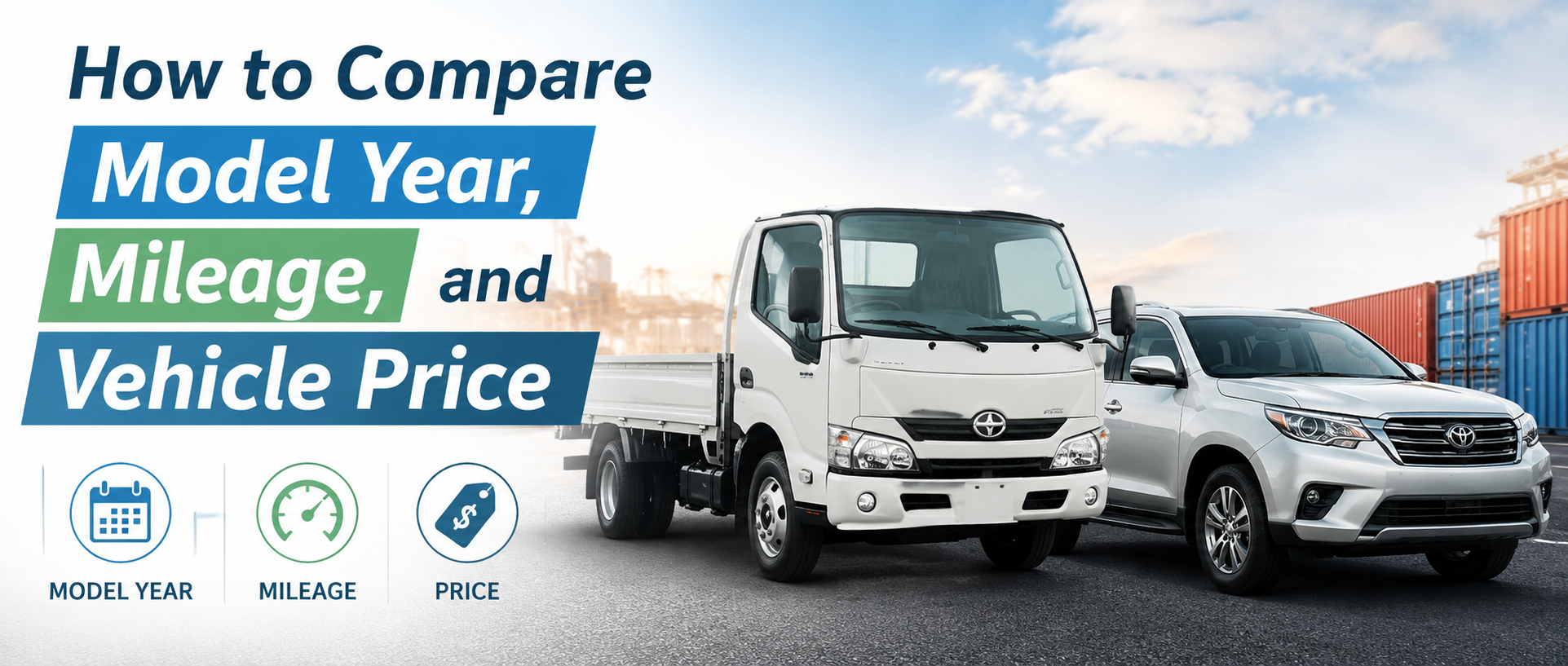
How to Compare Model Year, Mileage, and Price When Buying Vehicles from Japan
When importing used vehicles from Japan, many buyers focus only on price. However, smart buyers compare three important points together: model year, mileage, and price. These factors affect vehicle quality, resale value, and long-term business profit.
For dealers, importers, and business buyers in Africa, the Caribbean, and Asia, choosing the right balance is very important. A cheaper vehicle is not always the best choice. A newer model with lower mileage may reduce repair costs and increase customer satisfaction.
Today, many overseas buyers use Japanese dealer stock vehicles because prices are fixed, purchase is simple, and vehicles are ready for export. Dealer stock also helps buyers compare vehicles faster than auctions.
Why Model Year Is Important
The model year shows how old the vehicle is. In many countries, import regulations depend on vehicle age. Some countries only allow vehicles under a certain age. Because of this, checking the model year is always the first step.
Newer vehicles usually offer better fuel efficiency, safety systems, and cleaner engines. This is especially important for commercial vehicles such as trucks, buses, and tractors that operate every day.
However, newer models are normally more expensive. Buyers must decide if the higher price matches the local market demand. In some countries, customers prefer low-cost older vehicles. In other markets, buyers want newer vehicles with modern features.
For example:
- A 2019 Toyota Hiace may cost more than a 2014 model.
- But the newer model may sell faster and need fewer repairs.
- This can improve long-term business profit.
When comparing used vehicles from Japan dealer stock, always think about import rules, customer needs, and resale speed.
How Mileage Affects Vehicle Value
Mileage is another key point when buying used vehicles from Japan. Lower mileage often means less engine wear and longer vehicle life.
Many overseas buyers search for low-mileage dealer stock vehicles because they want reliable units that can work immediately after arrival.
However, mileage alone does not tell the full story.
A well-maintained truck with 150,000 km may be better than a poorly maintained vehicle with 80,000 km. Japanese vehicles are famous for regular maintenance and careful driving conditions. Because of this, even higher-mileage vehicles from Japan can still perform very well.
Buyers should also think about vehicle type:
- Passenger cars usually need lower mileage for better resale value.
- Commercial trucks and buses can still be valuable with higher mileage.
- Farm tractors and machinery often depend more on maintenance condition than mileage.
When using used vehicles from Japan dealer stock, buyers can compare mileage easily because dealer stock vehicles already have clear information and fixed pricing.
Understanding the Relationship Between Price and Condition
Price is important, but the cheapest vehicle is not always the best business choice.
Many buyers make mistakes by focusing only on low prices. This can lead to expensive repairs, slow resale, or customer complaints after delivery.
A better strategy is to compare total value.
For example:
- Vehicle A: Older model, high mileage, lower price
- Vehicle B: Newer model, lower mileage, higher price
Vehicle A may look attractive at first. However, Vehicle B may create more profit because it sells faster and requires fewer repairs.
This is why experienced importers compare:
- Model year
- Mileage
- Repair condition
- Market demand
- Import costs
- Expected resale price
Japanese dealer stock vehicles are useful for this process because buyers can compare many units quickly without waiting for auction bidding.
Dealer stock also gives business buyers more speed and simplicity. Prices are already fixed. Buyers can make decisions immediately and arrange export quickly.
This system is very helpful for companies that need stable inventory for resale businesses.
Dealer Stock vs Auction Vehicles
Many buyers compare dealer stock vehicles and auction vehicles when sourcing from Japan.
Japanese auctions offer many vehicle choices. Sometimes buyers can find lower prices. However, auctions also have risks:
- Bidding competition
- Price uncertainty
- Longer purchasing process
- Vehicle availability changes quickly
Dealer stock is different.
Dealer stock vehicles already have fixed prices and are available for immediate purchase. Buyers can compare model year, mileage, and price faster and more clearly.
This is one reason why many overseas dealers now prefer dealer stock for regular business purchases.
For example, if a buyer needs buses, trucks, or tractors for urgent delivery, dealer stock may be a better option because export arrangements can start immediately.
EVERY supports overseas buyers by offering professional inspection support, clear vehicle information, and fast communication. This helps buyers make safe and simple purchasing decisions.
If you want to learn more about dealer stock purchasing, check this Japanese dealer stock vehicles guide.
Conclusion
Comparing model year, mileage, and price is one of the most important skills when buying used vehicles from Japan.
Smart buyers do not focus only on cheap prices. They compare vehicle age, mileage, condition, and business value together. This helps reduce risk and improve long-term profit.
Japanese dealer stock vehicles offer major advantages for overseas buyers. Fixed prices, fast purchasing, and ready-to-export inventory make the buying process simple and reliable.
Whether you import cars, trucks, buses, or tractors, choosing the right balance between model year, mileage, and price will help your business grow successfully.


Browse Reliable Used Trucks & Buses from Japan
Carefully selected vehicles ready for export worldwide
Search 100,000+ Dealer Stock Vehicles from Japan
Access a wide selection of vehicles from Japanese dealers nationwide. Updated daily.