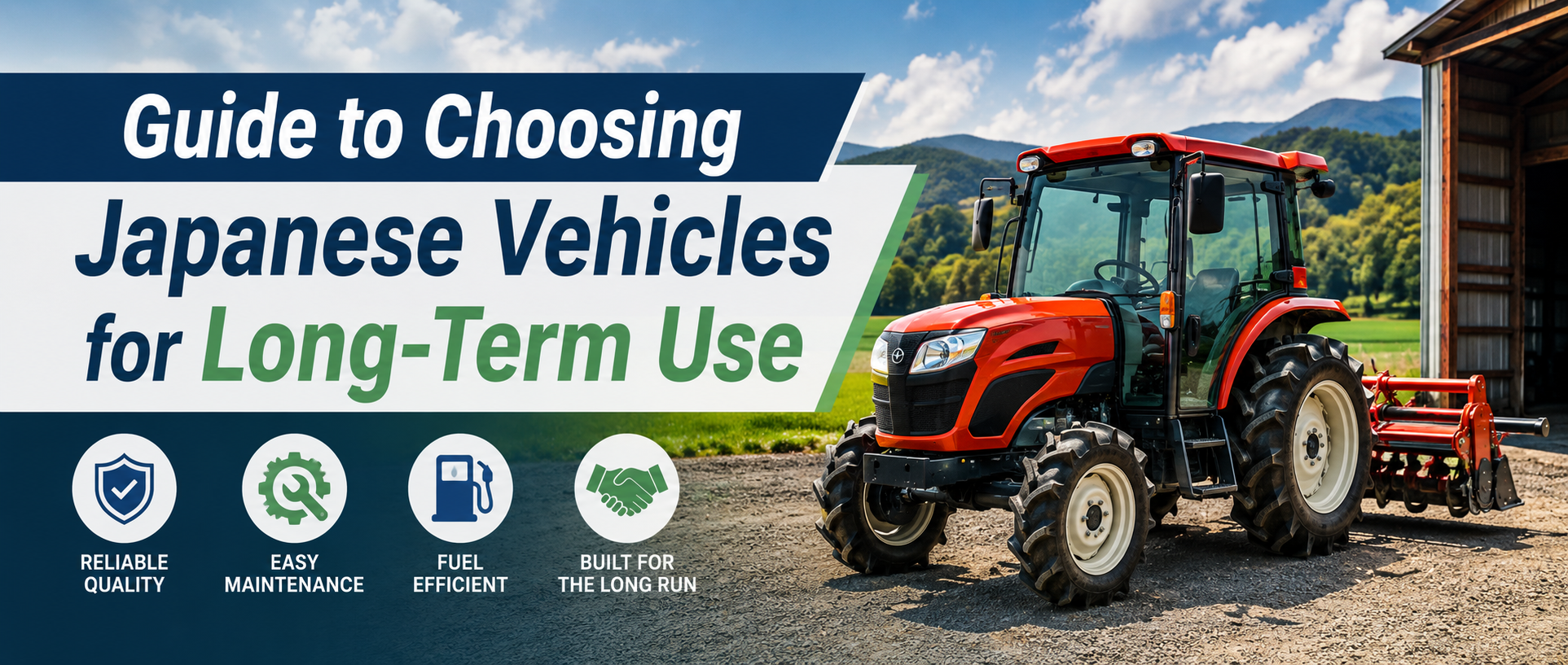
Guide to Choosing Japanese Vehicles for Long-Term Use
Choosing Japanese vehicles for long-term use is an important decision for overseas buyers. Many importers, dealers, and business owners need vehicles that can work for many years after arrival. Price is important, but durability, parts availability, fuel efficiency, and condition are also very important.
Japan is a strong source for used cars, trucks, buses, and tractors because many vehicles are well maintained. For buyers in Africa, the Caribbean, Asia, and other regions, the right vehicle can support daily business, transport, delivery, farming, and resale operations.
Many buyers now choose Japanese dealer stock vehicles because they are ready to buy, have fixed prices, and can move quickly to export. This makes the buying process simple, fast, and reliable.
Choose Vehicles with Proven Reliability
For long-term use, reliability must come before appearance. A clean body is good, but the engine, transmission, suspension, and frame condition are more important.
Japanese brands are popular in many export markets because they offer strong quality and easy maintenance. Toyota, Nissan, Mitsubishi, Isuzu, Hino, Mazda, and Subaru are well known in many countries. For tractors and machinery, Kubota, Yanmar, Iseki, and Mitsubishi tractors are also trusted by many users.
When choosing Japanese vehicles for long-term use, buyers should check the model history. Some models have a strong reputation in taxis, delivery businesses, farms, schools, and construction work. These models often have better resale value and easier parts supply.
For business buyers, the best vehicle is not always the newest one. The best choice is the vehicle that can work every day with low risk. This is why many experienced buyers select models that are already popular in their local market.
Check Mileage, Maintenance, and Vehicle Condition
Mileage is important, but it should not be judged alone. A vehicle with low mileage may look attractive. However, if it has poor maintenance history, it may still create problems.
A vehicle with higher mileage but good maintenance can be a better choice. Many Japanese used vehicles receive regular service. This helps engines and transmissions stay in good condition for a long time.
Buyers should check these points before purchase:
- Engine condition
- Transmission condition
- Accident history
- Rust condition
- Interior and exterior condition
- Tire and suspension condition
- Air conditioning and electrical parts
For trucks and buses, frame condition is especially important. For tractors and machinery, engine hours, hydraulic condition, and attachment condition are also important.
When buying used vehicles from Japan dealer stock, buyers can compare vehicle details more easily. Dealer stock vehicles are already available, so buyers do not need to wait for auction bidding results.
Think About Parts Supply and Local Maintenance
Long-term use depends on parts supply. A vehicle may be strong, but if parts are difficult to find in your country, repair costs can become high.
Before buying, check if the model is common in your local market. Popular models usually have better parts supply and more mechanics who understand them. This is important for cars, trucks, buses, vans, and tractors.
For example, Toyota Hiace, Toyota Land Cruiser, Nissan Caravan, Isuzu Elf, Hino Dutro, and Mitsubishi Canter are widely used in many export markets. These models are often easier to maintain because many spare parts are available.
For long-term business use, simple models can be better than very advanced models. Vehicles with simple engines and common parts are often easier to repair. This is especially useful in areas where workshop equipment is limited.
Fuel type is also important. Diesel vehicles are often preferred for commercial use because they are strong and fuel efficient. However, buyers should also check local fuel quality and emission rules before importing.
Why Dealer Stock Is Good for Long-Term Buyers
Dealer stock is useful for buyers who want speed, trust, and simplicity. Unlike auction vehicles, dealer stock vehicles have fixed prices. Buyers can make a decision without waiting for bidding.
Auction buying can offer many choices, but the price can change. The buyer may also lose the bid. This can slow down business planning.
Dealer stock is different. The vehicle is already available. The price is clear. Export preparation can start quickly after purchase.
This is a big advantage for overseas buyers who need vehicles for business. Dealers can plan inventory faster. Transport companies can prepare fleets. Farmers can arrange tractors and machinery with less delay.
EVERY TRADING supports overseas buyers with clear communication and professional export experience. The company understands that buyers need more than a vehicle. They need trust, correct information, and smooth shipping support.
For more details about buying direct stock, you can read this Japanese dealer stock vehicles guide.
Conclusion
Choosing Japanese vehicles for long-term use requires more than checking price. Buyers should compare reliability, mileage, maintenance, parts supply, fuel type, and local market demand.
For business buyers, the right vehicle can support profit for many years. Cars, trucks, buses, and tractors from Japan can be strong choices when selected carefully.
Dealer stock makes the process faster and simpler. Fixed prices, ready-to-export vehicles, and clear information help buyers make safe decisions.
With the right support from EVERY TRADING, overseas buyers can choose Japanese vehicles with more confidence and build stronger long-term business results.


Browse Reliable Used Trucks & Buses from Japan
Carefully selected vehicles ready for export worldwide
Search 100,000+ Dealer Stock Vehicles from Japan
Access a wide selection of vehicles from Japanese dealers nationwide. Updated daily.