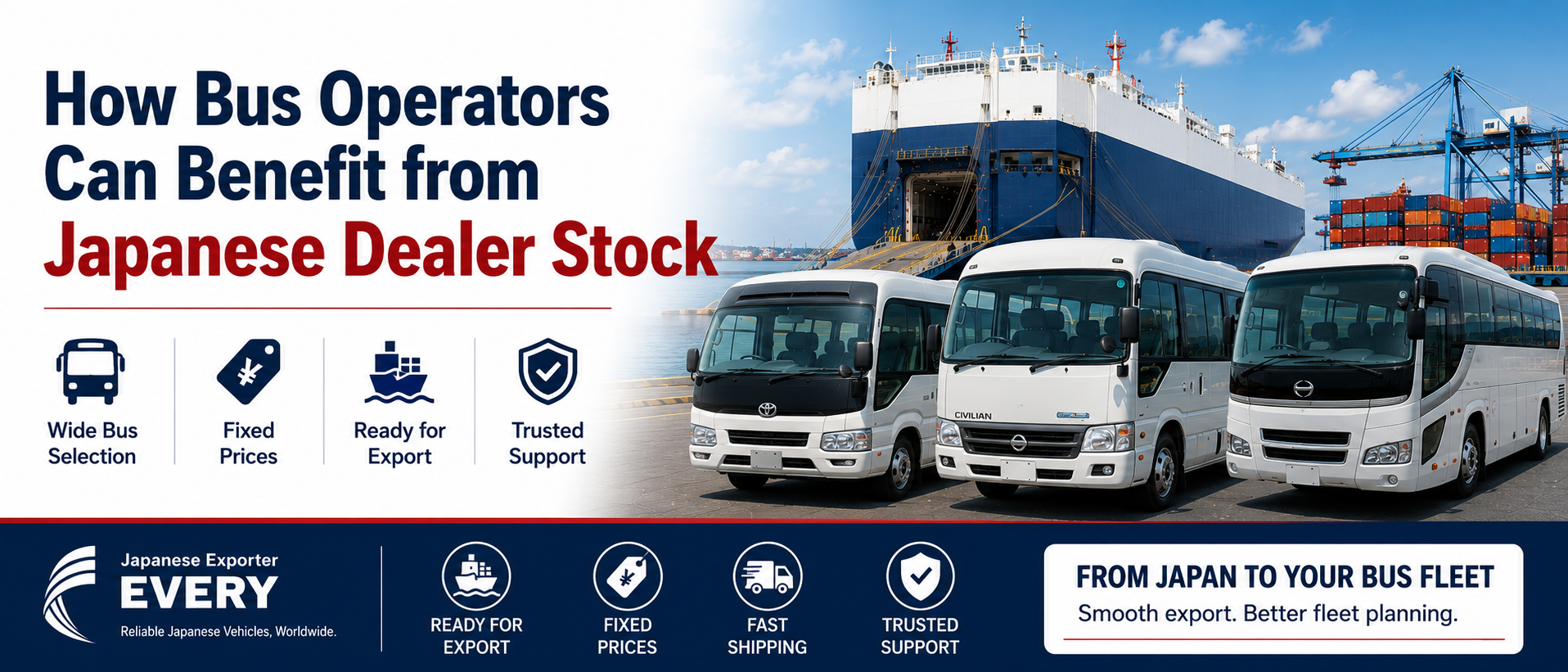
How Bus Operators Can Benefit from Japanese Dealer Stock
How Bus Operators Can Benefit from Japanese Dealer Stock is an important topic for transport companies, schools, hotels, tour operators, churches, and business owners who need reliable buses from Japan. Many overseas buyers in Africa, the Caribbean, Asia, and other regions choose Japanese used buses because they are practical, durable, and suitable for daily passenger transport.
Bus operators must think carefully before buying. A bus is not just a vehicle. It carries people every day. The buyer must check seating capacity, condition, comfort, maintenance needs, total cost, documents, and shipping. A wrong choice can create delays, repair costs, and business problems.
Japanese dealer stock can make the buying process faster and clearer. Vehicles are already available, prices are usually fixed, and export preparation can start quickly after confirmation. Buyers can check available Japanese dealer stock vehicles and compare buses, vans, cars, trucks, and other vehicles for business use.
Dealer Stock Helps Bus Operators Find Ready Vehicles
One of the biggest benefits of dealer stock is ready availability. Bus operators often need vehicles within a clear schedule. A school may need a bus before the new term. A hotel may need a shuttle bus before a busy travel season. A transport company may need extra buses when passenger demand increases.
When using dealer stock, the bus is already available for purchase. The buyer does not need to wait for auction bidding or search again after losing a bid. This can save time and reduce stress.
For bus operators, timing is very important. If a bus arrives late, the business may lose customers or delay service. Dealer stock supports faster decisions because the buyer can review available units, confirm details, and move forward more directly.
Japanese used buses are popular because they can support many transport needs. Minibuses are useful for schools, hotels, churches, tourism, and company staff transport. Larger buses may be suitable for public transport, long-distance routes, and high-capacity passenger service.
Dealer stock also helps buyers compare vehicle types. Some operators may need buses only. Others may need vans, trucks, or cars together with buses. For example, a hotel may need a bus for guests, a van for airport transfer, and a car for staff use. Dealer stock can support this wider business sourcing.
Fixed Prices Support Better Business Planning
Bus operators must control cost carefully. A bus purchase can be a large investment. The buyer needs to know if the total cost fits the business plan before making a decision.
One strong point of dealer stock is fixed pricing. In auctions, the final price is not decided until bidding ends. A buyer may spend time checking a bus and preparing a bid, but the price may become higher than expected. The buyer may also lose the bid and need to start again.
Dealer stock is simpler. The price is usually shown or confirmed before purchase. This helps buyers calculate the total cost more clearly. For business buyers, this is very important.
The total cost may include the bus price, inland transport in Japan, export fees, ocean freight, inspection fees if needed, import duty, port charges, registration, and local maintenance after arrival. If the purchase price is clear, the buyer can plan more safely.
For bus operators, fixed prices also help with service planning. A company can calculate how much income the bus must generate each month. A school can plan transport budget. A tourism company can estimate return on investment before the high season.
This clear cost planning is one reason Japanese dealer stock is attractive for overseas buyers who value speed, trust, and simplicity.
Clear Vehicle Details Help Reduce Risk
Bus operators must check more than the outside appearance. Since buses carry passengers, safety, comfort, and reliability are very important. Clear vehicle details help buyers reduce risk before purchase.
Important points include seating capacity, model year, mileage, engine type, transmission, fuel type, air conditioning, interior condition, tire condition, body condition, and service history when available. For commercial use, the buyer should also check if the bus type is suitable for local roads and routes.
For example, a minibus may be easier to use in narrow city roads or rural areas. A larger bus may be better for main transport routes with many passengers. A hotel shuttle may need good interior comfort. A school bus may need simple maintenance and safe seating.
Buyers should also think about spare parts. A bus that is common in the local market may be easier to maintain. This is important because downtime can hurt a transport business. If a bus cannot operate, the company may lose income.
Dealer stock helps because buyers can review photos, specifications, and price before making a decision. The buyer can ask questions and compare available units. This is easier than trying to make a quick decision during an auction process.
For more background on buying direct from Japan, this Japanese dealer stock vehicles guide explains how dealer stock can support overseas buyers with a faster and simpler sourcing process.
Professional Export Support Makes Bus Buying Smoother
Buying a bus from Japan requires more than choosing the vehicle. The buyer also needs payment guidance, document support, shipping planning, and export updates. This is where professional support becomes very important.
Buses may need special shipping planning because of size, height, and destination. Some buses can be shipped by RoRo vessel. In some cases, buyers may need different shipping arrangements depending on port service, vessel schedule, and bus condition.
Documents are also important. Buyers may need invoice, export certificate, bill of lading, inspection certificate, and other documents depending on the destination country. If documents are incorrect, customs clearance may be delayed after arrival.
A trusted Japanese exporter can help explain these steps in simple language. Clear communication helps overseas buyers understand what happens next and what they need to prepare.
EVERY supports overseas buyers who want to import used vehicles from Japan, including buses, cars, trucks, vans, tractors, and commercial vehicles. This experience helps bus operators choose vehicles that match their route, passenger needs, and budget.
Professional support also helps long-term business. A bus operator may start with one bus, then add more vehicles later. Once the exporter understands the buyer’s preferred size, seating capacity, destination port, and budget, future sourcing can become faster and more accurate.
You can compare current used vehicles from Japan dealer stock to find buses and related vehicles that may fit your transport business needs.
Conclusion
How Bus Operators Can Benefit from Japanese Dealer Stock becomes clear when we look at the needs of transport businesses. Bus operators need ready vehicles, clear prices, reliable information, safe documents, and smooth export from Japan.
Dealer stock supports these needs because vehicles are already available, prices are usually fixed, and export preparation can start quickly after confirmation. This gives overseas buyers more speed, trust, and simplicity.
For schools, hotels, tour companies, churches, transport operators, importers, and dealers, Japanese dealer stock can be a smart way to source used buses and related vehicles. With professional support and clear communication, buying buses from Japan can become safer, faster, and better for long-term business growth.


Browse Reliable Used Trucks & Buses from Japan
Carefully selected vehicles ready for export worldwide
Search 100,000+ Dealer Stock Vehicles from Japan
Access a wide selection of vehicles from Japanese dealers nationwide. Updated daily.