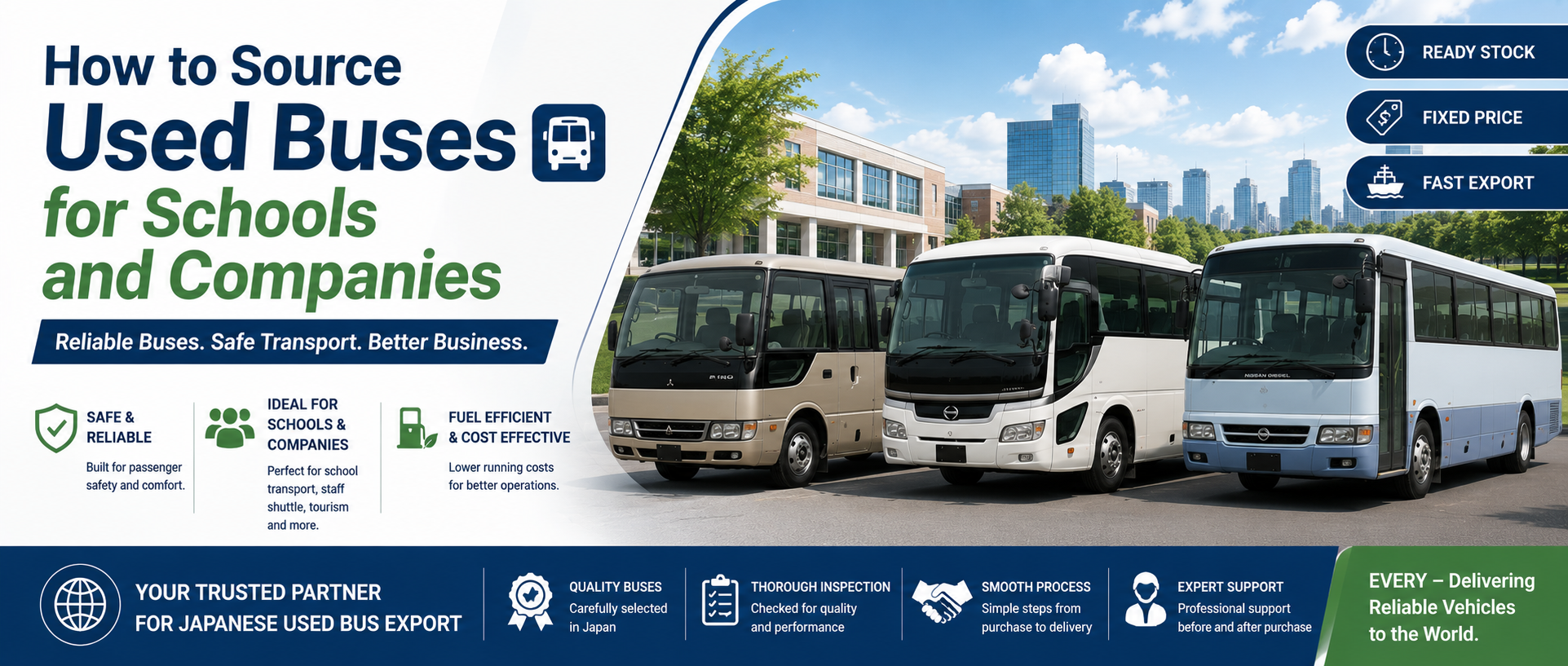
How to Source Used Buses for Schools and Companies
How to Source Used Buses for Schools and Companies is an important topic for buyers who need reliable transport vehicles for daily operations. Schools, businesses, hotels, tourism companies, and transport operators often require buses that are durable, safe, and affordable.
Japanese used buses are trusted worldwide because they offer strong quality, fuel efficiency, and long-term reliability. Many buyers in Africa, the Caribbean, and Asia choose Japanese buses to support school transport, company staff movement, tourism services, and local passenger operations.
In this article, we explain how to source used buses from Japan for schools and companies. We also show why dealer stock is useful for fast purchasing, fixed pricing, and simple export support.
Why Japanese Used Buses Are Popular Worldwide
Japanese buses are known for durability and stable performance. Many models continue operating well even after years of use when they are maintained properly.
This reliability is very important for schools and companies. Daily transport requires vehicles that can work consistently without frequent breakdowns.
Japanese buses are also popular because they are fuel efficient. Lower fuel consumption helps reduce operating costs, especially for businesses that use buses every day.
Safety is another important reason for strong demand. Many Japanese buses are built with good safety standards and comfortable interiors. This is important for school transport and staff transportation.
Because demand remains strong, buyers often use Japanese dealer stock vehicles to secure buses quickly and avoid long waiting periods.
How to Choose the Right Bus for Your Business
Before buying a used bus, buyers should first understand their business purpose. Different operations require different bus sizes and specifications.
Schools often need medium-size or small buses with comfortable seating and easy passenger access. Companies may require buses for staff transport between offices, factories, farms, or project sites.
Tourism companies may prefer larger buses with additional comfort features for long-distance travel. Hotels and airport transport businesses may also need buses with luggage space.
Buyers should also consider local road conditions and fuel availability. In some markets, smaller buses may be more practical because roads are narrow or fuel costs are high.
For rural regions and agricultural businesses, buses can also support worker transportation for farms and tractor-related operations. This makes buses useful beyond normal passenger transport.
With used vehicles from Japan dealer stock, buyers can compare different bus types and select units that match their local market needs.
Why Dealer Stock Is Better for Fast Bus Purchasing
Speed is very important for school and company transport operations. A delayed vehicle purchase can affect daily business activity and transportation schedules.
Dealer stock helps buyers solve this problem because the buses are already available. Buyers can confirm the vehicle, agree on the price, and move forward with export preparation quickly.
Fixed pricing is another major advantage. Businesses and schools often work with planned budgets. Dealer stock allows buyers to know the purchase cost before making a decision.
Auctions can provide many choices, but they also create uncertainty. Buyers must wait for auction schedules and compete with other bidders. The final price may become higher than expected.
Dealer stock is simpler. Buyers can secure the vehicle immediately without complex bidding. This helps companies and schools plan transportation projects more efficiently.
For buyers who want to understand the process more clearly, the Japanese dealer stock vehicles guide explains how direct purchasing from Japan supports easier importing.
Important Points to Check Before Importing
Before importing a used bus from Japan, buyers should carefully review several important points.
First, check seating capacity and interior condition. The bus should match the number of passengers required for the operation.
Second, check the engine condition and mileage. A reliable engine is important for long-term transport use. Buyers should also consider fuel efficiency and maintenance history when available.
Third, check local import regulations. Some countries have restrictions on vehicle age, engine type, or emissions standards. Buyers should confirm these rules before purchasing.
Fourth, think about maintenance and parts availability. Japanese buses are often popular because spare parts and service knowledge are available in many markets.
Technology also helps buyers today. Online dealer stock systems allow buyers to search inventory, compare specifications, and communicate with exporters more efficiently.
Trust is another important factor. Buyers need exporters who provide clear information, honest communication, and professional export support. This reduces risk and helps create smoother transactions.
At EVERY, dealer stock systems are designed to support global buyers who need reliable buses for schools, companies, tourism, and passenger transport operations. This helps buyers source vehicles with confidence.
Conclusion
How to Source Used Buses for Schools and Companies starts with choosing reliable vehicles and working with trusted exporters. Japanese buses remain popular because they offer durability, fuel efficiency, and strong long-term value.
Dealer stock provides important advantages for business buyers. It allows immediate purchase, fixed pricing, and faster export preparation. These benefits help schools and companies reduce delays and improve planning.
Compared to auctions, dealer stock offers more speed, trust, and simplicity. This makes it ideal for buyers who need buses for daily operations and passenger transport.
At EVERY, trusted Japanese buses and professional export support help global buyers source suitable vehicles with confidence. This approach supports safer, smoother, and more reliable transport operations worldwide.


Browse Reliable Used Trucks & Buses from Japan
Carefully selected vehicles ready for export worldwide
Search 100,000+ Dealer Stock Vehicles from Japan
Access a wide selection of vehicles from Japanese dealers nationwide. Updated daily.