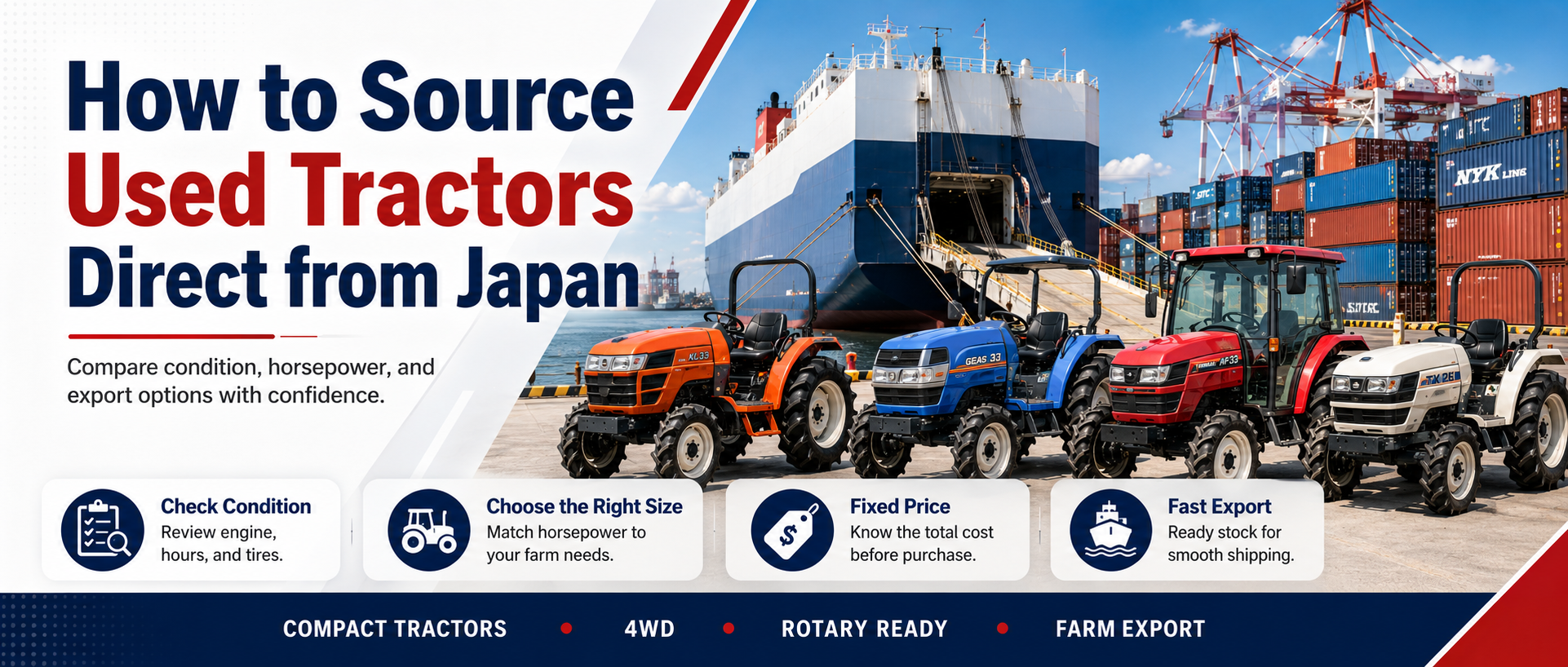
How to Source Used Tractors Direct from Japan
How to Source Used Tractors Direct from Japan is an important topic for overseas buyers who need reliable farm machinery for agriculture, land preparation, and rural business. Japanese used tractors are popular in many export markets because they are practical, durable, and often easy to maintain.
For farmers, importers, machinery dealers, agricultural companies, and business buyers, the right tractor can support daily work and long-term growth. Buyers in Africa, the Caribbean, Asia, Oceania, and other regions often look for used tractors from Japan because they want machines that can work well in real field conditions.
Dealer stock makes tractor sourcing easier because available units can be checked before purchase. Buyers can compare models, horsepower, condition, price, attachments, and export timing. This gives overseas buyers more speed, trust, and simplicity than waiting for auction bidding results.
1. Choose the Right Tractor for Your Farming Needs
The first step in sourcing used tractors direct from Japan is to choose the right tractor for the work. A tractor should match the land size, soil condition, crop type, and daily use in the destination country.
Small tractors can be useful for vegetable farming, orchards, greenhouses, and small fields. They are easier to operate and may be more suitable for narrow farm roads. Medium tractors can support general farming work, including plowing, rotary work, transport, and land preparation.
Larger tractors may be better for wide fields, heavy work, or commercial farming. However, buyers should also think about fuel cost, maintenance, spare parts, and operator skill. A bigger tractor is not always the best choice if the farm does not need that power.
Popular Japanese tractor brands can include Kubota, Yanmar, Iseki, Mitsubishi, and other well-known makers. Many overseas buyers like these brands because they are known for strong engines, simple operation, and long service life.
Before choosing a tractor, buyers should check horsepower, drive type, tire condition, engine condition, operating hours, transmission type, and available attachments. Buyers should also think about whether they need a 2WD or 4WD tractor. In many rural areas, 4WD tractors are useful because they can work better in wet or uneven fields.
Buyers can start by checking available Japanese dealer stock vehicles and comparing used tractors that match their farming or business needs.
2. Check Tractor Condition Before Purchase
Condition is very important when buying used tractors from Japan. A tractor may be simple, but it is still a working machine. Buyers should check the main parts carefully before making a decision.
Important points include engine condition, operating hours, hydraulic system, transmission, clutch, tires, steering, brakes, PTO, and body condition. Buyers should also check whether there are oil leaks, heavy rust, broken parts, or signs of hard use.
The engine is one of the most important parts. A strong engine helps the tractor work smoothly and reduces repair risk after arrival. Buyers should ask about starting condition, smoke, noise, and basic running condition when possible.
Tires are also important. Tractor tires can be expensive to replace. Buyers should check tire tread, cracks, size, and general condition. In some markets, tire condition can affect resale value and working performance.
Attachments should also be checked. Some tractors may come with rotary tillers, loaders, blades, or other implements. These can add value, but buyers should confirm condition and compatibility. If an attachment is damaged or not suitable for local use, it may not give real value.
Photos help buyers understand basic condition, but clear questions are also important. Buyers should ask: Is the tractor still available? What are the operating hours? Does the engine start well? Are the hydraulics working? Are there attachments? Can the tractor be exported soon?
EVERY supports overseas buyers by helping them understand tractor details and choose suitable used machinery from Japan. Clear communication helps buyers reduce risk and buy with more confidence.
3. Compare Fixed Prices and Total Import Cost
Price is important, but buyers should compare the total cost, not only the tractor price. The total cost may include the tractor price, export preparation, inland transport in Japan, shipping cost, port charges, customs duty, local clearance, and repairs after arrival.
Dealer stock is useful because the price is usually fixed. This helps buyers plan their budget before purchase. A fixed price is helpful for machinery dealers who need to calculate resale profit. It is also useful for farmers and companies that need to prepare a clear buying budget.
This is different from auction buying. In an auction, the final price depends on bidding. The buyer may not know the final cost until the auction ends. The buyer may also lose the tractor to another bidder and need to start the search again.
With dealer stock, buyers can compare available tractors based on price, horsepower, condition, operating hours, attachments, and export timing. A lower price may not always mean better value. A slightly higher priced tractor may be better if it has lower hours, better tires, working hydraulics, or useful attachments.
Buyers should also compare shipping cost. Tractors may need RoRo shipping or container shipping depending on size, destination, and shipping route. Some tractors may require special handling due to height, width, weight, or attachments.
For buyers who want to learn more about dealer stock, auctions, and buying direct from Japan, the Japanese dealer stock vehicles guide is a useful resource.
4. Plan Export and Shipping from Japan
Export planning is an important part of sourcing used tractors direct from Japan. Since dealer stock tractors are already available, the export process can often begin soon after the buyer confirms the purchase and completes payment.
This speed is useful for farmers and agricultural businesses. A buyer may need a tractor before the farming season starts. A machinery dealer may need stock for local customers. A rural business may need equipment for land preparation or transport work.
After purchase confirmation, the exporter can prepare documents, arrange inland transport if needed, check shipping schedules, and move the tractor toward the port. The actual timing depends on the tractor location, destination port, shipping route, and vessel schedule.
Shipping method depends on the tractor and destination. Some tractors may be shipped by RoRo vessel if they can be driven or moved safely. Others may be shipped by container, especially smaller units or units with attachments. Buyers should confirm the best shipping method before purchase.
Import rules are also important. Some countries may have rules for used machinery, age, inspection, cleanliness, documents, or customs clearance. Buyers should check local import rules before choosing a tractor.
Working with a trusted exporter helps buyers avoid mistakes. A professional exporter can explain shipping options, export documents, payment steps, and basic import preparation. This gives buyers more confidence when buying tractors from Japan.
Buyers who want ready-to-buy tractors and other vehicles can browse used vehicles from Japan dealer stock and send an inquiry for suitable options.
Conclusion
How to Source Used Tractors Direct from Japan can be summarized in four simple steps. Buyers should choose the right tractor for the work, check condition carefully, compare fixed prices and total cost, and plan export before purchase.
Dealer stock is a practical option because it offers speed, trust, and simplicity. Tractors are already available, prices are usually fixed, and buyers can move forward without waiting for auction results.
For farmers, machinery dealers, agricultural companies, and rural business buyers, Japanese used tractors can be valuable working machines. The right tractor can improve farm work, reduce labor, and support long-term business growth.
EVERY helps overseas buyers find suitable used tractors from Japan and supports the export process from inquiry to shipping. For buyers who want clear pricing, ready availability, and reliable support, Japanese dealer stock is a strong place to start.


Browse Reliable Used Trucks & Buses from Japan
Carefully selected vehicles ready for export worldwide
Search 100,000+ Dealer Stock Vehicles from Japan
Access a wide selection of vehicles from Japanese dealers nationwide. Updated daily.