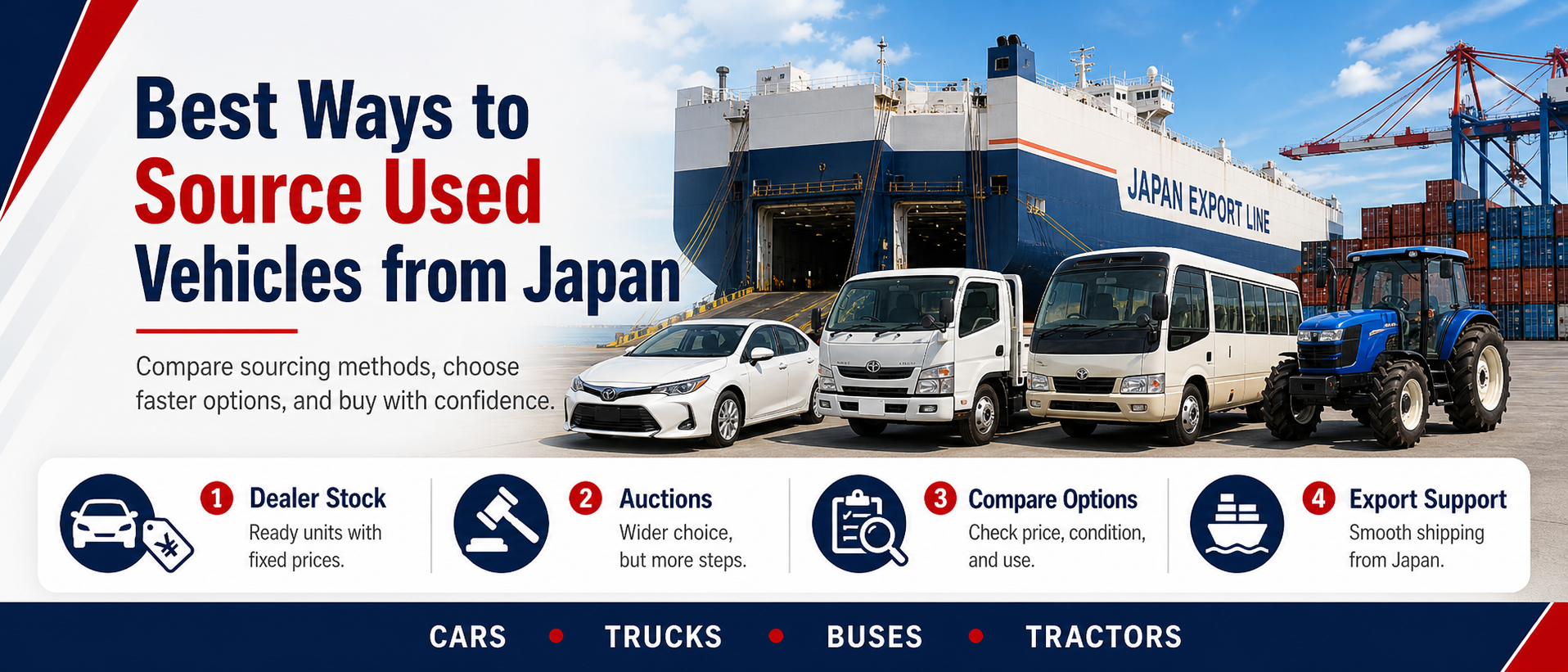
Best Ways to Source Used Vehicles from Japan
Best Ways to Source Used Vehicles from Japan is an important topic for overseas buyers who want to buy reliable vehicles for business, resale, transport, farming, or fleet use. Japan has a large used vehicle market, and buyers can find many cars, trucks, buses, vans, tractors, and machinery for export.
However, choosing the right sourcing method is very important. Some buyers need vehicles quickly. Some buyers want fixed prices. Some buyers want to compare many options before making a decision. The best method depends on the buyer’s budget, purpose, timeline, and experience.
For many overseas buyers in Africa, the Caribbean, Asia, Oceania, and other regions, dealer stock is one of the easiest ways to start. It offers speed, trust, and simplicity because the vehicles are already available, often listed with fixed prices, and can move toward export more quickly than auction vehicles.
1. Source Vehicles from Japanese Dealer Stock
Dealer stock is one of the best ways to source used vehicles from Japan when buyers want a simple and direct process. Dealer stock vehicles are already available for purchase. They are not waiting for auction bidding, so buyers can check them and make a decision faster.
This method is useful for importers, dealers, companies, and business buyers who need clear pricing and quick action. For example, a dealer may need cars for resale. A logistics company may need trucks for delivery. A school or hotel may need a bus. A farmer may need a tractor for daily work.
The main benefit of dealer stock is fixed pricing. Buyers can see the listed price, ask about export costs, and plan the total budget before purchase. This is very helpful for overseas buyers who need to calculate freight, port charges, customs duty, and local registration costs.
Dealer stock also saves time. Since the vehicle is already available, the exporter can often move forward with documents and shipping preparation soon after purchase confirmation. This supports faster export planning and helps buyers avoid delays caused by failed auction bids.
Buyers who want a simple starting point can check available Japanese dealer stock vehicles. This allows them to compare ready-to-buy cars, trucks, buses, tractors, and other used vehicles from Japan.
2. Use Japanese Vehicle Auctions When You Need More Choice
Japanese vehicle auctions are another major sourcing method. Auctions offer many vehicles every week. Buyers can find different models, years, grades, mileage levels, and conditions. This can be useful when a buyer is looking for a specific vehicle or wants to compare many options.
Auctions can be a good choice for experienced buyers. They may offer a wide selection of passenger cars, commercial trucks, buses, SUVs, vans, and sometimes machinery. Buyers who understand auction sheets, grading, bidding prices, and market trends can use auctions as a strong sourcing tool.
However, auctions are not always simple for beginners. The buyer must place a bid and wait for the result. The final price is not fixed until bidding ends. If another buyer bids higher, the buyer may lose the vehicle and need to search again.
This can make auctions less suitable for buyers who need vehicles quickly. It can also make budget planning harder because the final price may change. For this reason, many first-time buyers and business buyers prefer dealer stock when they want a simpler process.
Auctions are useful, but they require good support. A trusted exporter can help buyers understand vehicle condition, auction sheets, bidding limits, and total cost before they make a decision.
3. Compare Vehicle Purpose, Condition, and Total Cost
No matter which sourcing method buyers choose, comparison is very important. Buyers should not choose a vehicle only because the price looks low. They should compare purpose, condition, total cost, and local demand.
First, buyers should think about the purpose. A passenger car may be used for resale, taxi business, company use, or personal transport. A truck may be used for construction, delivery, logistics, or farming. A bus may be used for school transport, hotel service, tourism, or public transport. A tractor may be used for agriculture or rural work.
Second, buyers should check condition. Important points include mileage, engine condition, transmission, tires, body condition, interior condition, and visible damage. For trucks, buyers should also check body type, payload, chassis, and work purpose. For buses, seating capacity and air conditioning may be important. For tractors, operating hours and attachments may matter.
Third, buyers should compare total cost. The real import cost includes more than the vehicle price. Buyers should consider export preparation, inland transport in Japan, freight, port charges, customs duty, local inspection, registration, and possible repairs after arrival.
Dealer stock helps make this comparison easier because the vehicle price is usually fixed. Buyers can compare available units and make faster decisions. Auctions may provide more choice, but the final cost can be harder to confirm before bidding ends.
For buyers who want to learn more about direct vehicle sourcing, the Japanese dealer stock vehicles guide is a helpful resource. It explains dealer stock, auctions, and buying direct from Japan in a simple way.
4. Work with a Trusted Japanese Exporter
Working with a trusted Japanese exporter is one of the most important parts of sourcing used vehicles from Japan. Buying a vehicle from overseas requires more than choosing a car or truck. Buyers need clear communication, correct documents, safe payment steps, and export support.
A professional exporter can help buyers understand vehicle details, confirm availability, explain total cost, prepare invoices, arrange export documents, and support shipping. This is especially important for first-time buyers who may not know the full process.
Trust is also important because overseas buyers cannot always inspect vehicles in person. They need honest information, clear photos, and careful support. A good exporter helps reduce mistakes and gives buyers more confidence.
EVERY supports overseas buyers by helping them source suitable used vehicles from Japan and move through the export process. Whether the buyer needs cars, trucks, buses, vans, tractors, or machinery, professional support can make the process smoother.
Shipping is another key point. Depending on the vehicle type and destination, vehicles may be shipped by RoRo vessel or container. Cars, buses, trucks, and tractors may require different arrangements. A trusted exporter can help buyers check the best option and prepare for export.
Buyers who want ready-to-buy units with a clear process can browse used vehicles from Japan dealer stock and send an inquiry for suitable vehicles.
Conclusion
Best Ways to Source Used Vehicles from Japan include dealer stock, auctions, careful comparison, and support from a trusted exporter. Each method has benefits, but the best choice depends on the buyer’s purpose, budget, timing, and experience.
Dealer stock is often the best starting point for buyers who want speed, fixed prices, and a simple buying process. The vehicles are already available, and export preparation can often begin faster after purchase confirmation.
Auctions are useful for buyers who want a wider selection and understand the bidding process. However, they require more experience and may take more time.
For overseas buyers, the safest approach is to compare purpose, condition, total cost, and export timing before purchase. With professional support from EVERY, buyers can source suitable used vehicles from Japan with more trust, speed, and confidence.


Browse Reliable Used Trucks & Buses from Japan
Carefully selected vehicles ready for export worldwide
Search 100,000+ Dealer Stock Vehicles from Japan
Access a wide selection of vehicles from Japanese dealers nationwide. Updated daily.