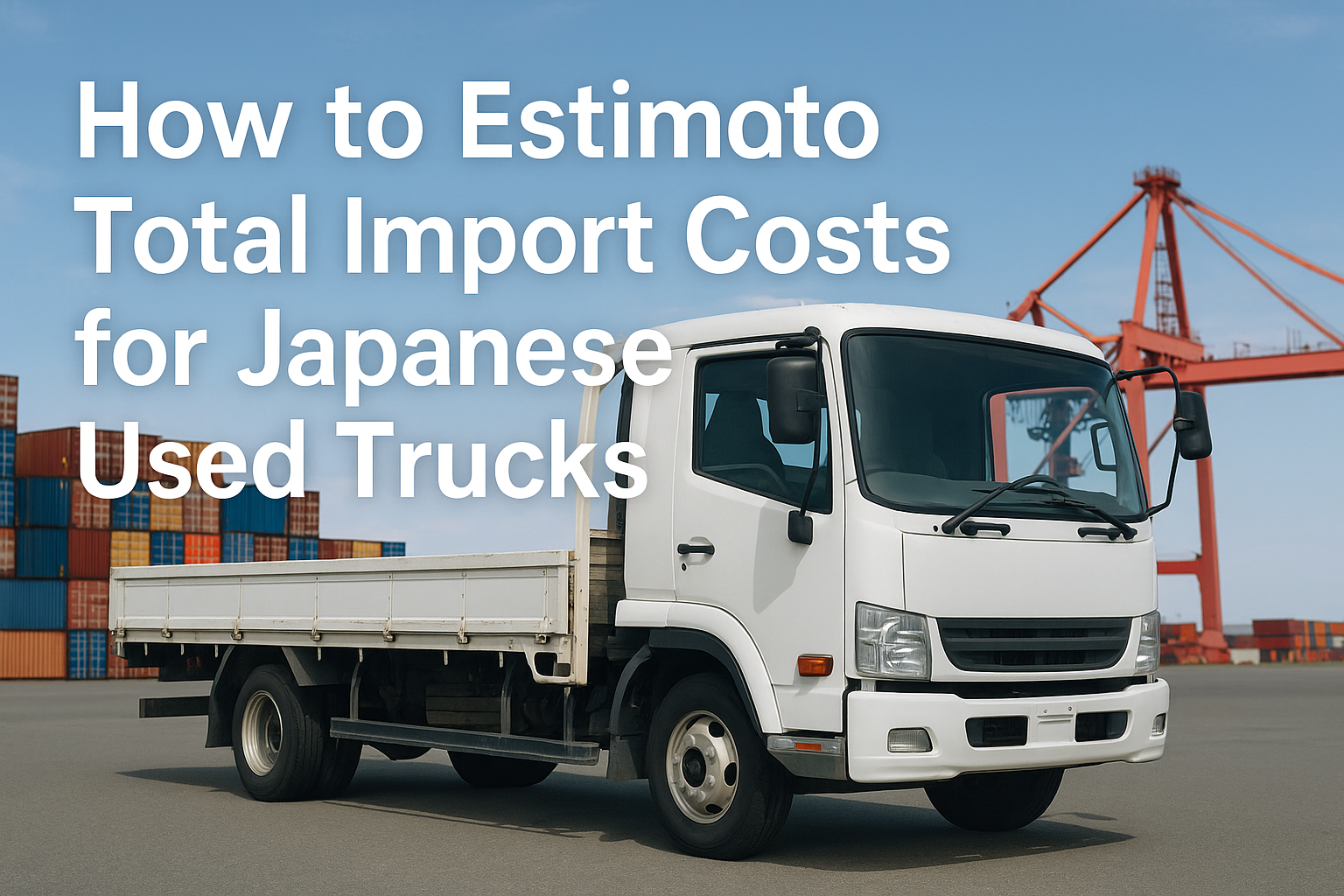
Importing a used truck from Japan can transform your business. Many buyers choose Japanese trucks because they offer strong durability, low operating costs, and trusted global performance. However, understanding the total import cost is essential. When you calculate everything clearly, you avoid surprises and protect your budget.
This guide explains each cost step-by-step. Moreover, it helps international buyers make smart, safe, and profitable decisions.
1. Start with the Vehicle Price
The base price is the truck’s selling price from Japan. It includes the condition, mileage, brand, and model. Popular brands like Hino, Isuzu, Fuso, and UD usually keep strong resale value.
Additionally, exporters often list the FOB price, which excludes shipping.
2. Add the Shipping Cost (RoRo or Container)
Next, calculate the freight cost. RoRo is usually cheaper. Container shipping is safer for high-value units.
Furthermore, prices change by destination, season, and port congestion.
Common examples:
-
Africa: Dar es Salaam, Mombasa
-
Caribbean: Kingston, Nassau
-
Pacific: Suva, Port Moresby
Because freight fluctuates, always confirm the latest quote from your exporter.
3. Calculate Import Duty
Every country sets its own duty rate. As a result, two buyers may pay very different amounts for the same truck.
Typical duty systems include:
-
Percentage based on the vehicle value
-
Engine-size brackets
-
Age-based tax categories
Before purchase, check your local customs website or consult your clearing agent.
4. VAT, GST, or Sales Tax
Many countries add VAT or GST during clearance. This tax is usually calculated on the CIF price (FOB + shipping + insurance).
Thankfully, VAT/GST rates are clear and rarely change suddenly.
5. Port Handling Fees
Port charges include:
-
Wharfage
-
Port security
-
Documentation
-
Storage (if delayed)
These fees vary by country. For example, ports in East Africa may charge differently from ports in the Middle East.
Therefore, plan ahead to avoid extra storage costs.
6. Inland Transport to Your City
After clearance, you must transport the truck from the port to your location.
Distances, road conditions, and demand affect the cost.
Additionally, some buyers choose local drivers, while others prefer transport companies.
7. Optional Costs: Inspection, Insurance, and Reconditioning
Some countries require pre-export inspections such as JEVIC or QISJ.
Insurance is optional but smart for long voyages.
Also, some buyers request repainting or maintenance before shipping.
Each option adds value yet increases cost slightly.
8. Summarizing Your Estimated Total Cost
To avoid mistakes, use this simple formula:
Total Import Cost = Truck Price + Shipping Cost + Import Duty + VAT/GST + Port Fees + Inland Transport + Optional Services
When you know each step, you can compare options confidently and choose the right truck for your business.
9. Choose a Trusted Exporter
Finally, your exporter makes a huge difference. Reliable exporters offer transparent pricing, clear documents, detailed photos, and fast communication.
Explore this helpful guide:
👉 Top 5 Trusted Japanese Used Truck Exporters for Global Buyers
https://everycar-review.com/2025/07/14/top-5-trusted-japanese-used-truck-exporters-for-global-buyers/