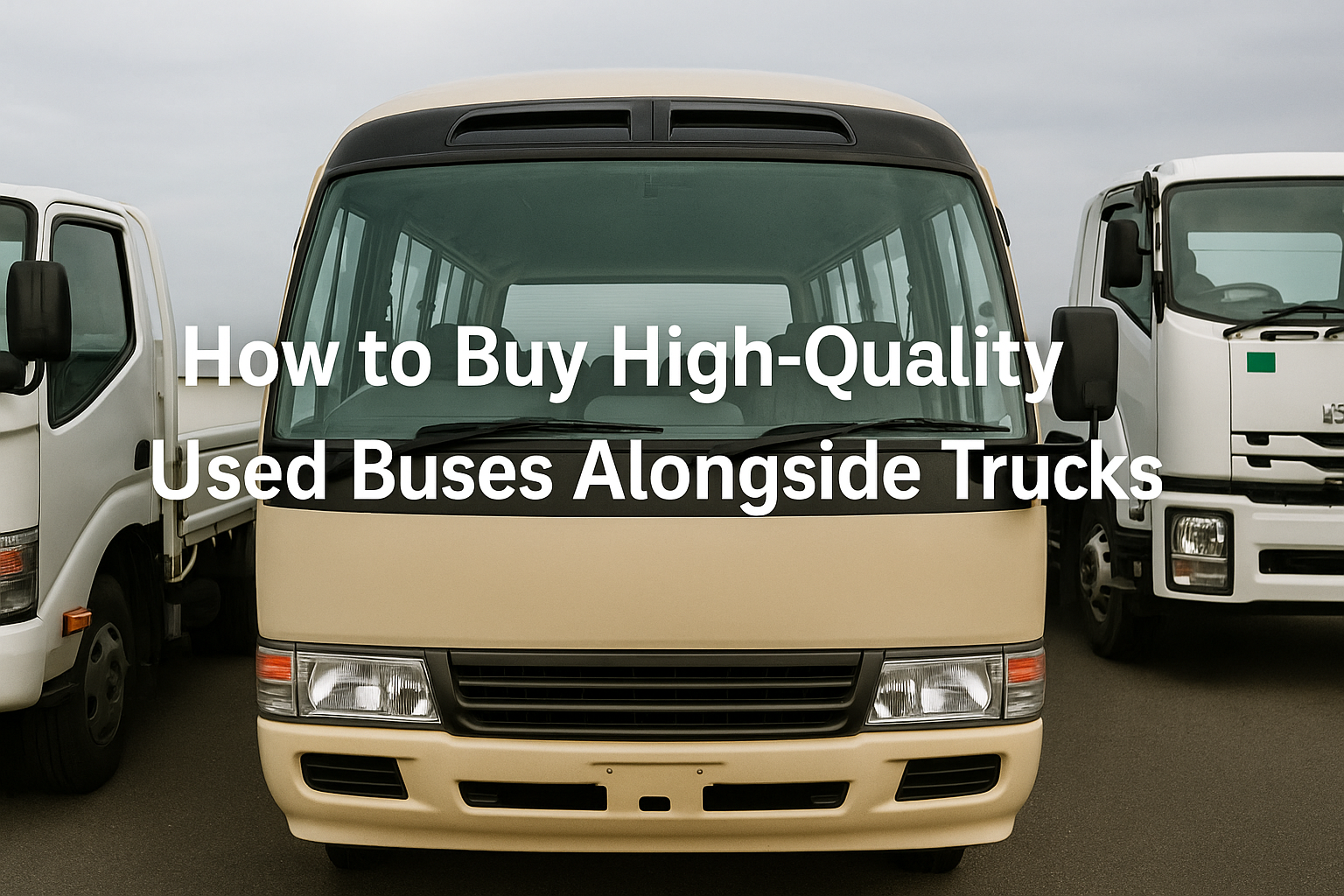
Many global buyers import used trucks from Japan because they offer strong reliability, durable engines, and excellent long-term value. Yet, more buyers now also search for high-quality used buses to expand their transport business. These buses support schools, tourism, staff transport, public routes, and even private companies.
Although buying a used bus is similar to buying a truck, several extra points matter. This guide explains each step clearly. Moreover, it helps you choose the best units with confidence.
1. Start With a Clear Purpose
Before buying a bus, identify why you need it.
Your purpose affects the ideal size, seating capacity, engine type, and features.
Common bus uses in export markets
-
School transport
-
Staff shuttle for factories
-
Tourism and safari tours
-
Airport pickup services
-
City or rural public routes
Once you know the purpose, choosing the right model becomes much easier.
2. Understand Bus Categories
Japanese used buses fall into three main types:
✔ Micro Buses (HiAce, Civilian, Coaster)
Perfect for school routes, hotels, and company shuttles.
They offer good fuel economy, simple maintenance, and easy driving.
✔ Mid-Size Buses (Rosa, Coaster long-body, Civilian 29-seater)
A great balance between size and comfort.
They work well for tourism, staff transport, and regional travel.
✔ Large Buses (Hino Selega, Isuzu Gala, Mitsubishi Aero Queen/Kingo)
They deliver high power, air-suspension comfort, and large seating capacity.
Ideal for long-distance travel, tourism, and public transport.
Understanding the class helps you match your purchase to your business needs.
3. Check Key Specifications
Just like trucks, buses vary widely in specs.
However, bus buyers should check even more details.
Important factors
-
Engine size and fuel type
-
Transmission (manual, automatic, AMT)
-
Seating capacity
-
Air-conditioning performance
-
Suspension type (leaf or air)
-
Luggage space
-
Wheelchair accessibility options
-
Rear vs front engine layout
Additionally, buses often work long hours. Therefore, strong mechanical condition matters even more.
4. Always Request Inspection Reports
A good exporter provides detailed vehicle reports.
Clear information builds trust and reduces risk.
Look for:
-
Engine start video
-
Dashboard photos
-
Undercarriage inspection
-
Tire condition
-
Air-conditioning test
-
Odometer accuracy
-
Rust condition
-
Brake and suspension checks
Furthermore, Japanese inspection standards are strict, which helps buyers feel safe.
5. Compare Buses and Trucks Together
Many buyers purchase both buses and trucks in the same shipment.
This can reduce total freight cost and help expand operations quickly.
Why combine buses and trucks?
-
Lower shipping cost per unit
-
One set of documents
-
Faster fleet expansion
-
Easier communication with the exporter
-
Stronger transport capability for your business
Additionally, Japanese exporters often offer package deals for bulk buyers.
6. Understand Total Import Costs
Used bus import costs vary by country.
Therefore, calculate everything before confirming the purchase.
Costs to consider
-
Vehicle price
-
RoRo or container shipping
-
Import duty
-
VAT or GST
-
Port charges
-
Inland transport
-
Optional reconditioning or repainting
Because buses are large, shipping may cost more than trucks.
Yet, RoRo remains the cheapest and easiest option.
7. Popular Japanese Bus Brands in Export Markets
Japan builds some of the world’s most reliable buses.
Top models buyers trust
-
Toyota Coaster
-
Nissan Civilian
-
Mitsubishi Rosa
-
Hino Selega
-
Isuzu Gala
-
Mitsubishi Aero Queen
These models survive tough roads, hot climates, heavy usage, and long distances.
8. Work Only With Trusted Exporters
A reliable exporter helps you choose the best units, provides honest photos, and manages all export documents.
Explore this trusted guide:
👉 Top 5 Trusted Japanese Used Truck Exporters for Global Buyers
https://everycar-review.com/2025/07/14/top-5-trusted-japanese-used-truck-exporters-for-global-buyers/
Working with a reputable supplier ensures safe purchasing, smooth logistics, and fast communication.
9. Final Tips for Buying High-Quality Used Buses
To succeed in global markets:
-
Know your purpose
-
Choose the right category
-
Check specs carefully
-
Request detailed inspection reports
-
Calculate total import cost
-
Work with a trustworthy exporter
With these steps, you can buy buses and trucks confidently.
Moreover, you will build a strong transport fleet that supports your community and grows your business.