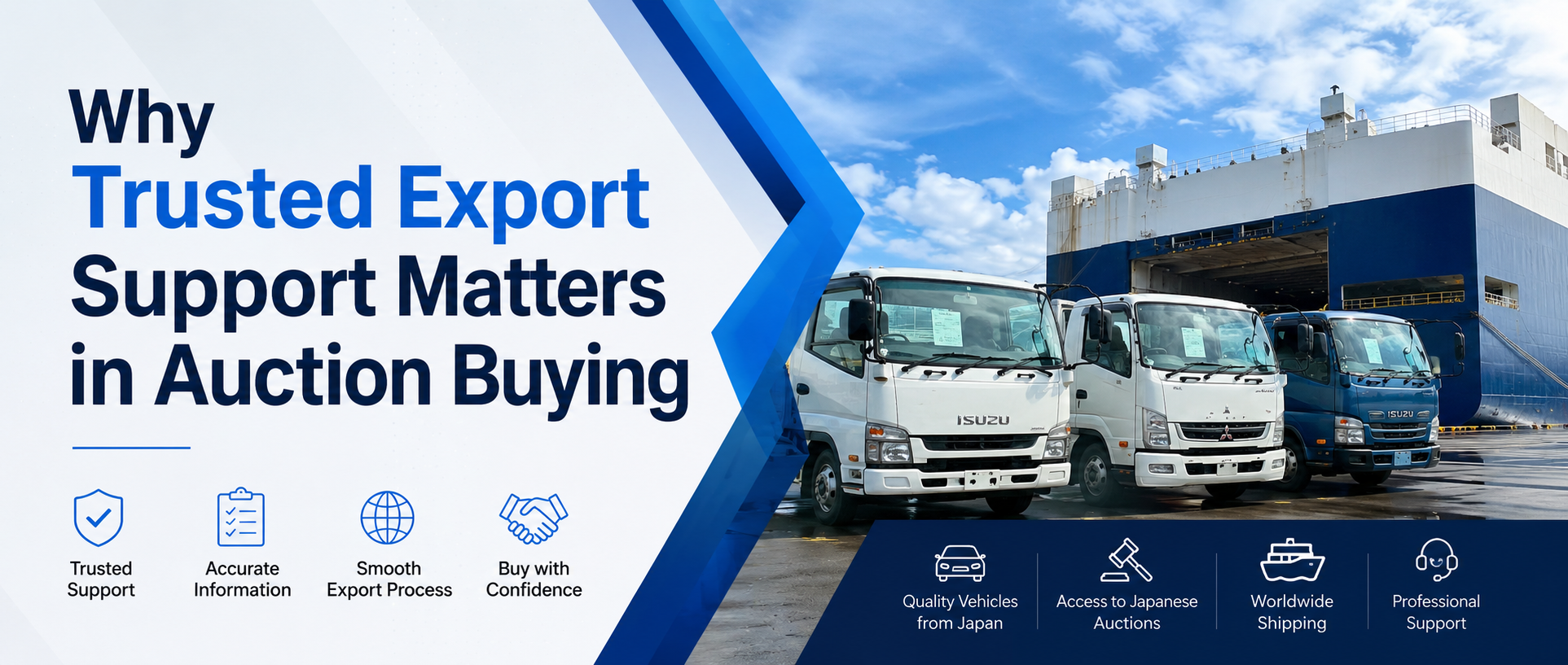
Why Trusted Export Support Matters in Auction Buying
Search available auction vehicles here:
Browse Auction Vehicles
Japan is one of the world’s most trusted sources of high-quality used vehicles. Every week, thousands of cars, trucks, buses, tractors, and machinery are sold through the Japanese vehicle auction system.
For overseas buyers, Japanese auctions offer access to a huge selection of vehicles, competitive prices, and detailed vehicle information. However, many buyers soon discover that finding a vehicle is only one part of the process.
Understanding auction sheets, bidding rules, export procedures, and vehicle conditions requires experience. This is why trusted export support plays an important role when purchasing Auction Stock Japan.
In this guide, we explain how Japanese auctions work, what Auction Stock means, how it differs from Dealer Stock, and why professional support helps buyers purchase with confidence.
Understanding the Japanese Used Vehicle Auction System
A Japanese vehicle auction is a marketplace where licensed dealers buy and sell used vehicles.
Thousands of vehicles enter auction houses every day. Sellers include dealerships, leasing companies, rental companies, businesses, and vehicle owners.
Before a vehicle is listed, auction inspectors examine it and create an auction sheet. Buyers then review the information and place bids during the auction.
The auction process is fast, transparent, and highly organized.
Major auction groups handle large numbers of:
- Passenger cars
- Commercial trucks
- Buses
- Agricultural tractors
- Construction machinery
- Special-purpose vehicles
Because of the large volume of inventory, overseas buyers can often find vehicles that are difficult to locate in their local markets.
What Is Auction Stock?
Auction Stock Japan refers to vehicles currently available through Japanese auction networks.
Unlike vehicles already held by an exporter or dealer, Japanese Auction Stock becomes available only when sellers list the vehicles for auction.
As a result, inventory changes every day.
Buyers can search through thousands of fresh listings and choose vehicles based on:
- Brand
- Model
- Year
- Mileage
- Engine size
- Auction grade
- Budget
This constantly changing inventory is one reason many professional buyers prefer Japanese Auction Stock when sourcing vehicles.
Dealer Stock vs Auction Stock
Dealer Stock
Dealer Stock consists of vehicles already purchased and owned by dealers or exporters.
These vehicles usually have fixed prices and are immediately available for purchase.
Advantages include:
- Quick purchasing process
- Fixed pricing
- No bidding required
- Fast export preparation
Auction Stock
Auction Stock consists of vehicles listed for upcoming auctions.
Buyers compete through bidding and can access a much larger inventory.
Advantages include:
- Massive vehicle selection
- Fresh inventory every day
- Access to rare models
- Opportunity to source vehicles directly from auction
Many experienced importers use both Dealer Stock and Auction Stock depending on their business needs.
Benefits of Using Japanese Auction Stock
Access to Large Inventory
One of the biggest advantages of Auction Stock Japan is vehicle volume.
Thousands of units become available daily, giving buyers more choices than many local markets can offer.
Detailed Vehicle Information
Most auction listings include inspection reports, photographs, and auction sheets.
This information helps buyers evaluate vehicles before bidding.
Competitive Market Pricing
Because auctions involve multiple buyers and sellers, prices are generally determined by market demand.
This creates a transparent environment where buyers can compare different options.
Opportunity to Buy Direct from Japan
Many international buyers choose auctions because they can buy direct from Japan and access vehicles before they reach overseas dealers.
Wide Variety of Vehicles Available
Japanese auctions are not limited to passenger cars.
Buyers can search for:
- Used cars from Japan
- Used trucks from Japan
- Used buses from Japan
- Used tractors from Japan
- Construction machinery
- Forklifts
- Excavators
- Agricultural equipment
This variety makes auctions attractive for dealers, transport companies, farmers, contractors, and machinery importers.
Whether you want a compact car, heavy-duty truck, tourist bus, farm tractor, or excavator, Japanese auctions offer a wide range of options.
The Vehicle Purchasing Process
The purchasing process is usually straightforward when working with a trusted Japanese vehicles exporter.
Step 1: Search Vehicles
Review available Japanese Auction Stock and identify suitable vehicles.
Step 2: Check Auction Sheets
Study the vehicle condition, mileage, repair history, and auction grade.
Step 3: Set a Bid Limit
Determine the maximum amount you are willing to pay.
Step 4: Place the Bid
The exporter submits the bid through auction membership systems.
Step 5: Win the Vehicle
If your bid is successful, the vehicle is purchased.
Step 6: Inspection and Export Preparation
Documents are prepared and shipping arrangements begin.
Step 7: Shipment
The vehicle is loaded and exported to the destination country.
How to Read an Auction Sheet Japan
An Auction sheet Japan report is one of the most important tools when evaluating a vehicle.
Auction inspectors examine the vehicle and record its condition.
Overall Grade
The overall grade provides a general assessment of vehicle condition.
Higher grades typically indicate better condition.
Interior Grade
This section evaluates the cabin condition, including seats, dashboard, and interior wear.
Exterior Diagram
Inspectors use symbols to indicate scratches, dents, repairs, and other cosmetic issues.
Mileage
The recorded mileage appears on the auction sheet.
Inspector Comments
This section often contains valuable notes regarding repairs, mechanical issues, or special conditions.
Understanding auction sheets can be challenging for new buyers. Professional support helps translate and explain these reports accurately.
Important Risks and Points to Consider
Although Japanese auctions are highly organized, buyers should still understand potential risks.
Limited Inspection Time
Vehicles are sold quickly, and overseas buyers cannot physically inspect them before bidding.
Translation Challenges
Auction sheets are often written in Japanese.
Incorrect interpretation can lead to unexpected problems.
Hidden Costs
Buyers should understand:
- Auction fees
- Transport fees
- Port charges
- Shipping costs
- Import duties
- Local registration fees
Market Competition
Popular vehicles may attract many bidders, causing prices to increase.
A realistic bidding strategy is important.
Why Professional Export Support Is Important
Many overseas buyers can search vehicles online. However, successful importing involves much more than finding a vehicle.
Professional support helps buyers avoid mistakes and make informed decisions.
Accurate Auction Sheet Analysis
Experienced exporters can explain auction grades, comments, and condition reports.
Vehicle Selection Assistance
Professionals help buyers choose vehicles that match local market demand and import regulations.
Bidding Support
Experienced teams understand auction trends and can assist with bid planning.
Export Documentation
Export paperwork must be completed correctly to avoid delays.
Shipping Coordination
Professional exporters manage transportation, shipping schedules, and logistics.
This level of professional support allows buyers to focus on their business while reducing risk.
How Beginners Can Buy with Confidence
First-time buyers often worry about making mistakes. Fortunately, several simple steps can improve purchasing confidence.
- Work with a trusted partner
- Study auction sheets carefully
- Set realistic budgets
- Research market demand
- Ask questions before bidding
- Understand total import costs
- Choose exporters with proven experience
Following these steps helps buyers buy with confidence and avoid common mistakes.
Choosing a Trusted Japanese Vehicles Exporter
A reliable exporter acts as more than a vehicle supplier.
The best exporters provide guidance throughout the entire purchasing process.
When evaluating a Japanese vehicles exporter, consider:
- Industry experience
- Export track record
- Vehicle sourcing capabilities
- Auction access
- Customer communication
- Shipping support
- Professional support services
A trusted partner helps reduce uncertainty and improves the overall buying experience.
Final Thoughts
Japanese auctions provide access to one of the largest used vehicle markets in the world.
Whether you are searching for Japanese used vehicles, used cars from Japan, used trucks from Japan, used buses from Japan, used tractors from Japan, or construction machinery, Auction Stock Japan offers extensive choices and transparent information.
However, understanding auction sheets, bidding systems, documentation, and shipping procedures requires knowledge and experience.
This is why trusted export support matters. A reliable exporter helps buyers navigate the process, reduce risk, and import vehicles from Japan with confidence.
EVERY TRADING is a Japanese used vehicle exporter serving customers around the world. The company handles cars, trucks, buses, tractors, and machinery while providing access to Japanese Auction Stock searches.
As a trusted Japanese vehicles exporter, EVERY TRADING offers professional support for vehicle selection, auction participation, export documentation, and shipping arrangements. This support helps overseas buyers purchase vehicles from Japan safely and efficiently.
Learn more about Japanese auctions:
Japanese Car Auction Guide
Start searching your vehicle from Japan today:
Search Auction Vehicles Now


Browse Reliable Used Trucks & Buses from Japan
Carefully selected vehicles ready for export worldwide
Search 100,000+ Dealer Stock Vehicles from Japan
Access a wide selection of vehicles from Japanese dealers nationwide. Updated daily.