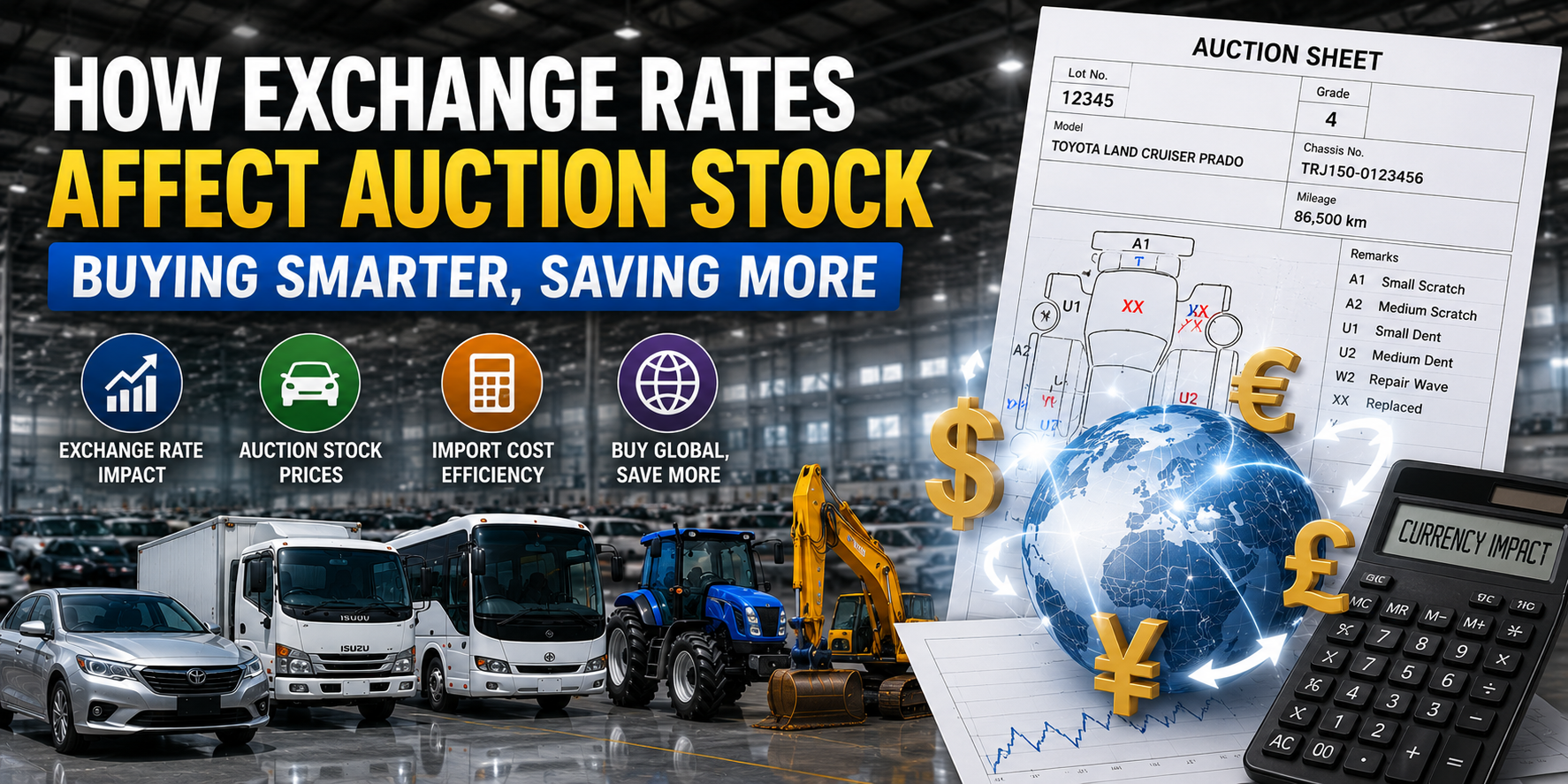
How Exchange Rates Affect Auction Stock Buying
When buying vehicles from Japan, most overseas buyers focus on vehicle condition, auction grades, shipping costs, and market demand. However, one important factor is often overlooked: exchange rates.
Currency exchange rates can significantly affect the total cost of purchasing vehicles through a Japanese vehicle auction. Even when auction prices remain stable, changes in exchange rates can increase or decrease the final cost paid by international buyers.
Whether you are purchasing used cars from Japan, used trucks from Japan, used buses from Japan, used tractors from Japan, or construction machinery, understanding exchange rates can help you make better purchasing decisions and manage your budget more effectively.
This guide explains how exchange rates influence Auction Stock Japan purchases and how overseas buyers can reduce risks when importing vehicles from Japan.
Search available auction vehicles here:
Browse Auction Vehicles
Understanding the Japanese Used Vehicle Auction System
Japan operates one of the largest used vehicle auction networks in the world. Thousands of vehicles are listed daily through auction houses across the country.
Before vehicles are offered for sale, professional inspectors examine them and prepare auction sheets. These reports provide buyers with important information before bidding.
Typical auction sheet information includes:
- Vehicle specifications
- Mileage
- Auction grade
- Exterior condition
- Interior condition
- Damage reports
- Repair history
- Inspector comments
This inspection system helps buyers evaluate Japanese used vehicles before making purchasing decisions.
What Is Auction Stock?
Auction Stock refers to vehicles currently available for bidding through Japanese auction houses.
New vehicles enter the auction system every day, creating a constantly changing inventory.
Japanese Auction Stock includes:
- Passenger vehicles
- SUVs
- Commercial vans
- Used trucks from Japan
- Used buses from Japan
- Used tractors from Japan
- Construction machinery
- Agricultural equipment
The large inventory gives buyers access to many options across different vehicle categories.
Auction Stock vs Dealer Stock
Auction Stock
- Sold through bidding
- Large vehicle selection
- Market-based pricing
- Frequent new inventory
- Detailed auction inspections
Dealer Stock
- Fixed pricing
- Immediate purchase available
- Smaller inventory selection
- Direct transactions
- Often export-ready
While both options are valuable, Auction Stock Japan often offers more variety and greater purchasing flexibility.
What Is an Exchange Rate?
An exchange rate represents the value of one currency compared to another.
For example, buyers may convert:
- US Dollars to Japanese Yen
- Australian Dollars to Japanese Yen
- South African Rand to Japanese Yen
- Kenyan Shillings to Japanese Yen
- British Pounds to Japanese Yen
Because Japanese vehicle auctions operate in Japanese Yen, exchange rates directly affect purchasing costs.
Why Exchange Rates Matter in Vehicle Imports
Auction prices are usually listed in Japanese Yen.
Even if the vehicle price remains unchanged, the amount paid in your local currency may change significantly due to exchange rate fluctuations.
This means:
- Vehicle affordability can change
- Profit margins can change
- Import costs can increase or decrease
- Bidding strategies may need adjustment
Understanding exchange rates is therefore important for both individual buyers and vehicle import businesses.
How a Strong Local Currency Helps Buyers
When your local currency strengthens against the Japanese Yen, buying vehicles from Japan becomes more affordable.
This often allows buyers to:
- Increase bidding budgets
- Purchase higher-grade vehicles
- Buy additional inventory
- Improve profit margins
Many experienced importers closely monitor currency movements before placing large auction bids.
How a Weak Local Currency Affects Buyers
When your local currency weakens against the Yen, vehicle purchases become more expensive.
Buyers may face:
- Higher vehicle costs
- Reduced purchasing power
- Lower profit margins
- Smaller bidding budgets
In such situations, buyers often become more selective when choosing vehicles.
Exchange Rates and Auction Competition
Exchange rates can influence bidding activity across international markets.
When the Japanese Yen weakens, buyers from many countries may increase purchasing activity because Japanese vehicles become more affordable.
As demand rises, auction competition may become stronger.
This can affect:
- Final auction prices
- Vehicle availability
- Popular model demand
- Export market activity
Understanding these trends helps buyers prepare realistic bidding strategies.
Vehicle Categories Most Affected by Exchange Rates
Used Cars from Japan
Passenger vehicles are highly sensitive to exchange rate changes because they are traded in large volumes globally.
Used Trucks from Japan
Commercial trucks often involve larger purchase values, making exchange rates especially important.
Used Buses from Japan
Bus purchases typically represent major investments, so currency fluctuations can significantly affect budgets.
Used Tractors from Japan
Agricultural buyers frequently monitor exchange rates because equipment purchases often involve multiple units.
Construction Machinery
Heavy equipment buyers often consider exchange rates carefully due to high vehicle and shipping costs.
Using Exchange Rates When Setting Bidding Budgets
Successful buyers calculate bidding budgets using current exchange rates before entering auctions.
A practical approach includes:
- Monitoring exchange rate trends
- Calculating maximum purchase costs
- Including shipping expenses
- Allowing a safety margin
- Reviewing local resale values
This process helps prevent unexpected costs after winning an auction.
How Auction Sheets Help Buyers Make Better Decisions
Even when exchange rates are favorable, buyers should never ignore vehicle condition.
The Auction sheet Japan report remains one of the most important evaluation tools.
Buyers should review:
- Auction grade
- Interior grade
- Mileage
- Repair history
- Damage diagrams
- Inspector comments
Strong exchange rates are beneficial, but vehicle quality remains essential.
Why Photos Should Be Reviewed Alongside Auction Sheets
Auction sheets provide inspection data, while photos provide visual confirmation.
When used together, they help buyers:
- Confirm damage severity
- Review repair quality
- Assess appearance
- Estimate resale potential
- Reduce purchasing risks
Successful importers always review both sources before bidding.
The Typical Vehicle Purchasing Process
The process of buying Auction Stock Japan vehicles generally includes:
- Monitor exchange rates
- Search auction inventory
- Review auction sheets
- Check vehicle photos
- Calculate total costs
- Set bidding limits
- Participate in auctions
- Complete payment
- Arrange export procedures
- Ship the vehicle overseas
Planning ahead helps buyers manage costs more effectively.
Common Exchange Rate Mistakes Buyers Should Avoid
- Ignoring currency fluctuations
- Using outdated exchange rates
- Focusing only on auction prices
- Forgetting shipping costs
- Overbidding during favorable market periods
- Failing to monitor currency trends
Careful financial planning helps reduce these risks.
Benefits of Using Japanese Auction Stock
Despite exchange rate fluctuations, Japanese Auction Stock continues to offer many advantages.
- Large inventory selection
- Transparent inspections
- Frequent new listings
- Reliable auction grading systems
- Access to cars, trucks, buses, tractors, and machinery
- Opportunity to buy direct from Japan
These advantages continue to attract buyers from around the world.
Why Work with a Professional Export Company?
Exchange rates, auction prices, vehicle conditions, and shipping costs can be difficult to manage simultaneously.
An experienced exporter can help buyers:
- Understand total purchase costs
- Review auction sheets
- Evaluate vehicle conditions
- Monitor market conditions
- Arrange export procedures
- Manage shipping logistics
Professional support helps buyers reduce risk and improve purchasing efficiency.
Tips for Beginners to Buy with Confidence
First-time buyers should approach vehicle imports carefully.
- Monitor exchange rates regularly
- Set realistic budgets
- Review Auction sheet Japan reports
- Check vehicle photos carefully
- Compare multiple vehicles
- Avoid emotional bidding
- Work with a trusted partner
These simple steps help buyers buy with confidence and make informed decisions.
Final Thoughts
Exchange rates play an important role in Auction Stock Japan purchasing decisions. Even small currency changes can affect vehicle affordability, bidding strategies, and overall profitability.
By understanding exchange rates, monitoring market conditions, reviewing auction sheets, and evaluating total costs, buyers can make smarter purchasing decisions when importing vehicles from Japan.
Whether you are looking for used cars from Japan, used trucks from Japan, used buses from Japan, used tractors from Japan, or construction machinery, exchange rate awareness is an important part of successful importing.
EVERY TRADING is a Japanese used vehicle exporter serving customers worldwide. The company exports cars, trucks, buses, tractors, machinery, and many other vehicle categories.
Buyers can search Japanese Auction Stock listings and receive professional support throughout the purchasing process. As a trusted Japanese vehicles exporter and trusted partner, EVERY TRADING assists with auction evaluation, export documentation, shipping arrangements, and vehicle sourcing.
Learn more about Japanese auctions:
Japanese Car Auction Guide
Start searching your vehicle from Japan today:
Search Auction Vehicles Now


Browse Reliable Used Trucks & Buses from Japan
Carefully selected vehicles ready for export worldwide
Search 100,000+ Dealer Stock Vehicles from Japan
Access a wide selection of vehicles from Japanese dealers nationwide. Updated daily.