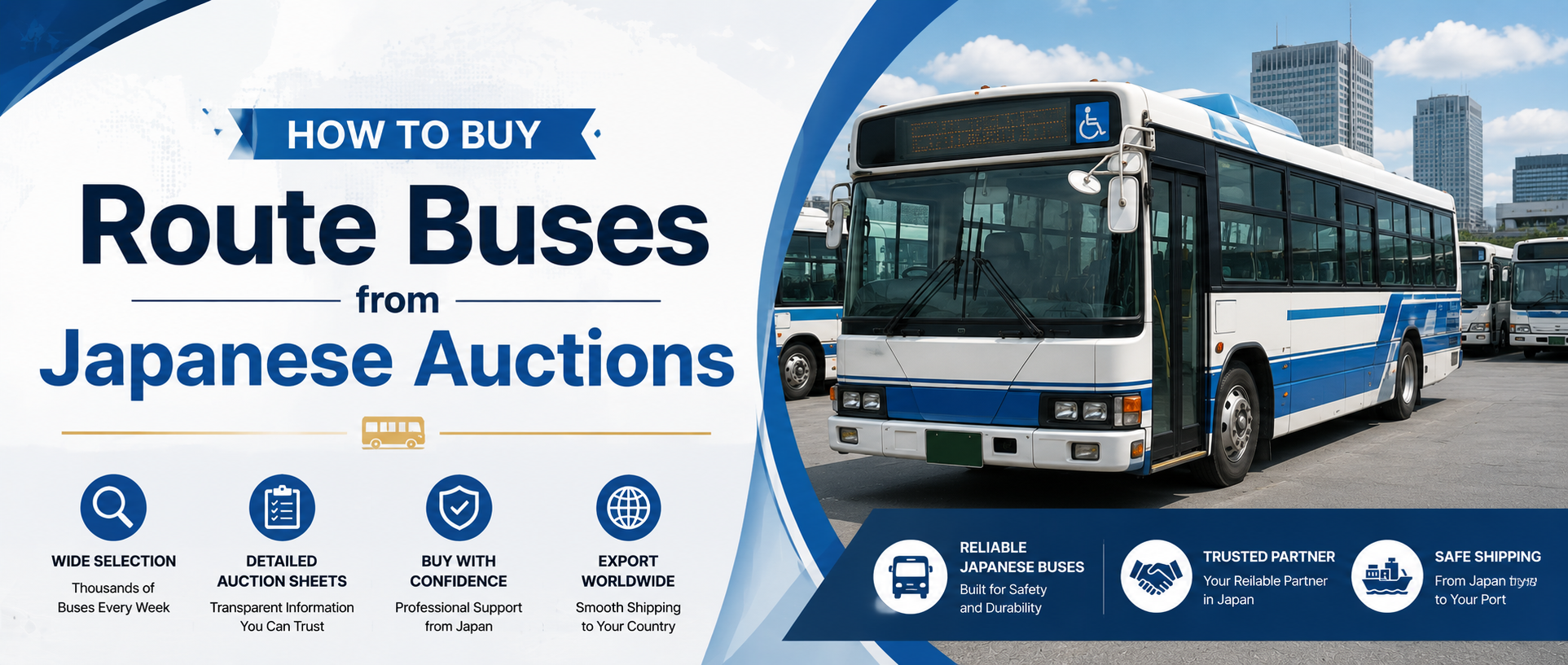
How to Buy Route Buses from Japanese Auctions
Route buses are important vehicles for public transport, school transport, company shuttles, hotel transfers, and community services.
Many overseas buyers look to Japan when they need reliable used buses for daily passenger operations.
Japanese route buses are often valued for their maintenance history, practical design, strong diesel engines, and long service life.
For importers, transport companies, and local operators, Japanese vehicle auctions can be a useful place to find suitable buses.
This guide explains how to buy route buses from Japanese auctions, how Auction Stock Japan works, and how overseas buyers can review vehicles before purchase.
Search available auction vehicles here:
Browse Auction Vehicles
How Japanese Vehicle Auctions Work
A Japanese vehicle auction is a wholesale marketplace where licensed dealers buy and sell used vehicles.
Every day, auction houses across Japan list many types of Japanese used vehicles.
These vehicles come from bus companies, fleet operators, rental companies, leasing firms, government organizations, schools, and trade-in networks.
Before auction day, professional inspectors check each vehicle.
They prepare an auction sheet with vehicle details, condition notes, grades, and comments.
Basic Auction Process
- The vehicle arrives at the auction yard
- An inspection is completed
- An auction sheet is prepared
- Photos and vehicle details are listed
- Registered dealers place bids
- The successful bidder purchases the vehicle
- Export preparation starts after purchase
This system helps buyers compare vehicles and understand condition before making a bidding decision.
What Is Auction Stock Japan?
Auction Stock Japan means vehicles that are currently available for bidding through Japanese auction networks.
These vehicles have not yet been purchased and may be available only for a limited time.
Japanese Auction Stock changes every day.
New vehicles enter auctions constantly, while other vehicles sell quickly.
For route bus buyers, this gives access to many bus types, body sizes, seating layouts, mileage levels, and price ranges.
Common Route Buses Found in Japanese Auctions
- City route buses
- Local passenger buses
- School buses
- Shuttle buses
- Low-floor buses
- Medium-size route buses
- Large public transport buses
- Accessible buses with wheelchair equipment
Popular Japanese bus brands often include Hino, Isuzu, Mitsubishi Fuso, Nissan Diesel, and Toyota.
Auction Stock vs Dealer Stock
Overseas buyers often compare Auction Stock and Dealer Stock before choosing how to buy.
Both options have benefits.
Auction Stock
Auction Stock vehicles are sold through bidding.
The final price depends on vehicle condition, market demand, and competition from other buyers.
- Large selection of vehicles
- Many route bus specifications
- Market-based pricing
- Access to rare bus layouts
- Inventory changes daily
Dealer Stock
Dealer Stock means vehicles already purchased and owned by dealers or exporters.
These vehicles usually have fixed prices.
- Immediate purchase is possible
- Fixed price is clear
- Buying process is simpler
- Vehicle is already secured
- Selection may be smaller than auctions
Auction Stock is useful when buyers want more choices.
Dealer Stock may be better when buyers need a faster and simpler purchase.
Why Overseas Buyers Use Japanese Auction Stock
Many overseas buyers use Japanese Auction Stock because it offers transparency, variety, and access to business-use vehicles.
Large Vehicle Selection
Japanese auctions are not limited to route buses.
Buyers can also search for Used cars from Japan, Used trucks from Japan, Used buses from Japan, Used tractors from Japan, and machinery.
This is helpful for importers who handle many vehicle categories.
A buyer may search for buses, commercial vans, trucks, tractors, and construction equipment through one auction network.
Detailed Vehicle Information
Auction sheets provide useful information about mileage, grade, repair history, exterior condition, interior condition, and inspector comments.
For buses, this information is important because passenger vehicles must be safe, comfortable, and suitable for daily operation.
Transparent Market Pricing
Auction prices reflect real market demand.
This helps buyers understand current value before they Buy direct from Japan.
However, the lowest price is not always the best choice.
A bus with better maintenance, cleaner interior, and strong mechanical condition may offer better long-term value.
Types of Route Buses to Consider
Large Route Buses
Large route buses are suitable for public transport, city routes, and high-passenger operations.
They offer high seating capacity and strong durability.
Buyers should check engine condition, transmission operation, air conditioning, door systems, and underbody rust.
Medium-Size Route Buses
Medium-size route buses are practical for rural routes, schools, hotels, and company transport.
They are often easier to operate on narrow roads.
They can be a good option for buyers who need passenger capacity without the size of a full city bus.
Low-Floor Buses
Low-floor buses support easier passenger entry and exit.
They are useful for city transport, elderly passengers, and wheelchair access.
Buyers should confirm suspension condition, ramp equipment, door operation, and local import rules.
Shuttle and Community Buses
Smaller route-style buses are often used for schools, hotels, factories, airports, and local community transport.
These buses may be easier to import and operate in smaller markets.
How to Read an Auction Sheet Japan
The Auction sheet Japan report is one of the most important documents for overseas buyers.
It helps buyers understand the condition of the bus before bidding.
Main Information on an Auction Sheet
- Manufacturer and model
- Year of registration
- Mileage
- Engine displacement
- Transmission type
- Fuel type
- Auction grade
- Interior grade
- Exterior condition
- Repair history
- Inspector comments
Bus-Specific Points to Check
- Number of seats
- Standing passenger space
- Door system condition
- Air conditioning operation
- Floor and step condition
- Interior wear
- Wheelchair ramp or lift
- Chassis rust
- Engine and transmission notes
- Tire condition
For route buses, the auction grade alone is not enough.
Buyers should carefully review photos, comments, and equipment details.
Purchase Flow for Overseas Buyers
Step 1: Decide the Bus Type
First, decide how the bus will be used.
A city route bus, school bus, hotel shuttle, and community bus may require different specifications.
Step 2: Search Japanese Auction Stock
Use auction search tools to find available buses.
Filter by brand, year, mileage, seating capacity, transmission, fuel type, and body size.
Step 3: Review the Auction Sheet
Check the auction sheet, inspection comments, and photos.
Ask for translation when Japanese comments are unclear.
Step 4: Set a Budget
Set your maximum bid before auction day.
Include the vehicle price, export fees, inland transport, shipping, customs charges, and destination costs.
Step 5: Place a Bid
A Japanese vehicles exporter or auction agent places the bid on your behalf.
If your bid is successful, the bus is purchased.
Step 6: Complete Export Preparation
After purchase, the exporter handles documentation, inspection requirements, customs procedures, and shipping preparation.
Step 7: Ship the Bus
Route buses are often shipped by RORO vessel, depending on the route and destination port.
Important Cautions Before Buying
Check Import Regulations
Each country has different rules for used buses.
Some countries have age limits, emissions rules, roadworthiness inspections, and passenger transport regulations.
Confirm Seating Layout
Route buses may have fewer seats and more standing space than coaches.
Make sure the layout matches your business purpose.
Review Air Conditioning
Air conditioning is very important in hot climates.
Check comments and photos carefully, and ask for support when needed.
Check Rust and Undercarriage Condition
Buses often operate every day.
Undercarriage rust, suspension wear, and frame condition should be reviewed carefully.
Calculate Total Cost
The auction price is only one part of the total cost.
Freight, customs, taxes, port fees, inspection costs, and registration fees must be included.
Why Use a Professional Export Company?
Most overseas buyers cannot bid directly in a Japanese vehicle auction.
A registered exporter or auction agent is needed.
A professional Japanese vehicles exporter helps buyers understand vehicle condition, bid correctly, and complete export procedures.
Professional Support Can Include
- Auction Stock search assistance
- Auction sheet translation
- Bus condition review
- Market price advice
- Bidding support
- Export documentation
- Shipping arrangement
- Pre-shipment communication
Professional support helps reduce risk.
It also helps beginners buy with confidence when they are not familiar with Japanese auctions.
Beginner Tips to Buy with Confidence
- Start with well-known Japanese bus brands
- Confirm the seating layout before bidding
- Review auction sheets carefully
- Check air conditioning and door systems
- Compare several buses before choosing one
- Understand total import costs
- Confirm destination import rules early
- Work with a trusted partner in Japan
A route bus should match your business needs, road conditions, and passenger requirements.
Buying only by low price can create problems later.
Can Buyers Also Source Cars, Trucks, Tractors, and Machinery?
Yes.
Japanese auctions offer many types of vehicles and equipment.
Buyers can search Used cars from Japan, Used trucks from Japan, Used buses from Japan, Used tractors from Japan, and machinery through the same auction system.
This wide coverage helps importers, dealers, transport companies, farms, and construction businesses source vehicles from one country with consistent support.
Final Review
Japanese auctions can be a strong source for route buses.
They offer large selection, detailed vehicle information, and access to many Japanese used vehicles for passenger transport businesses.
However, buyers should study the auction sheet, check bus-specific details, and understand the total import process before bidding.
With the right preparation and professional support, overseas buyers can Import vehicles from Japan and purchase route buses with confidence.
About EVERY TRADING
EVERY TRADING is a Japanese used vehicle export company serving customers around the world.
The company handles cars, trucks, buses, tractors, machinery, and many other Japanese used vehicles.
Overseas buyers can search Japanese Auction Stock and access a wide range of auction vehicles from Japan.
As a trusted Japanese vehicles exporter, EVERY TRADING provides professional support throughout the buying process, including vehicle verification, auction sheet review, export procedures, documentation, and shipping arrangements.
The goal is to help overseas buyers Buy direct from Japan and buy with confidence through clear information and reliable guidance.
Learn more about Japanese auctions:
Japanese Car Auction Guide
Start searching your vehicle from Japan today:
Search Auction Vehicles Now


Browse Reliable Used Trucks & Buses from Japan
Carefully selected vehicles ready for export worldwide
Search 100,000+ Dealer Stock Vehicles from Japan
Access a wide selection of vehicles from Japanese dealers nationwide. Updated daily.