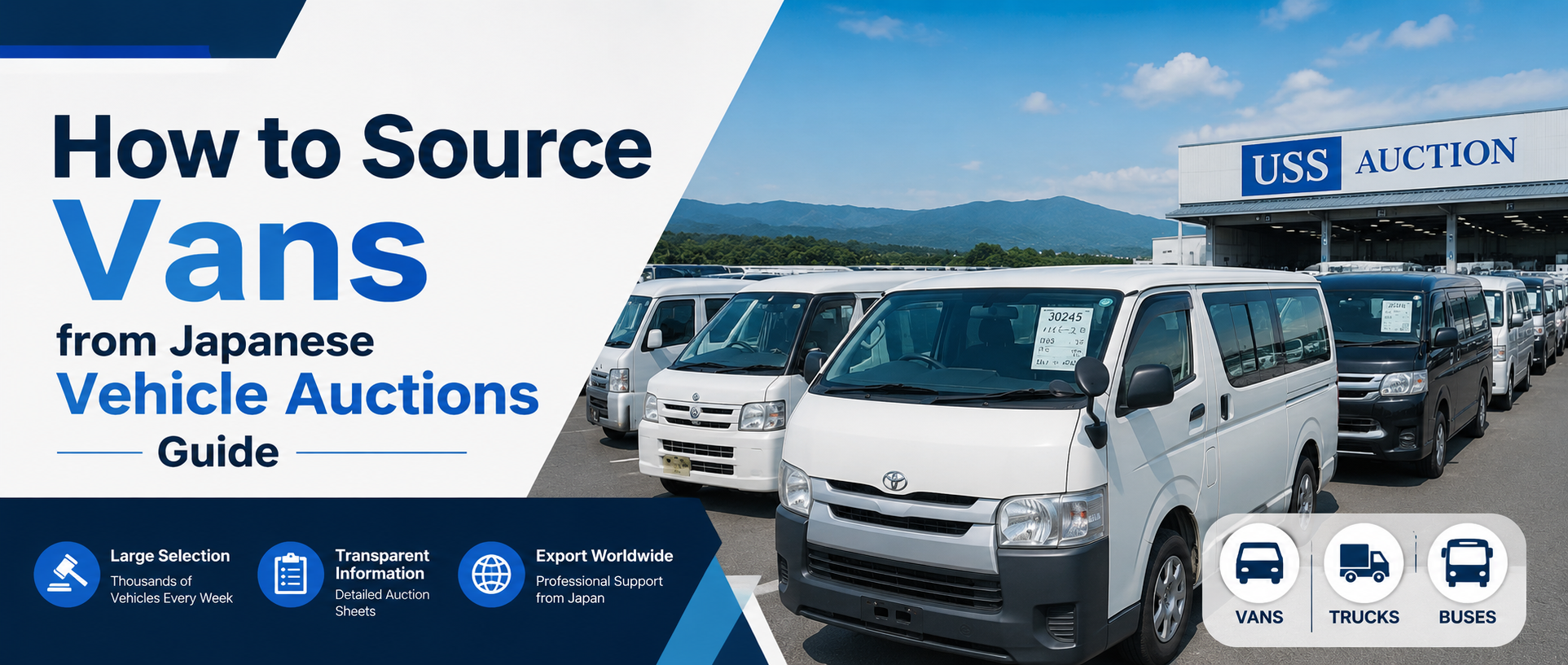
How to Source Vans from Japanese Vehicle Auctions
Japanese vehicle auctions are one of the largest sources of used vehicles in the world.
Every week, hundreds of thousands of vehicles are listed across auction networks throughout Japan.
For overseas buyers, auctions provide access to a huge selection of vans, cars, trucks, buses, tractors, and machinery.
Many importers use Auction Stock Japan as their primary sourcing method because it offers transparency, variety, and competitive market pricing.
Whether you are looking for delivery vans, passenger vans, commercial vehicles, or specialty vehicles, understanding how Japanese Auction Stock works can help you make better purchasing decisions and buy with confidence.
Search available auction vehicles here:
Browse Auction Vehicles
Understanding the Japanese Vehicle Auction System
A Japanese vehicle auction is a wholesale marketplace where dealers buy and sell used vehicles.
Most vehicles sold through auctions come from trade-ins, lease returns, fleet companies, rental companies, and private owners.
Unlike retail dealerships, auction houses focus on vehicle transactions between licensed dealers.
Because of this structure, buyers gain access to a much larger inventory than what is normally available through dealer stock alone.
Major auction groups operate throughout Japan and offer thousands of vehicles every day.
Many exporters provide access to these auctions for overseas customers.
How Auctions Operate
- Vehicles are inspected before auction
- An auction sheet is prepared
- Vehicles receive a grade and condition report
- Dealers place bids electronically
- The highest bidder wins the vehicle
This process creates a transparent marketplace where vehicle condition and market demand influence pricing.
What Is Auction Stock?
Auction Stock refers to vehicles currently available through Japanese vehicle auction networks.
These vehicles have not yet been purchased by dealers and remain available for bidding.
Japanese Auction Stock includes a wide range of vehicle categories:
- Passenger cars
- Commercial vans
- Mini vans
- Used trucks from Japan
- Used buses from Japan
- Used tractors from Japan
- Construction and industrial machinery
For many buyers, Auction Stock Japan provides the largest selection of vehicles available from Japan at any given time.
Auction Stock vs Dealer Stock
Understanding the difference between Japanese Auction Stock and dealer stock is important before making a purchase.
Auction Stock
- Vehicles are sold through bidding
- Large inventory available daily
- Market-driven pricing
- Access to rare and specialized vehicles
- Vehicle availability changes constantly
Dealer Stock
- Vehicles are already owned by dealers
- Fixed purchase prices
- Immediate purchase possible
- Smaller inventory compared to auctions
- Faster transaction process
Many professional buyers use both sourcing methods depending on their business goals.
Auction Stock often provides more options, while dealer stock offers convenience and speed.
Why Overseas Buyers Use Auction Stock Japan
Many importers prefer Auction Stock Japan because it gives access to vehicles that may never appear on public retail websites.
Huge Vehicle Selection
Thousands of vehicles enter auctions every day.
This allows buyers to compare multiple options and find vehicles that match their budget and requirements.
Access to Specialized Vans
Japanese auctions frequently offer:
- Cargo vans
- Refrigerated vans
- Passenger vans
- Wheelchair-accessible vans
- Utility vans
- Business fleet vehicles
This variety makes auctions attractive for commercial buyers and vehicle dealers.
Transparency
Auction sheets provide detailed condition reports.
Buyers can review vehicle information before placing bids.
Market-Based Pricing
Auction prices reflect actual market demand.
As a result, buyers often gain a clear understanding of current market values.
Finding More Than Just Vans
Although this guide focuses on vans, Japanese vehicle auctions offer much more.
Many international buyers source multiple vehicle categories from the same auction network.
- Used cars from Japan
- Used trucks from Japan
- Used buses from Japan
- Used tractors from Japan
- Forklifts
- Excavators
- Agricultural machinery
- Construction machinery
This flexibility helps importers build inventory across multiple business sectors.
The Vehicle Purchasing Process
Understanding the purchasing process helps overseas buyers avoid confusion and delays.
Step 1: Search Auction Stock
Review available vehicles through an exporter or auction access platform.
Filter vehicles by make, model, year, mileage, and vehicle type.
Step 2: Review Auction Sheets
Carefully check the auction sheet Japan inspection report.
Review grades, comments, repair history, and condition notes.
Step 3: Set a Budget
Determine your maximum bid before the auction starts.
Include shipping, export fees, taxes, and destination costs.
Step 4: Place a Bid
Submit your maximum bid through your exporter or auction agent.
Step 5: Win the Auction
If your bid is successful, the vehicle is purchased and moved to the exporter’s facility.
Step 6: Export Procedures
The exporter handles documentation, inspection requirements, customs procedures, and shipping arrangements.
Step 7: Shipment
The vehicle is loaded and shipped to your destination country.
How to Read an Auction Sheet Japan
The auction sheet is one of the most important documents in the Japanese vehicle auction system.
It provides an independent assessment of vehicle condition.
Key Information Found on Auction Sheets
- Vehicle make and model
- Year of manufacture
- Mileage
- Engine size
- Transmission type
- Vehicle grade
- Interior condition grade
- Exterior condition grade
- Repair history
- Inspector comments
Condition Markings
Auction sheets often contain diagrams with symbols indicating scratches, dents, repairs, paint issues, and other cosmetic conditions.
Learning these markings helps buyers evaluate vehicles more accurately.
Understanding Auction Grades
- Grade 5 – Excellent condition
- Grade 4.5 – Very good condition
- Grade 4 – Good used condition
- Grade 3.5 – Average used condition
- Grade 3 – More visible wear
- R or RA – Repaired accident history
Auction grading standards vary slightly between auction houses, so professional guidance can be valuable.
Important Things to Watch Out For
Although Japanese auctions are highly respected, buyers should still conduct careful due diligence.
Translation Issues
Many auction sheets are written in Japanese.
Professional translation helps avoid misunderstandings.
Repair History
Always review accident and repair records.
A repaired vehicle may still be suitable, but buyers should understand its history.
Shipping Costs
The winning bid is only one part of the total cost.
Always calculate transportation, export fees, and destination charges.
Import Regulations
Each country has different import requirements.
Confirm age restrictions, emissions standards, and inspection rules before purchasing.
Why Work With a Professional Export Company?
Many overseas buyers choose to work with a Japanese vehicles exporter because auctions can be complex for first-time buyers.
A professional exporter provides valuable assistance throughout the process.
Benefits of Professional Support
- Auction sheet translation
- Vehicle condition reviews
- Bidding assistance
- Market value guidance
- Export documentation management
- Shipping arrangements
- Customer support after purchase
Professional support reduces risk and helps buyers make informed decisions.
A trusted partner can also help identify suitable vehicles based on business requirements and destination market conditions.
Tips for First-Time Buyers
If you are planning to buy direct from Japan for the first time, these recommendations can help.
- Start with common vehicle models
- Study auction grades carefully
- Review auction sheet information thoroughly
- Understand total landed costs
- Work with a trusted Japanese vehicles exporter
- Ask questions before bidding
- Verify destination import regulations
- Avoid emotional bidding decisions
Following these steps helps first-time importers buy with confidence and reduce unnecessary risks.
Conclusion
Japanese Auction Stock provides one of the largest and most transparent used vehicle marketplaces in the world.
Whether you want vans, cars, trucks, buses, tractors, or machinery, Japanese vehicle auctions offer extensive selection and reliable vehicle information.
By understanding auction sheets, purchasing procedures, and export requirements, overseas buyers can make informed decisions and successfully import vehicles from Japan.
Working with experienced exporters and reviewing vehicle information carefully allows buyers to source Japanese used vehicles with greater confidence and efficiency.
About EVERY TRADING
EVERY TRADING is a Japanese used vehicle export company serving customers around the world.
The company handles cars, trucks, buses, tractors, machinery, and many other vehicle categories.
Customers can search Japanese Auction Stock and access a wide range of auction vehicles through Japan’s auction network.
As a trusted Japanese vehicles exporter, EVERY TRADING provides professional support throughout the buying process, including vehicle verification, auction bidding assistance, export procedures, documentation, and shipping arrangements.
The goal is to help overseas buyers buy direct from Japan and buy with confidence through reliable guidance and transparent information.
Learn more about Japanese auctions:
Japanese Car Auction Guide
Start searching your vehicle from Japan today:
Search Auction Vehicles Now


Browse Reliable Used Trucks & Buses from Japan
Carefully selected vehicles ready for export worldwide
Search 100,000+ Dealer Stock Vehicles from Japan
Access a wide selection of vehicles from Japanese dealers nationwide. Updated daily.