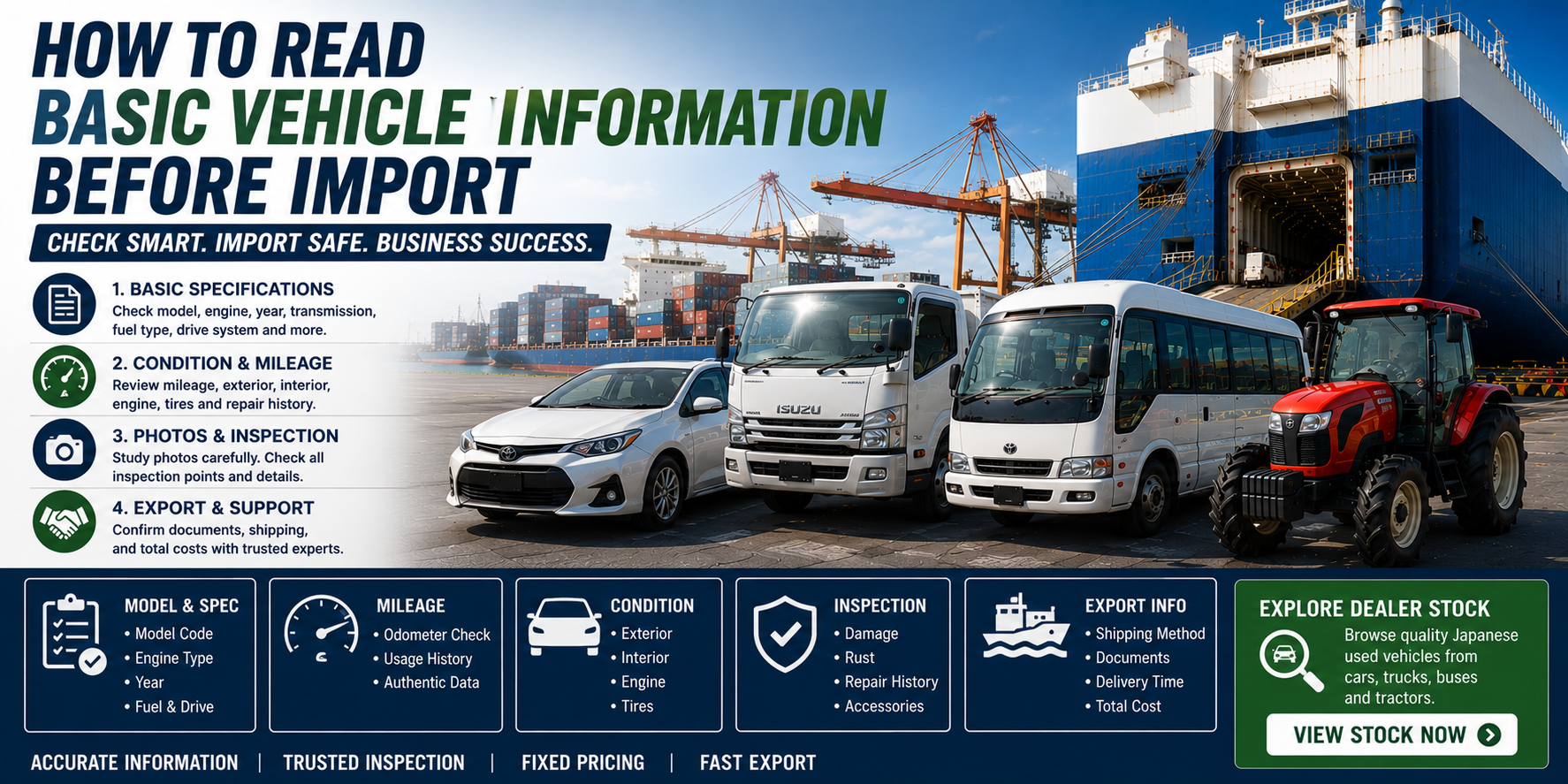
How to Read Basic Vehicle Information Before Import
How to Read Basic Vehicle Information Before Import is an important skill for overseas buyers who want to purchase vehicles from Japan safely and efficiently. Many importers rely on online listings when selecting used cars, trucks, buses, and tractors from Japan.
Understanding vehicle information correctly helps buyers reduce risks and make better purchasing decisions. Before importing, buyers should carefully review vehicle details, inspection points, photos, and specifications.
Today, dealer stock has become one of the easiest ways to source vehicles from Japan. Dealer stock vehicles are already available with fixed pricing and detailed information. With access to Japanese dealer stock vehicles, buyers can compare inventory quickly and arrange export faster than traditional auction systems.
For overseas importers, simple and accurate vehicle information is very important for successful business operations.
1. Understand Basic Vehicle Specifications
The first step before importing a vehicle is understanding the basic specifications listed in the vehicle information.
Important vehicle details usually include:
- Vehicle model
- Model code
- Engine type
- Year of manufacture
- Transmission type
- Fuel type
- Drive system
For example, buyers should confirm whether the vehicle uses diesel or gasoline because fuel availability differs between countries.
Transmission type is also important. Some markets prefer automatic vehicles, while others mainly use manual transmission.
Buyers should also check whether the vehicle is:
- 2WD
- 4WD
- Left-hand drive
- Right-hand drive
These specifications affect driving performance, maintenance, and local market demand.
Understanding these details helps buyers select vehicles that match business and customer needs.
2. Check Mileage and Vehicle Condition
Mileage is one of the most important inspection points when importing used vehicles from Japan.
Lower mileage often means less wear, but vehicle condition is also very important.
Buyers should carefully review:
- Exterior condition
- Interior cleanliness
- Engine condition
- Rust or corrosion
- Repair history
- Tire condition
Japanese vehicles are often maintained carefully because Japan has strict inspection systems. This is one reason Japanese used vehicles remain highly trusted worldwide.
With used vehicles from Japan dealer stock, buyers can review vehicle photos and inspection information more easily before purchasing.
Professional exporters can also help buyers understand condition details clearly and select vehicles that match their budgets and operational needs.
3. Understand the Advantages of Dealer Stock
Dealer stock provides many important advantages for overseas buyers.
Unlike auctions, dealer stock vehicles are already available for immediate purchase with fixed pricing.
Main dealer stock advantages include:
- Fast purchasing process
- Stable pricing
- Quick export arrangements
- Easy vehicle comparison
Auction systems may offer additional inventory, but auctions often require waiting for bidding schedules and final price confirmation.
Dealer stock allows buyers to act quickly when suitable vehicles become available.
This speed is especially important for:
- Vehicle dealers
- Transport operators
- Construction companies
- Agricultural businesses
Dealer stock creates a simpler and more predictable purchasing experience, especially for first-time importers.
4. Work with a Trusted Export Partner
Reliable export support is very important when importing vehicles from Japan.
Professional exporters help buyers confirm vehicle details and simplify the export process.
Export support usually includes:
- Vehicle sourcing assistance
- Condition verification
- Shipping arrangements
- Export documentation
Trusted exporters also help buyers understand:
- Shipping schedules
- Import procedures
- Local regulations
- Total import costs
This support helps buyers reduce risks and avoid costly mistakes.
To learn more about dealer stock purchasing, visit the Japanese dealer stock vehicles guide.
Working with experienced exporters creates a smoother and more efficient import experience.
Conclusion
How to Read Basic Vehicle Information Before Import is essential for overseas buyers who want to purchase vehicles from Japan safely and confidently.
Understanding vehicle specifications, inspection points, mileage, and condition details helps buyers make better purchasing decisions and reduce business risks.
Dealer stock provides immediate purchase opportunities, fixed pricing, and faster export arrangements. This makes importing Japanese used cars, trucks, buses, and tractors simpler and more efficient.
EVERY supports overseas buyers with trusted sourcing and professional export services. With clear vehicle information and reliable support, importing vehicles from Japan becomes safer, faster, and easier for global buyers.


Browse Reliable Used Trucks & Buses from Japan
Carefully selected vehicles ready for export worldwide
Search 100,000+ Dealer Stock Vehicles from Japan
Access a wide selection of vehicles from Japanese dealers nationwide. Updated daily.