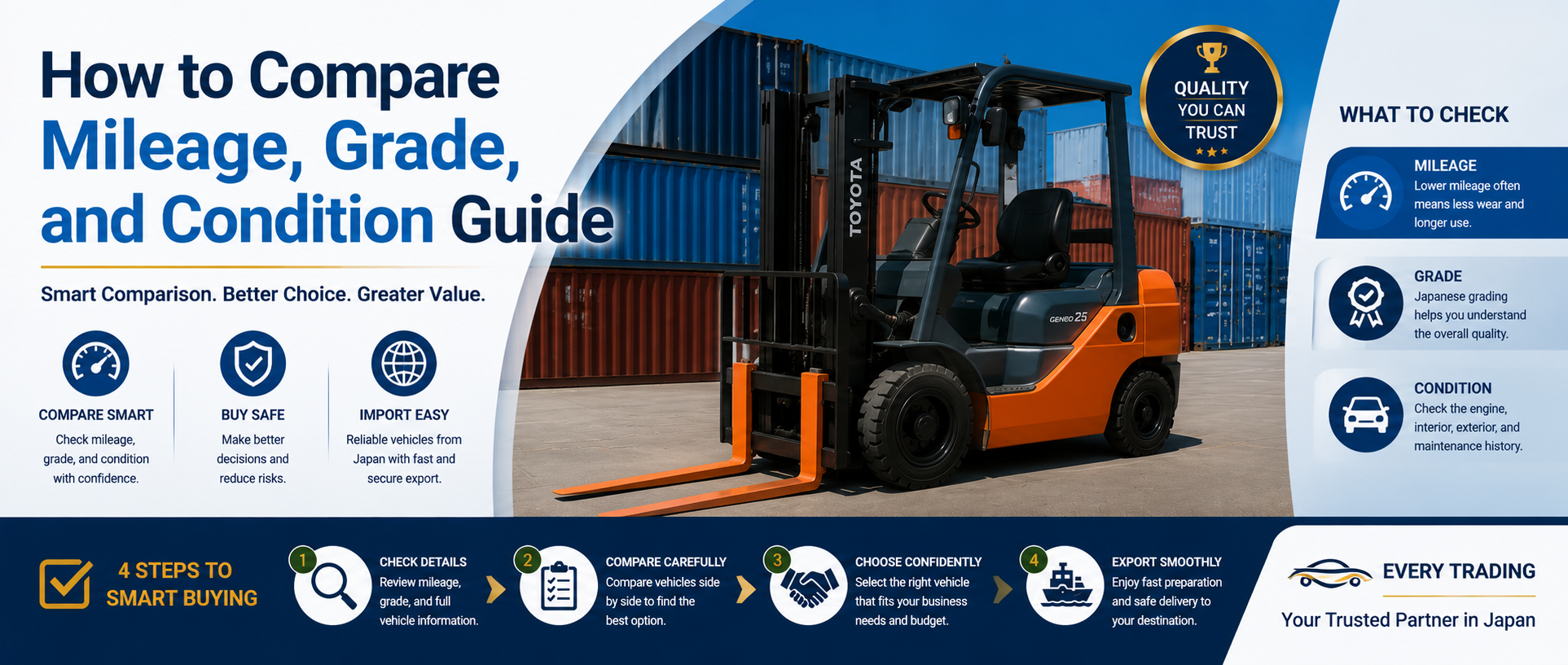
How to Compare Mileage, Grade, and Condition in Dealer Stock
How to Compare Mileage, Grade, and Condition in Dealer Stock is an important topic for buyers who want reliable vehicles from Japan. Many overseas importers choose dealer stock because it offers fixed pricing, fast export, and a simple buying process.
When buying used cars, trucks, buses, vans, or tractors, buyers should not focus only on price. Mileage, vehicle grade, and overall condition are very important for long-term value and customer satisfaction.
This guide explains How to Compare Mileage, Grade, and Condition in Dealer Stock in simple English. It helps buyers understand how to choose better vehicles and reduce business risk.
1. Why Mileage Matters When Buying Used Vehicles
Mileage shows how far a vehicle has been driven. In many cases, lower mileage means less engine wear and longer future use.
However, mileage alone does not decide vehicle quality. A well-maintained vehicle with moderate mileage may be better than a poorly maintained low-mileage unit.
Buyers should compare mileage together with:
– Maintenance history
– Engine condition
– Tire condition
– Interior cleanliness
– Exterior damage
Japanese dealer stock often includes detailed information, making comparison easier for overseas buyers.
You can browse available units here: Japanese dealer stock vehicles.
How to Compare Mileage, Grade, and Condition in Dealer Stock becomes easier when buyers review all vehicle details carefully instead of focusing only on numbers.
2. Understanding Vehicle Grades in Japan
Vehicle grade is an important part of Japanese used vehicle evaluation. Grades help buyers understand the condition of the vehicle before purchase.
In general:
Grade 5 or 6: Almost new condition.
Grade 4 or 4.5: Very good condition with minor wear.
Grade 3 or 3.5: Average used condition with visible wear.
Grade 2 or lower: Heavy wear or repair history.
Dealer stock listings may include grade information or detailed condition reports.
Compared to auctions, dealer stock is often easier for first-time buyers because pricing is fixed and vehicle details are clearly presented.
How to Compare Mileage, Grade, and Condition in Dealer Stock is important because understanding grades helps buyers avoid unexpected problems.
3. How to Check Vehicle Condition Properly
Condition is one of the most important factors when importing vehicles from Japan.
Even a low-mileage vehicle with a high grade should still be checked carefully.
Buyers should confirm:
– Engine sound and performance
– Body scratches or dents
– Rust condition
– Seat and interior wear
– Air conditioning operation
– Maintenance records
Commercial vehicles such as trucks and buses should also be checked for heavy-use damage.
For tractors and agricultural machinery, buyers should review tire condition, engine stability, and attachment compatibility.
You can compare multiple units through used vehicles from Japan dealer stock. Dealer stock allows buyers to review specifications quickly and make better business decisions.
How to Compare Mileage, Grade, and Condition in Dealer Stock is not only about finding cheap vehicles. It is about selecting reliable units that can support long-term business operations.
4. Why Dealer Stock Is Better for Simple and Fast Buying
Dealer stock is popular because the process is simple, fast, and reliable.
Main dealer stock advantages include:
Immediate Purchase: Vehicles are available right away.
Fixed Pricing: Buyers know the exact price before purchasing.
Fast Export: Shipping preparation can begin quickly.
Auctions can offer more choices, but they require bidding experience. Prices may increase unexpectedly, and buyers may lose bids.
Dealer stock reduces uncertainty and helps buyers make faster decisions.
To understand the buying process better, visit this Japanese dealer stock vehicles guide.
EVERY TRADING supports global buyers with clear communication, professional export support, and fast response. This helps buyers compare vehicles confidently and reduce business risk.
How to Compare Mileage, Grade, and Condition in Dealer Stock becomes much easier when buyers work with trusted exporters and use reliable dealer stock systems.
Conclusion
How to Compare Mileage, Grade, and Condition in Dealer Stock is an important skill for successful importing. Buyers should carefully compare mileage, vehicle grade, and overall condition before purchasing.
Dealer stock provides a fast and simple buying process with fixed pricing and immediate availability. This helps buyers reduce risk and improve business efficiency.
By understanding vehicle condition properly and working with trusted exporters, buyers can secure reliable Japanese vehicles for long-term business success.


Browse Reliable Used Trucks & Buses from Japan
Carefully selected vehicles ready for export worldwide
Search 100,000+ Dealer Stock Vehicles from Japan
Access a wide selection of vehicles from Japanese dealers nationwide. Updated daily.