🚛 Japanese Used Truck Articles Index (100 Topics)
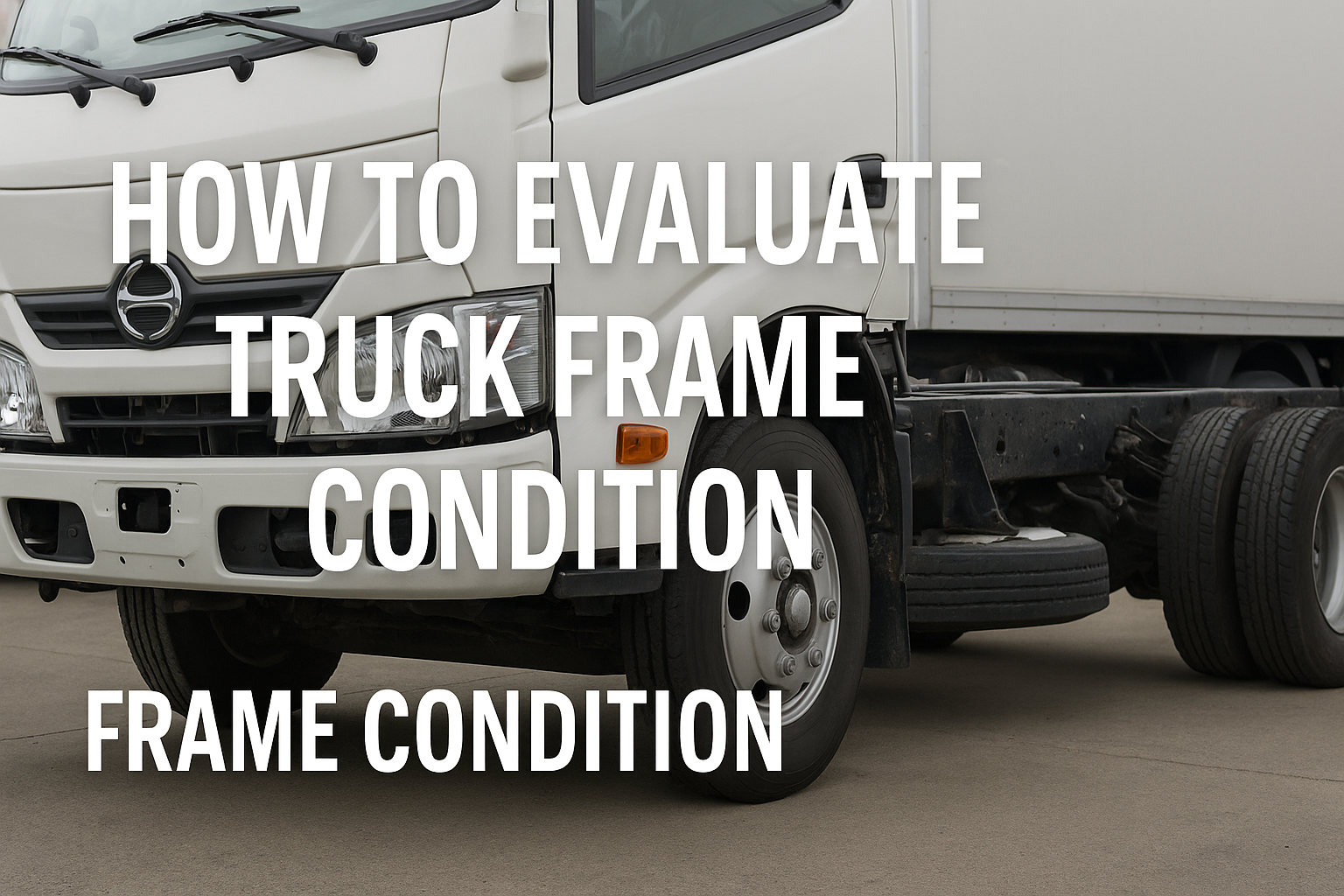
How to Evaluate Truck Frame Condition: A Practical Buyer’s Guide
Introduction: Why Truck Frame Condition Matters
When buying a used truck, the frame condition is critical.
The frame supports the entire vehicle structure and load capacity.
Even if the engine runs well, a damaged frame can cause serious problems.
Therefore, learning how to evaluate frame condition protects your investment.
Japanese used trucks are popular because they are well maintained.
However, buyers still need to check the frame carefully, especially when importing.
What Is a Truck Frame?
The truck frame is the main structural backbone.
It supports the engine, cabin, suspension, cargo body, and drivetrain.
Because of this role, frame damage affects:
-
Safety
-
Load capacity
-
Tire wear
-
Long-term durability
That is why professional buyers always inspect the frame first.
Step 1: Check for Rust and Corrosion
First of all, inspect the frame for rust.
Rust weakens metal and reduces structural strength.
Focus on:
-
Frame rails
-
Cross members
-
Suspension mounting points
Surface rust is common and usually acceptable.
However, deep rust, flaking metal, or holes indicate serious damage.
Japanese trucks often have less rust, but coastal use can still affect frames.
Step 2: Look for Bends and Twists
Next, check if the frame is straight.
A bent or twisted frame usually comes from accidents or overloading.
Signs of frame distortion include:
-
Uneven gaps between cab and body
-
Misaligned axles
-
Uneven tire wear
If possible, compare both sides visually.
Symmetry usually means the frame remains straight.
Step 3: Inspect Welds and Repairs
Then, inspect all weld points carefully.
Factory welds look clean and consistent.
Be cautious if you see:
-
Rough welding marks
-
Extra steel plates
-
Uneven joints
These signs may indicate past repairs.
Repairs are not always bad, but they should be explained clearly by the exporter.
Step 4: Check Suspension and Mounting Points
The frame connects directly to the suspension.
Therefore, inspect mounting points carefully.
Look for:
-
Cracks near bolt holes
-
Deformed brackets
-
Rust around mounts
Damage in these areas affects handling and safety.
Step 5: Examine Cross Members
Cross members help distribute load across the frame.
They are essential for rigidity.
Check that cross members are:
-
Straight
-
Securely attached
-
Free from heavy rust
Damaged cross members reduce load stability.
Step 6: Request Underbody Photos and Videos
If you cannot inspect the truck in person, request detailed photos.
Professional exporters provide clear underbody images.
Ask for:
-
Full frame rails
-
Rear frame section
-
Suspension mounts
-
Close-up rust areas
Videos are even better because they show depth and texture.
Why Japanese Trucks Usually Have Better Frames
Japanese fleet companies follow strict maintenance schedules.
Overloading is less common in Japan.
Because of this:
-
Frames stay straighter
-
Rust damage is often minimal
-
Structural integrity remains high
This advantage makes Japanese used trucks attractive worldwide.
Work With Trusted Exporters for Accurate Information
Frame condition cannot be judged from one photo alone.
Therefore, honest communication matters.
Professional exporters:
-
Explain frame condition clearly
-
Share inspection details
-
Answer technical questions honestly
We strongly recommend reviewing this guide before choosing a seller:
Top 5 Trusted Japanese Used Truck Exporters for Global Buyers
All companies listed are professional Japanese exporters with global experience.
Common Mistakes Buyers Should Avoid
Many buyers focus only on engine condition.
However, ignoring the frame can lead to costly repairs.
Avoid these mistakes:
-
Trusting only exterior photos
-
Ignoring underbody inspection
-
Accepting unclear repair explanations
Careful evaluation prevents long-term problems.
Final Advice for International Buyers
A strong frame means a reliable truck.
Therefore, always evaluate frame condition before purchase.
Japanese used trucks often offer excellent frame quality.
However, buyers should still inspect carefully and ask questions.
There are many Japanese used cars, trucks, buses, and farm tractors in the market.
If you want to import safely, always work with trusted Japanese export companies.
For reliable exporter information, please visit:
https://everycar-review.com/2023/12/09/top-recommended-japanese-used-car-export-companies-for-international-customers/