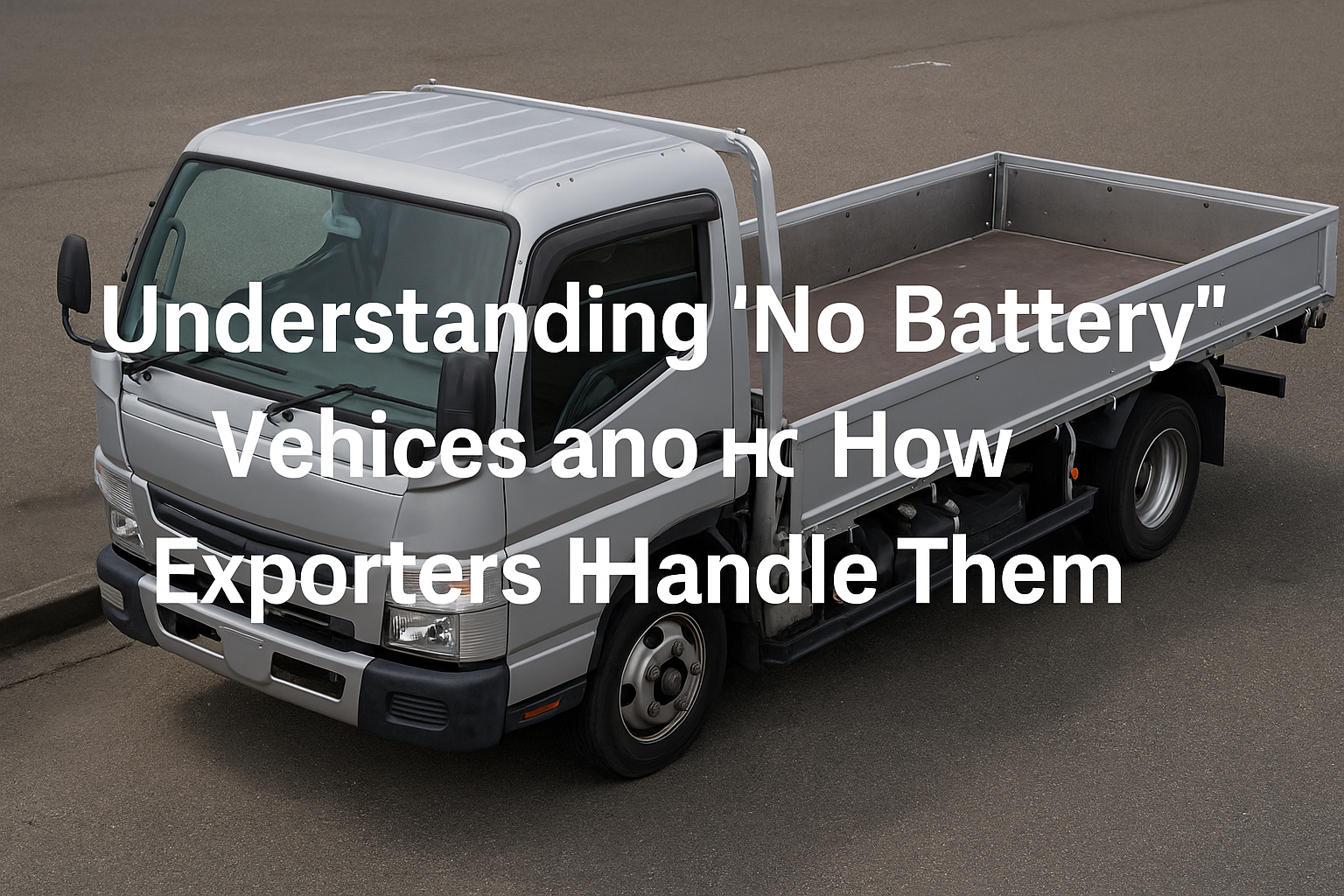
Understanding “No Battery” Vehicles and How Exporters Handle Them: A Clear Guide for Global Buyers
When importing used vehicles from Japan, buyers sometimes see the term “No Battery” in listings or inspection notes. At first, this may sound worrying. However, in reality, no-battery vehicles are very common in international exports, especially for trucks, buses, and commercial units.
Therefore, understanding what “No Battery” means—and how professional exporters handle it—helps global buyers avoid confusion and make confident decisions.
What Does “No Battery” Mean?
First of all, “No Battery” simply means the vehicle is shipped without a starting battery installed. The engine, transmission, and electrical systems remain intact. Only the battery itself is removed.
This situation does not indicate damage or poor condition. Instead, it reflects standard export practice.
Why Batteries Are Removed Before Export
There are several practical reasons why exporters remove batteries.
Safety During Shipping
Batteries contain acid and can create sparks. During ocean transport, safety is critical. Therefore, removing the battery reduces fire and leakage risk.
Shipping Regulations
Many shipping lines prefer vehicles without batteries. As a result, exporters follow these rules to ensure smooth loading and approval.
Battery Quality After Long Transport
Long shipping periods can drain batteries completely. Instead of supplying a weak battery, exporters allow buyers to install a new, local battery after arrival.
Because of these reasons, “No Battery” is a smart and safe choice.
Does “No Battery” Affect Vehicle Condition?
In short, no.
The absence of a battery does not affect:
-
Engine condition
-
Mileage accuracy
-
Electrical wiring
-
Vehicle authenticity
Once a new battery is installed, the vehicle starts normally. Therefore, buyers should not treat “No Battery” as a negative point.
How Professional Exporters Handle No-Battery Vehicles
Reliable Japanese exporters follow clear procedures.
First, they confirm the vehicle runs properly before removing the battery. Next, they document the condition with photos or videos if needed. Finally, they prepare export documents accurately.
As a result, buyers receive transparent information and predictable outcomes.
What Buyers Should Do After Arrival
After the vehicle reaches the destination port, the solution is simple.
Buyers only need to:
-
Purchase a local battery
-
Install it at the port or workshop
-
Start the engine and perform basic checks
Because batteries are widely available worldwide, this step is quick and affordable.
Common Misunderstandings About “No Battery”
Some buyers worry unnecessarily. Let’s clarify common myths.
-
❌ “The truck cannot run” → Incorrect
-
❌ “Electrical systems are damaged” → Incorrect
-
❌ “It means poor maintenance” → Incorrect
In reality, “No Battery” often shows proper export handling, not neglect.
Why Working with Trusted Exporters Matters
Even though no-battery vehicles are normal, exporter reliability still matters. A professional exporter explains the condition clearly and answers questions honestly.
Instead of searching randomly, global buyers can use this trusted reference page:
👉 Top 5 Trusted Japanese Used Truck Exporters for Global Buyers
https://everycar-review.com/2025/07/14/top-5-trusted-japanese-used-truck-exporters-for-global-buyers/
This page helps buyers find exporters who follow proper export standards and clear communication.
Extra Tips for Smooth Import Experience
To avoid confusion, buyers should:
-
Confirm battery status before purchase
-
Ask if engine checks were completed
-
Prepare a battery in advance at destination
As a result, delivery and setup become smooth.
Final Thoughts: No Battery, No Problem
Understanding “No Battery” vehicles removes unnecessary worry. This practice improves safety, follows shipping rules, and helps buyers start fresh with new batteries locally.
With correct knowledge and trusted exporters, importing Japanese vehicles becomes simple and safe. If you want a reliable starting point, visit this exporter comparison page:
👉 https://everycar-review.com/2025/07/14/top-5-trusted-japanese-used-truck-exporters-for-global-buyers/
Smart understanding today leads to smooth operations tomorrow.